Author: Bon Crowder

  • The QAMA Calculator  — The One Calculator You Shouldn't Burn!

    The QAMA Calculator — The One Calculator You Shouldn't Burn!

    It’s no secret that I’m an opponent of calculators. In fact, I recently suggested to readers of 12Most.com that they burn their calculators!

    But there is one calculator that isn’t burn-worthy.

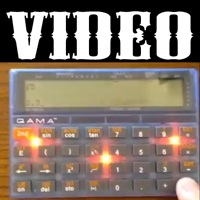
    The QAMA Calculator requires the user to input a reasonable approximation before it churns out an exact answer.

    So if you asked your QAMA Calculator to find the square root of 5, it would ask you first what \(\sqrt{5}\) is really close to. Like this:

    That’s annoying!

    Okay, maybe. If you need the calculator to do some quick work (the real reason to use a calculator), then you don’t need the darn thing quizzing you about an approximation.

    But the QAMA Calculator people thought of everything. You can turn off that feature!

    But then the kids will cheat!

    Ah! You would think so. But check out what it does when you turn the feature off:

    So what do you think? Will you get a QAMA Calculator? (It’s only about $25 after shipping & handling.) Will you let your kids use it?

    P.S. I paid full price for it — it’s not expensive and it’s a crazy brilliant idea, so I went for it.

    Share your thoughts in the comments or on twitter/x.

    You might also like:
  • Is Math a Language?

    Is Math a Language?

    I’m taking Keith Devlin’s course “Introduction to Mathematical Thinking” on Coursera for the next seven weeks. We’ve started with some thoughts and readings on set theory and logic.

    And the first big thing in set theory is the way the stuff is written.

    We invented shorthand to help us write stuff.

    You may be old enough to remember Gregg shorthand. They discontinued the class the very year I intended to take it in high school. But I remember seeing it and really wanting to learn it.

    The idea behind shorthand, both Gregg and any other, is that you have agreed upon symbols that allow you to write things quickly, or more concisely.

    Logic and set theory both use shorthand to do this. And in fact, you’re not a stranger to it either!

    We live in an age of texting shorthand.

    FYI and CC have been around for a long time. But LOL is relatively new. So is IMHO.

    And every now and then I come across a brand-new one that completely throws me.

    Logic and set theory shorthand works the same way. Consider the statement:

    For every number that’s a positive number, we know that that number is bigger than the number -13.

    That’s a math mouthful!

    So instead we have invented some shorthand to make that easier.

    We use variables like pronouns.

    The first shorthand we use is variables. If the number were a guy, we would say,

    If some number is positive, he’s bigger than the number -13.

    Unfortunately numbers aren’t people. So instead of using he and she, we use x and y. So we say,

    For every positive number x, we know that x is bigger than the number -13.

    Then we get freaky!

    Because math and set theory have been around a really long time, we have symbols that are easy to write with pencil and paper. But not so easy to write with typing!

    Let’s start with one of my fav’s: \(\forall\).

    That upside down A stands for “for all” or “for every.” If we were to invent that notation now, we would probably use FA or something easy to text.

    But we didn’t, so we’re stuck with it.

    Here’s how we would use it in our example:

    \(\forall\) x such that x is a positive number, then x is bigger than -13.

    You can also use it like this:

    \(\forall\) x such that x is a dish, you will wash x before you go to bed.

    How about some more…

    \(\exists\) means “there exists” and can be used like this:

    \(\exists\) a dish in the sink, so you’re not going to bed yet.

    \(\therefore\) means “therefore” or “thus” or “because of that, this will happen…” Here’s a way to use it:

    \(\exists\) a dish in the sink, \(\therefore\) you’re not going to bed yet.

    \(\land\) means “and” — to be used like this:

    \(\exists\) a dish \(\land\) a glass in the sink, \(\therefore\) you’re not going to bed and you just might lose your phone privileges tomorrow.

    Math isn’t a new language — it’s a shorthand of normal language.

    And it isn’t really hard. Give this sentence a shot. I’ll be you can figure out what the symbols mean!

    \(\exists\) a dish \(\lor\) a glass that isn’t washed \(\Rightarrow\) you’re getting into serious trouble!

    Want more? Check out this list of logic symbols. And make sure your share how you use them with your kids in the comments or on twitter/x.

    You might also like:
  • The Prime Directive in Education

    The Prime Directive in Education

    The Prime Directive in Star Trek is to not interfere with other cultures.

    The Prime Directive in medicine is do no harm.

    The Prime Directive in parenting is to keep the child alive.

    There’s a Prime Directive in Education too!

    Through all my suggestions, recommendations and ideas about math education, the one thing that trumps everything else is the Prime Directive in education:

    If it works for your child, do it.

    If a method, book, course or person helps your child do better in math, then stick with it!

    Everyone has an idea of what great teaching looks like.

    Proponents of Khan Academy like that lectures can be available to everyone, everywhere for free. Opponents say that Khan Academy is still just lectures.

    Proponents of education methods popularized by Dan Meyer say that children need to connect with the math. They need to see it in action.

    Opponents (and there aren’t many) say that sometimes kids just want to do the steps.

    It’s not about great teaching, though — it’s about great learning.

    Only your child knows what great learning looks like.

    Children know how they learn best. They can’t always articulate it, thought, so they need us to watch them and figure it out for them.

    If your child needs more of a top-down understanding of what’s going on in math, then the teacher (you or the classroom teacher) should work to give him that.

    If he needs a to thoroughly practice the basics in math before moving on to something more — then that’s what he should have.

    Even alternative learning methods can be used.

    A friend of mine told me her child needs to practice his cursive writing. Because he thinks cussing and swearing is fun, she’s entertaining the idea of having him write sentences using a swear word. She worried that it might make her a bad parent.

    Enter the Prime Directive in Education. If he improves with his cursive writing, and she explains that swearing is still not appropriate out loud, why shouldn’t he write the bad words?

    If it works for your child, do it!

    Some kids need rote memorization before understanding. Some need understanding first. And some need bizarre means to connect with the task at hand.

    So if you find something that works — by golly, do it!

    What does your child need? How can you make sure he or she gets it?

    Share your thoughts in the comments or on Twitter/X.

    You might also like:
  • 12 Most Simple Ways to Have Math Confident Kids

    12 Most Simple Ways to Have Math Confident Kids

    This post originally appeared on 12most.com on September 17, 2012.

    Do you remember your parents saying, “Do as I say not as I do?” Do you remember what you thought of that nonsense?

    We learned more from our parents’ social modeling than we ever did through their words. And our kids will do the same.

    If you (as a grownup) scream when you see a roach, your kids’ll learn to fear roaches. Head to the gym three times a week and they’ll learn a healthy body is part of life. Read to your kids on a daily basis and they’ll think that reading is part of normal life.

    And you can use that same social modeling to turn your household into a hub of math confidence! Here’s how:

    1. Say the word “math” as much as you can

    The more you hear or see something, the more familiar with it you are. That holds for kiddos too. So mention math as much as you can.

    If you see a graph on CNN or Fox News, say, “Hey, that’s math.” If you’re looking for a cheaper alternative in the grocery store, use the M-word: “I’m using math to compare prices.”

    2. Point out where you do basic arithmetic

    When you set your alarm clock, point out that you’re doing subtraction to figure out what time to wake up. If you have to grab for the half-cup because the 1-cup is in the dishwasher, mention you’re doing some fractions.

    3. Let them read the users manual

    Sometimes math is about getting the job done by going through the right steps. When you set up the entertainment system, hand over a users’ manual to your child. Following those instructions reinforces logical instruction following — i.e. “plug and chug” math.

    And when they’ve set up the new big screen TV and hooked it up to the 7 other boxes of electronics, tell them they just used logic — a part of math!

    4. Play games

    Board games and card games are full of if-then statements. If you roll doubles, then you get another turn. If you draw a blank card, then you get to advance four more spaces.

    If-then statements are the foundation of math. Even the simple 1 + 2 = 3 is an if-then statement:

    If 1 and 2 represent the values we’re used to, then their sum is the value 3.

    The best part is that when they win a game, you can point out all the math they did to accomplish it.

    5. Play Calvin-Ball

    Calvin & Hobbes often engage in a sport in which they make up rules as they go along. Try doing this with your kids — play a game (of any type) and let each person make up one rule.

    Those rules will show up in the form of if-then statements, just like “normal” rules.

    Watch closely for the compound rules, too. “If your name starts with a B and you’re more than 10 years old, then you get two turns.” That “and” is part of set theory — a subject of math!

    6. Bite your tongue

    If you ever find yourself saying, “I’ve never been good at math,” stop yourself before it comes out. In fact…

    7. Fake it

    Fake it until you make it. Tell yourself you do math everyday (you actually do) and then tell your kids you do math everyday. Even if you don’t see it.

    The more you say it, the more you’ll believe it. And when you finally believe it, saying it will be effortless.

    8. Look at people like they’re nuts when they say they’re bad at math

    Remember, it’s all about social modeling. If you respond with, “Yeah, a lot of people aren’t so good at math,” you’re sending the message that it’s okay to be bad at math.

    Ever hear someone say they’re bad at reading? Heck no! Because it’s not socially acceptable.

    If you want math confident kids, make it just as nuts to say you’re bad at math as it it to say you’re bad at reading.

    9. Treat their math grades like they were PE or drama class grades

    If you pressure your kids to get good grades, then their motivation to be creative problem solvers goes down. (This is from Dan Pink’s Drive, by the way.)

    Since creativity is the source of great math learning, take off the pressure and let them learn math at their own pace. If they pass, that’s good enough.

    10. Discuss the Common Core Standards with them

    Talk to your kids about the requirements your school follows (or the ones you follow, if you homeschool). Discuss what each requirement or objective means. Talk about where they might have seen it in action.

    Point out where they already do it or make plans together on how they can do it in real life.

    11. Read popular math books

    There’s a whole slew of non-fiction books written about math for the non-mathematician. Let your child catch you reading one of those.

    My favorite is The Man Who Counted by Malba Tahan.

    12. Burn the calculator and banish the back of the book

    Having an external device to check their work is clear confirmation to a kid that he’s not smart enough to check it himself.

    If your child (or you) follows the rules of logic and the agreed on methods of applying them (like the order of operations), the answer they get will be right. Guaranteed.

    Furthermore, there are an infinite number of ways to do every problem. So checking your work is a matter of doing the problem a different way and seeing if you arrive at the same thing. Or working it backwards to see if you come up with the original question.

    Tear out the back of the book or staple the pages together. And refuse to fall for the “check your work” calculator usage scam. Your children will be better off for it.

    Are you ready for math confident kids? Which of these will you try?

    Featured image courtesy of Inkyhack licensed via Creative Commons.



  • 100 Days to Christmas

    100 Days to Christmas

    I just got a notification that today, September 16, is 100 days until Christmas. When I read this many thoughts went through my mind:
    • What’s our obsession with 100?
    • I wonder why we chose 24 days of advent and not 25, 50 or 100.
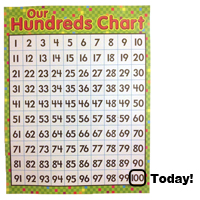
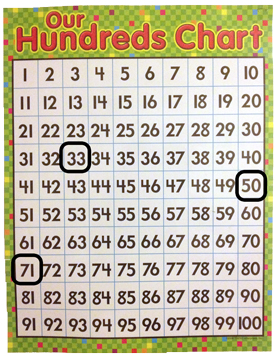
    • Hey — we could count 100 days to Christmas on a Hundreds Chart!

    Two good things to do…

    First, sign up to get the fun things from the site 100 Days to Christmas. I just found this site, so I’ll be getting those emails brand new like you!

    Get out your Hundreds Chart and use it for your 100 Days to Christmas countdown. Pick some favorite or familiar numbers and figure out when it will be that many days to Christmas.

    My best friend’s favorite number is 33, half of 100 is 50 and I was born in 1971. I’ll start with those!

    Or choose some special dates and figure out how many days to Christmas those dates will be. Like if your wedding anniversary is on September 29, that’s 87 days to Christmas.

    Please share what you’re doing in the comments or on twitter/x.

    You might also like:
  • Review of ThinkFun’s Roll & Play Toddler Game

    Review of ThinkFun’s Roll & Play Toddler Game

    This post originally appeared on The HSBA Post on September 14, 2012.

    How does a kid go from from having the attention span of a distracted gnat to an active game player? Baby steps!

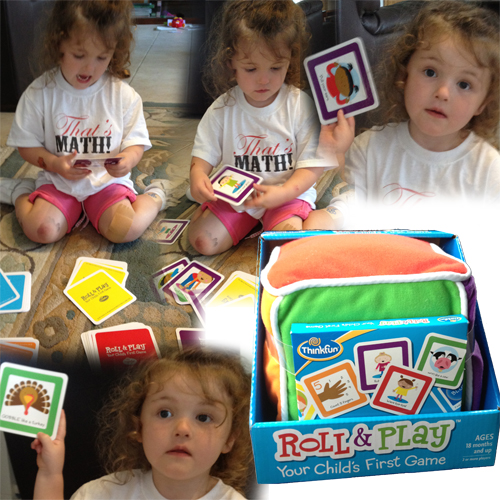
    ThinkFun has created Roll & Play, a “my first game” to start your little one out to becoming a regular part of family game night.

    Roll the die!

    The die in the Roll & Play game is a large plush cube. Each side is a different color. Players roll the die and then draw a card of the same color.

    This seems lame to older kids and grownups. But consider what you have to know in order for the die rolling to work.

    When the die stops, there are five sides showing and one hidden. You have to know that you’re focus is on the side that is face up. Rolling the big die teaches little ones that the top of the die is the indicator – not one of the sides facing him or her.

    Read the card!

    Each card has an activity on it. The pictures are sufficient for little ones to know what to do.

    When they “read” the card, they get to do the activity. To keep them engaged, you can have them read the cards to the other players.

    And then they get to pass the turn to the next person – another important game playing skill.

    Play, do, and change the rules at will!

    When you play Roll & Play, you’ll be hopping around, dancing, making animal noises, and having a great time. And if you want, you can adjust the rules to fit your little one.

    We started out by skipping some of the cards. They just weren’t as engaging as the others. We’ll work around to getting to all of them.

    Your turn!

    How have you integrated your little ones into game play? Would your toddler do well with ThinkFun’s Roll & Play?

    Share your thoughts in the comments and tweet this out!

    P.S. I got the Roll & Play game for free on accident. ThinkFun meant to send me another game and accidentally shipped this one. I refused to return it, promising instead to enjoy it and write about it.

  • Surgery Day Math

    Surgery Day Math

    I’m off to surgery in 60 minutes.

    I haven’t eaten since 12am.

    They’ll measure the anesthetic in cubic centimeters.

    They’ll use 2 holes to do the procedure.

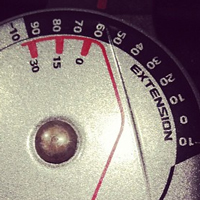
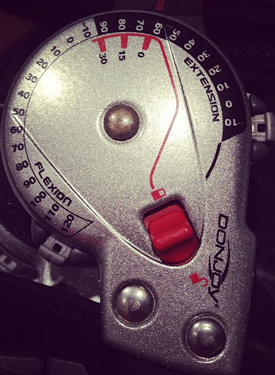
    They’ll put a range of motion knee brace on me.

    I’ll come back in 7 days.

    Even on surgery day, everyone’s doing math!

    This article is a part of the 50 Word Friday series. Learn more about this strange, limited writing style here…

    Share your thoughts in the comments or on twitter/x.

    You might also like:
  • Why You Should Ignore the Prerequisites in Math Classes

    Why You Should Ignore the Prerequisites in Math Classes

    You’ve seen the prerequisites part of a syllabus or course listing that begins:

    To take this course you should have completed…

    But what does that really mean anyway?

    A prerequisite is a way to keep out the rubbish.

    Have you ever sat in a class with someone asking tons of questions about things they should have known before signing up? To prevent this, instructors and institutions insert the “stay out if you’re going to get on everyone’s nerves” clause.

    It’s called the prerequisites.

    Prerequisites are a way out of a class that you didn’t want to take anyway.

    Prerequites are designed in such a way to allow you to escape. If you have any apprehensions about taking the class at all, you can just refrain from ever signing up — because of the prerequisites.

    Regardless of if you have the prereq’s, you can play this card. The course description reads: To take this course you should have completed College Algebra.

    You can convince yourself using one of these:

    1. “I passed College Algebra, but only with a C-. They probably mean that I should have made a B or at least a high C.”
    2. “I passed College Algebra with a B. But I was really uncomfortable about it. They probably mean that I should feel really good about all the content in College Algebra.”
    3. “I passed College Algebra with an A. But there were quite a few things I didn’t understand really really well. They probably mean that I should be really good with all of the stuff in College Algebra.”

    See how you can talk yourself out of anything?

    But there are no real prerequisites.

    All topics of math can be learned independently. Every topic can be learned before or after any other topic. And every topic can be used to support as well as be supported by any other topic.

    There is no order to this stuff. There is merely the order in which we learned it — one of a hundred bazillion ways that you could order it.

    My little sister was interested in math in college. I suggested she take Linear Algebra, a sophomore level class, in her first semester. The course catalog listed three semesters of calculus as the prerequisites. I told her that Linear Algebra had nothing at all to do with Calculus and she should ignore the prereq’s.

    She did.

    She finished her degree in her way — following her interests. (By the way, she’s currently the Business Administrator in that same math department!)

    Prerequisites are bogus.

    Education and learning should be focused on what you’re excited about. It’s about following what the learner wants — and what he or she (or you) will engage with.

    If you, or your kids, don’t want to do it, then don’t.

    But if you do — then don’t let some nutty arbitrary prerequisite statement stop you! Or even slow you down.

    Try it on this class…

    The sweet and talented Keith Devlin is teaching an online course in Math Thinking soon that has a “Recommended background of High School Mathematics.”

    Unfortunately those words sound like, “The prerequisite for this is high school math.”

    The class is online and it’s free. If your teens are interested, encourage them to join. If you have a precocious pre-teen, see if he or she is curious. And if you have a GED or no high school math at all, jump in — if you want.

    And the next time you’re faced with anything that looks like prerequisites, ignore them!

    Share your thoughts in the comments or on twitter/x.

    You might also like:
  • Fibonacci Birthday Party!

    Fibonacci Birthday Party!

    I’ve been preparing for months to have K8’s Fibonacci Birthday party. Last Saturday it happened.

    We did a lot of preparation.

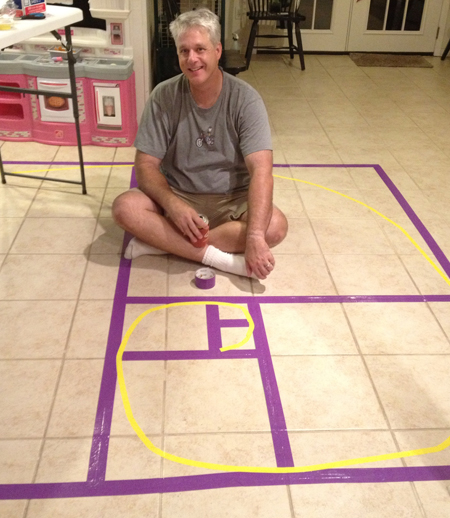
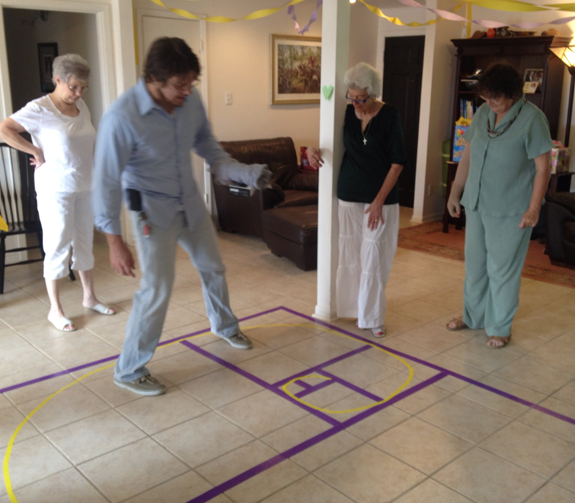
    Here is Judson creating the Fibonacci squares and spiral on our tile floor:

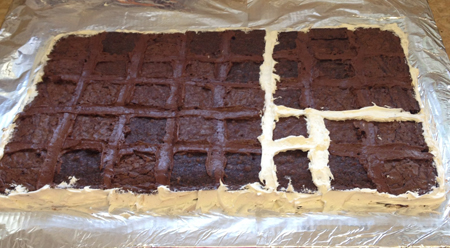
    Here is the birthday “cake” I made. It’s a Fibonacci Squares brownie cake!

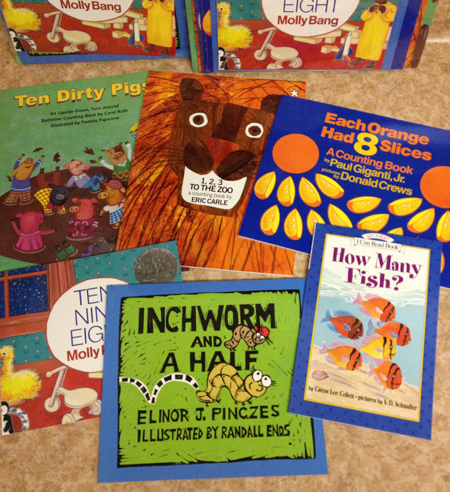
    I ordered these math picture books from Kaplan for the party favors. I put a sweet “thank you for coming to my party” sticker on the inside from K8:

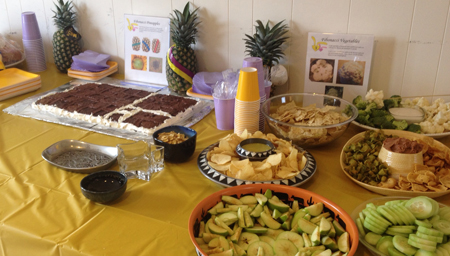
    The set up was intricate.

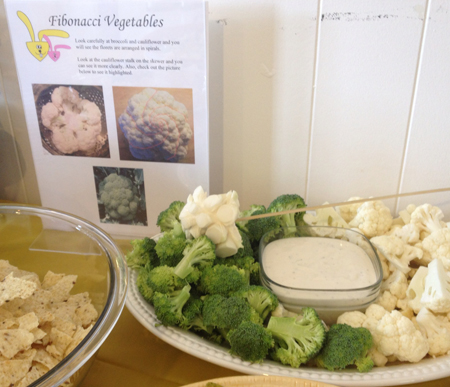
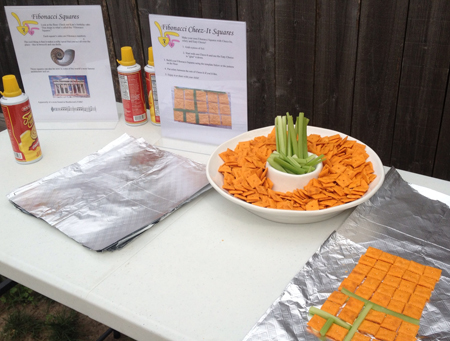
    The spread included descriptions of how each thing was related to Fibonacci.

    Someone said, “I’ve never been to a grownup’s three year old birthday party before.” Indeed, there were lots of informational pieces.

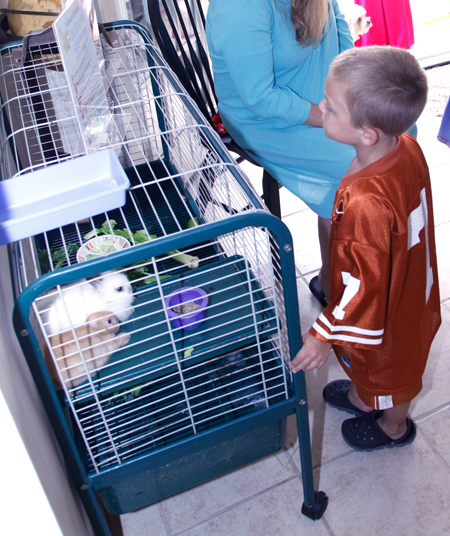
    We even had the Furry Fibonacci Bunnies out!

    And there were activities too!

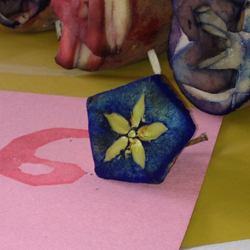
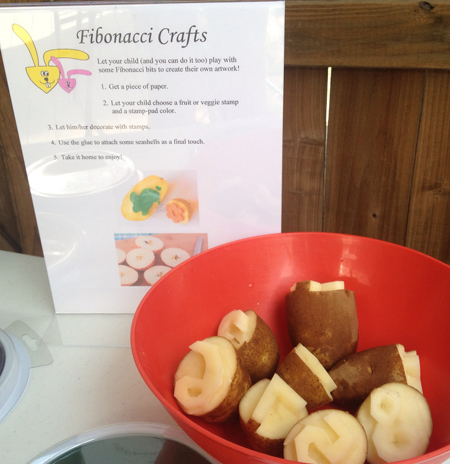
    My mom carved potato stamps with all the digits and I had apples cut open so the kids could stamp with them. There were also sea shells to glue on!

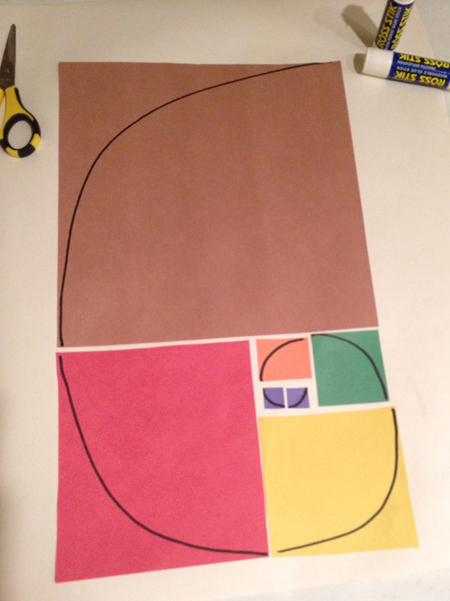
    We had glue and squares out for kids (and parents) to make their own Fibonacci Squares and Fibonacci Spiral.

    Even the grownups had a “craft” to do!

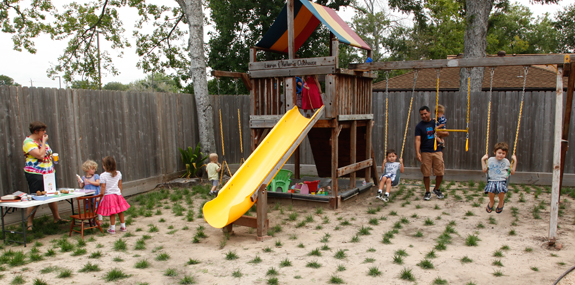
    Grownups AND kids had a great time!

    I refrained from pointing out the pseudo Cartesian Coordinate plane created by my new grass.

    Here’s Wil explaining the Fibonacci Squares to my three moms.

    Math presents!

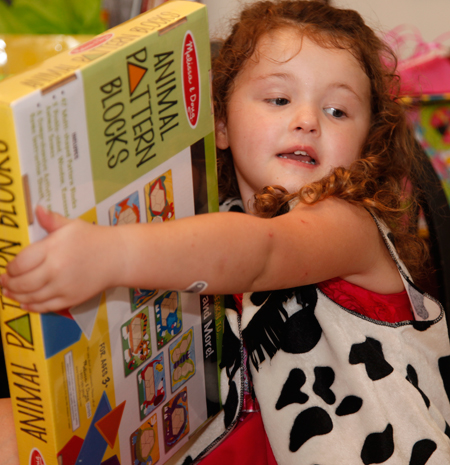
    How fun that K8 got some really neat math presents — like this animal pattern blocks from Melissa & Doug.

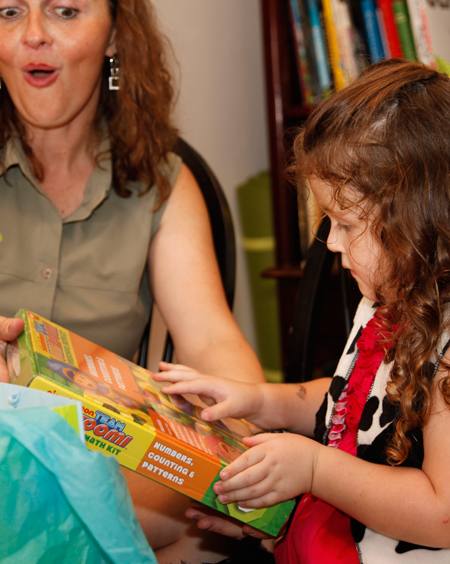
    And we were both excited about the UmiZoomi Preschool Math Kit!

    Even the “Thank You” notes use math!

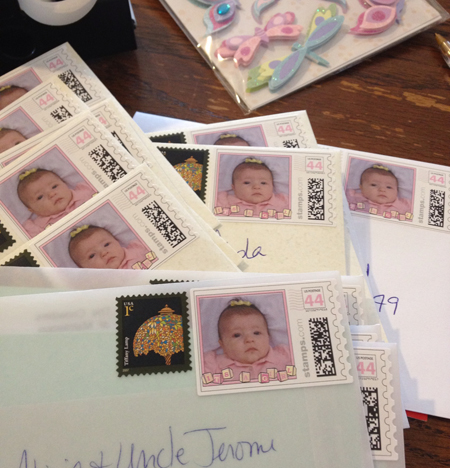
    I pulled out the stamps we ordered for K8’s announcements three years ago. Of course postage has gone up since then so we needed to add one!

    Do the activities with your kids!

    Here are some free downloadable printouts. Use them to play and learn more about Fibonacci.

    Share your thoughts in the comments or on twitter/x.

    Non-disclaimer: We paid for everything at this party. Kaplan gave me a nice discount for the books, though. Thanks, y’all!
    Bad-girl confession: Many of the images on the document stands were stolen from various online sources. Since I was using them for personal use, I neglected to give anyone credit. The downloadable documents shared above have legal images, though.

    You might also like:
  • Factoring Polynomials  — FREE Worksheet

    Factoring Polynomials — FREE Worksheet

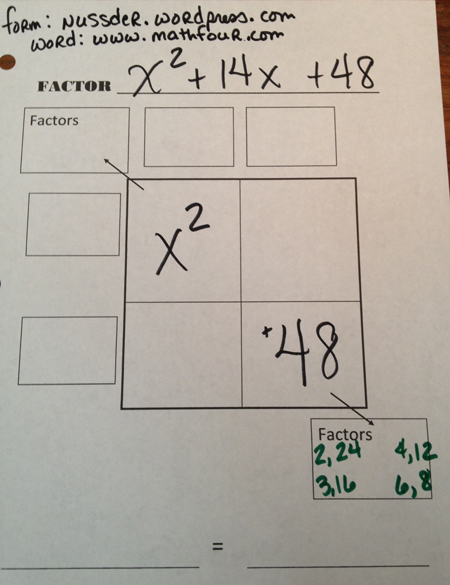
    In factoring polynomials it’s sometimes handy to break up the work graphically. Lisa Nuss, a member of Sam Shah’s New Blogger Initiation, shared a handy graphic organizer last week.

    I struggle with factoring polynomials, myself, so I wanted to give it a try.

    It started out easy.

    I started factoring polynomials with 1 as the leading coefficient (i.e. x2 has no messy number in front of it).

    I factored:

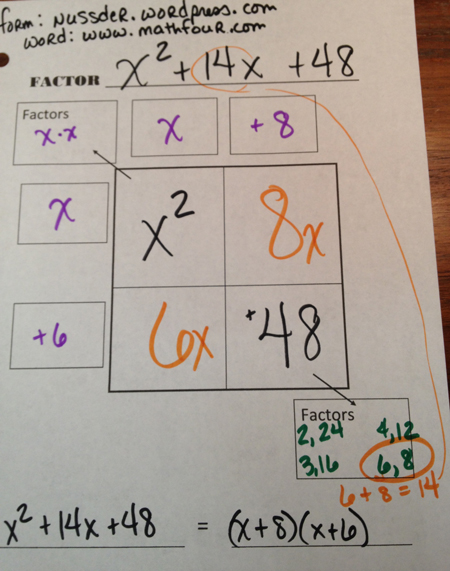
    \(x^2 + 14x + 48\)

    First, I put the first and last terms in the boxes. (Note that this graphic organizer works the same way as a multiplication table.)

    Then I factored those two in the given “factors” boxes. I determined which factors of 48 would add up to 14, and filled in the chart appropriately.

    I was done with that factorization.

    Yay me!

    Then I got into harder stuff.

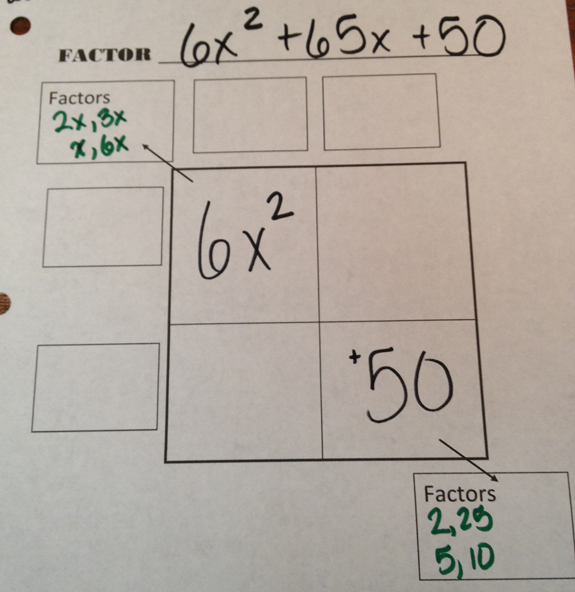
    Lisa put in an extra “Factors” box to handle non-unit leading coefficients. So I went for a big dog:

    \(6x^2 + 65x + 50\)

    Here’s how far I got before the breaks squealed:

    Factoring polynomials like this one shouldn’t be too much of a problem. Especially if you use a page protector and a dry erase pen to do the trial and error work, as Lisa suggested.

    But I don’t have such fancy technology.

    And I don’t like to erase my work. I want to see everything I’ve tried. For me, it’s very likely that I make a mistake and have to go back. And it’s a real pain to have to re-create everything.

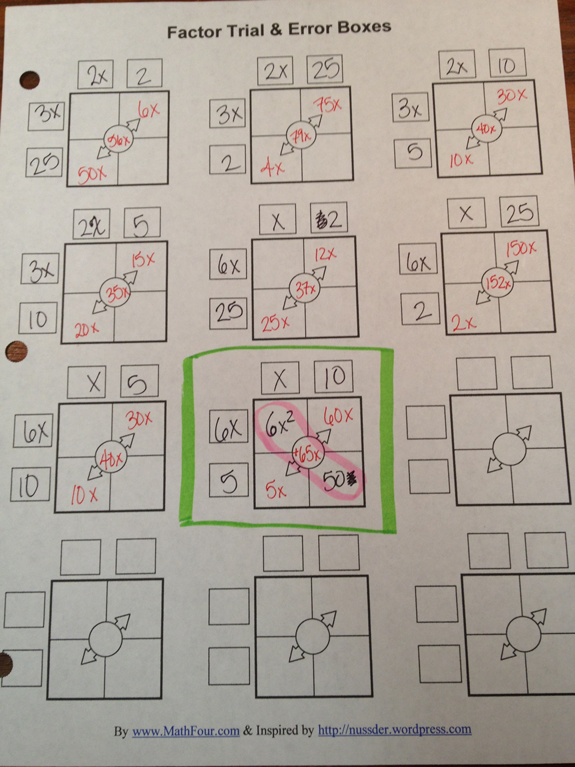
    So instead of playing trial and error with the one big sheet of paper, I created a Factor Trial & Error Boxes worksheet (or in Lisa’s terminology: a graphic organizer).

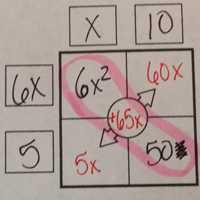
    Here’s what my work looked like:

    (It was a coincidence that the right answer was last, by the way.)

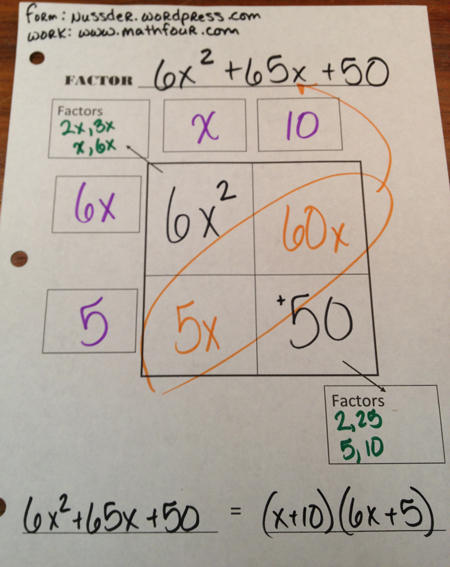
    With that info, I could go back to my big graphic organizer and finish the problem.

    This was very pleasing. I was able to use Lisa’s graphic organizer and mine to make sure I didn’t lose any options in my my trial & error.

    Will it work for you and your kids? Download the Factor Trial & Error Boxes worksheet now and give it a shot!

    Share your thoughts in the comments or on twitter/x.

    You might also like: