Tag: Kate Crowder

  • Logic Skills — Ornery Kids Develop them Naturally!

    Logic Skills — Ornery Kids Develop them Naturally!

    I got to see a natural use of logic yesterday — but it was disguised as an ornery kid!

    Parenting experts (and magazines) suggest that giving options to kids is a great idea — but only if they’re real. You’re not supposed to ask your little one if he wants to take a bath when you intend to give him a bath anyway.

    Instead, ask him which bathtub he wants to use. Or which towel he prefers when he gets out of the tub. Or even if he wants to take a bath alone or with a sibling.

    It’s a clever way of saying, “It’s time for your bath, but you get some autonomy in the activity.”

    Kids like this.

    And it’s formal math!

    Yup — in formal logic terms it looks like this: p∪q, where p and q are the options. And that little ∪ means “or.”

    For instance, I give K8 the choice of taking a bath alone or with me. So it looks like this:

    p = Take a bath alone.

    q = Take a bath with me.

    So pq = Take a bath alone or take a bath with me.

    But she’s more clever than I thought!

    Yesterday I gave her this option. She responded:

    I don’t want to take a bath alone and I don’t want to take a bath with you.

    Ornery little thing she is!

    But in our formal math lingo, this is

    ¬p∩¬q

    (Those little thingies in front of p and q are the “not” part. And the ∩ is the “and.”)

    If you look it up (or know formal logic) you can find out that ¬p∩¬q is exactly the same as ¬(p∪q).

    She was clearly saying to us that she does not want to take a bath at all!

    Math is built in.

    I’ve claimed before that we all have a built in ability to do math. Now it looks like that’s not just with numbers — it’s also with logical processing.

    She doesn’t get that she’s doing formal logic, but she understands in her gut that saying, “I don’t want to take a bath alone and I don’t want to take a bath with you” is negating the “take a bath” statement.

    Encourage it!

    I know it seems like she’s being a snot. And as she gets older it’ll get worse. I’ve seen my niece do it with my sister — play these logical games that feel like back-talk.

    But logic is the foundation of learning math. So instead of admonishing children, discuss it with them. Talk about a way to phrase your statements or rules so that there’s no logical loopholes.

    Allow them to argue with you on these little things — they’re building skills that will make them into super math thinkers!

    Your turn…

    What do you think? Has your child shown natural logic skills? How do you handle it?

    And how do I get K8 into the bath now!?

    Share your thoughts in the comments or on twitter/x.

    You might also like:
  • Seeing Rectangles in Rapunzel's Hair

    Seeing Rectangles in Rapunzel's Hair

    Part of Wordless Wednesday

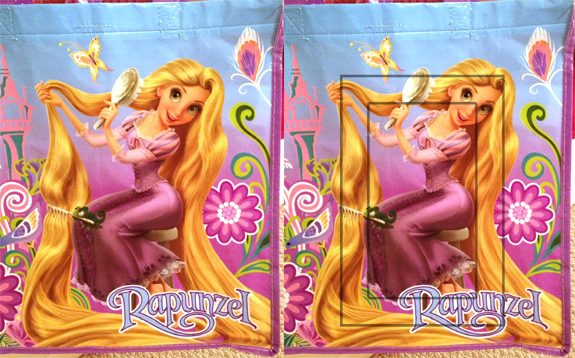
    I was walking out of her room when K8 shrieked, “A rectangle!”

    I looked and she was pointing directly at her Rapunzel bag. It took me a second, but I saw it when she said, “Her hair is a rectangle!”

    Amazing!

    Share your thoughts in the comments or on twitter/x.

    You might also like:
  • Parent Influence is Powerful

    Parent Influence is Powerful

    It’s hard to understand how parent influence really works. But your words and actions have a serious impact on your children.

    Even saying, “I haven’t done math in 15 years,” sends a decisive message to your kids: “I don’t need math as a grownup, and neither will you.”

    Kids want to do what you do.

    Here’s how powerful parent influence can be…

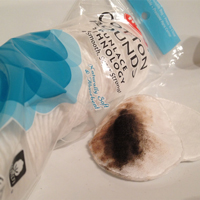
    K8 and I were getting ready for bed yesterday. I started taking off my eye makeup. She wanted to do it too.

    So I got out a cotton round for her and put a little makeup remover on it. She wiped her eye and was immediately annoyed.

    “I want brown!” she whined.

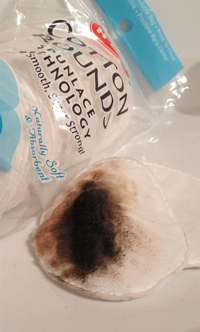
    My cotton round was full of removed makeup. Hers was white. She wanted to be like me.

    So I put a dab of liquid eyeliner on each of her lids. When she wiped it off, she had some “brown” on her cotton round too.

    Parent Influence is crazy powerful.

    How nuts that she wanted to have dirty eyes so she could clean them. It makes no logical sense.

    And that’s why your positive math talk is so important. Parent influence is the first and most impactful influence in your child’s life.

    As early as three years old (as K8 showed), they want to do everything exactly like you are doing. Exactly!

    So if you say you’re not good at math, they want to be not good at math too.

    So turn it around — be positive.

    Since parent influence has that kind of impact, make sure to keep it positive. Learn how to quit saying negative things about math.

    Have questions or suggestions on doing it? Leave them in the comments. And share this on twitter too!

    You might also like:
  • Review of ThinkFun’s Roll & Play Toddler Game

    Review of ThinkFun’s Roll & Play Toddler Game

    This post originally appeared on The HSBA Post on September 14, 2012.

    How does a kid go from from having the attention span of a distracted gnat to an active game player? Baby steps!

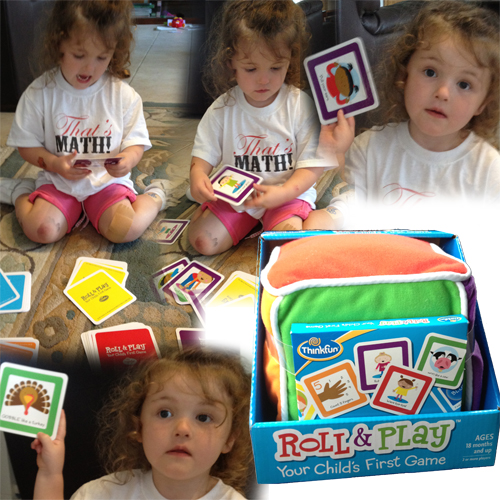
    ThinkFun has created Roll & Play, a “my first game” to start your little one out to becoming a regular part of family game night.

    Roll the die!

    The die in the Roll & Play game is a large plush cube. Each side is a different color. Players roll the die and then draw a card of the same color.

    This seems lame to older kids and grownups. But consider what you have to know in order for the die rolling to work.

    When the die stops, there are five sides showing and one hidden. You have to know that you’re focus is on the side that is face up. Rolling the big die teaches little ones that the top of the die is the indicator – not one of the sides facing him or her.

    Read the card!

    Each card has an activity on it. The pictures are sufficient for little ones to know what to do.

    When they “read” the card, they get to do the activity. To keep them engaged, you can have them read the cards to the other players.

    And then they get to pass the turn to the next person – another important game playing skill.

    Play, do, and change the rules at will!

    When you play Roll & Play, you’ll be hopping around, dancing, making animal noises, and having a great time. And if you want, you can adjust the rules to fit your little one.

    We started out by skipping some of the cards. They just weren’t as engaging as the others. We’ll work around to getting to all of them.

    Your turn!

    How have you integrated your little ones into game play? Would your toddler do well with ThinkFun’s Roll & Play?

    Share your thoughts in the comments and tweet this out!

    P.S. I got the Roll & Play game for free on accident. ThinkFun meant to send me another game and accidentally shipped this one. I refused to return it, promising instead to enjoy it and write about it.

  • Fibonacci Birthday Party!

    Fibonacci Birthday Party!

    I’ve been preparing for months to have K8’s Fibonacci Birthday party. Last Saturday it happened.

    We did a lot of preparation.

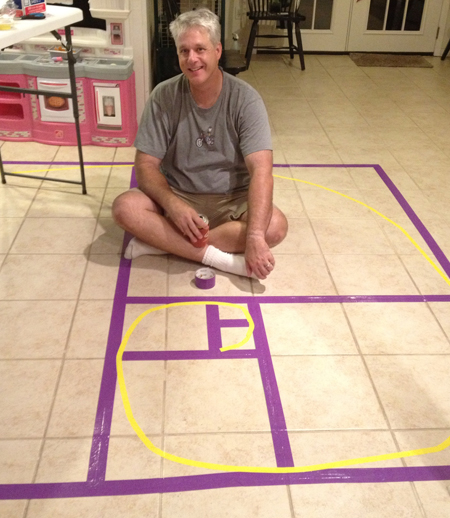
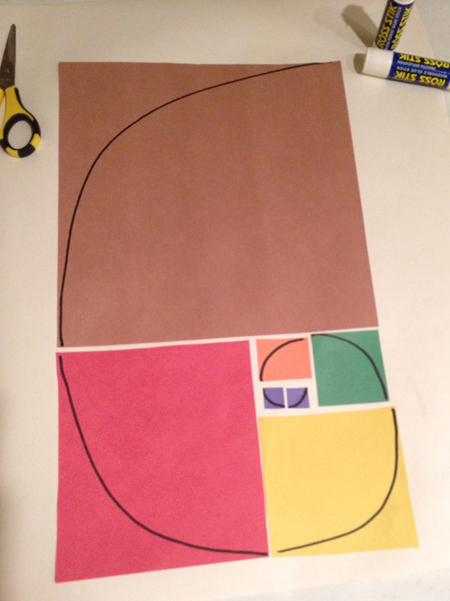
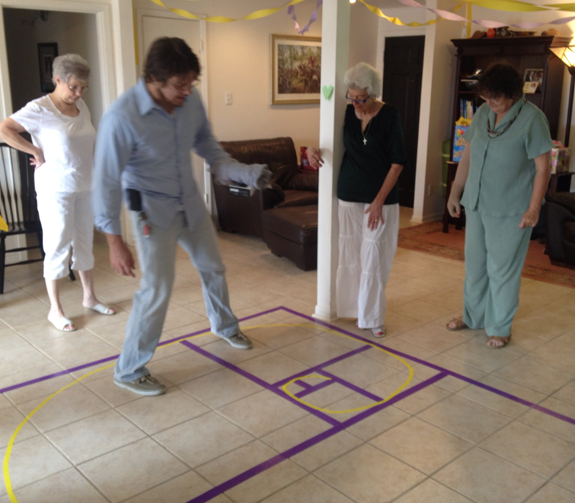
    Here is Judson creating the Fibonacci squares and spiral on our tile floor:

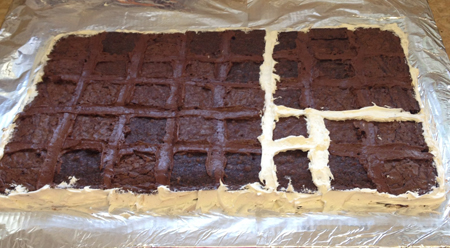
    Here is the birthday “cake” I made. It’s a Fibonacci Squares brownie cake!

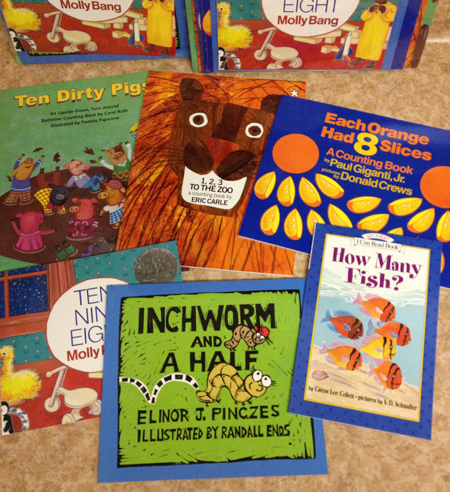
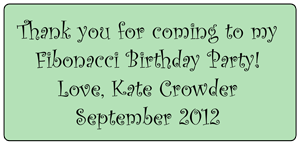
    I ordered these math picture books from Kaplan for the party favors. I put a sweet “thank you for coming to my party” sticker on the inside from K8:

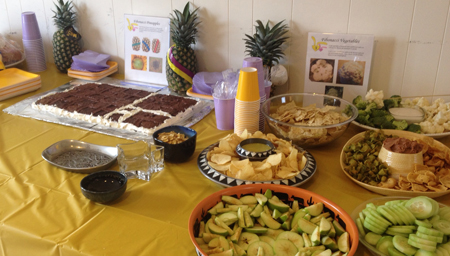
    The set up was intricate.

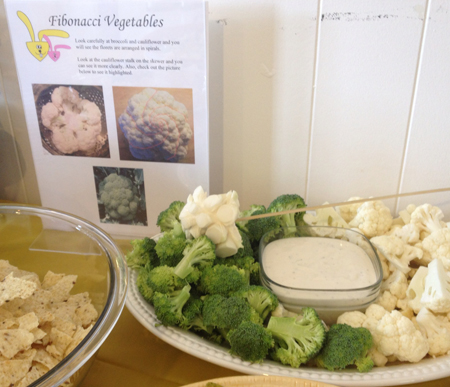
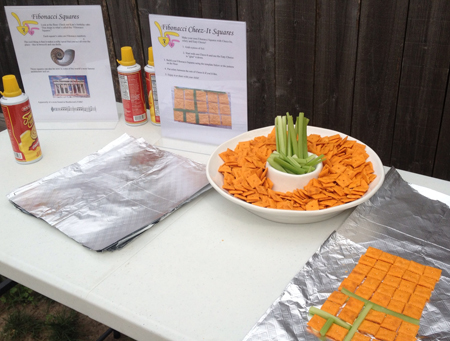
    The spread included descriptions of how each thing was related to Fibonacci.

    Someone said, “I’ve never been to a grownup’s three year old birthday party before.” Indeed, there were lots of informational pieces.

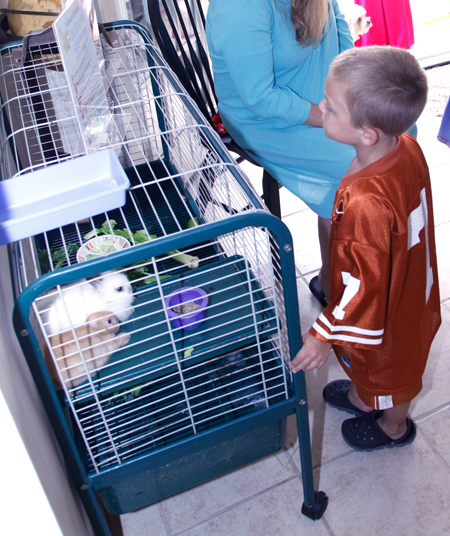
    We even had the Furry Fibonacci Bunnies out!

    And there were activities too!

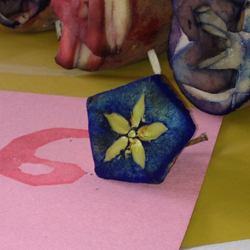
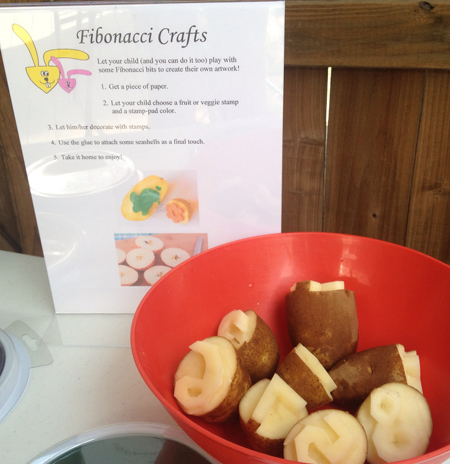
    My mom carved potato stamps with all the digits and I had apples cut open so the kids could stamp with them. There were also sea shells to glue on!

    We had glue and squares out for kids (and parents) to make their own Fibonacci Squares and Fibonacci Spiral.

    Even the grownups had a “craft” to do!

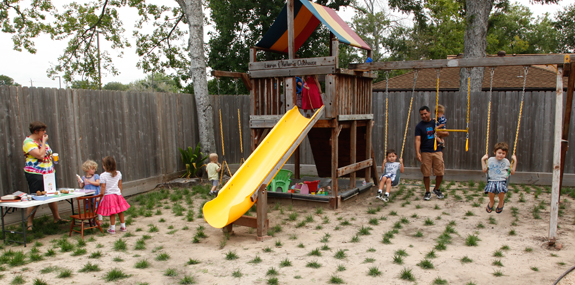
    Grownups AND kids had a great time!

    I refrained from pointing out the pseudo Cartesian Coordinate plane created by my new grass.

    Here’s Wil explaining the Fibonacci Squares to my three moms.

    Math presents!

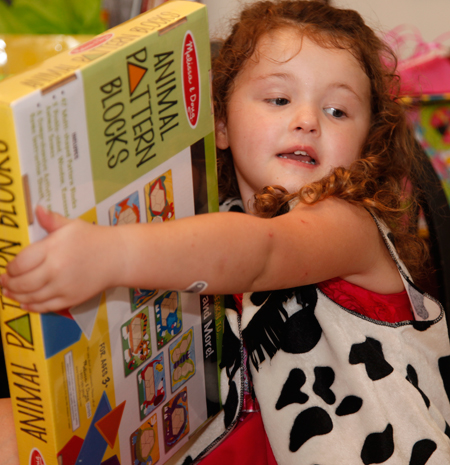
    How fun that K8 got some really neat math presents — like this animal pattern blocks from Melissa & Doug.

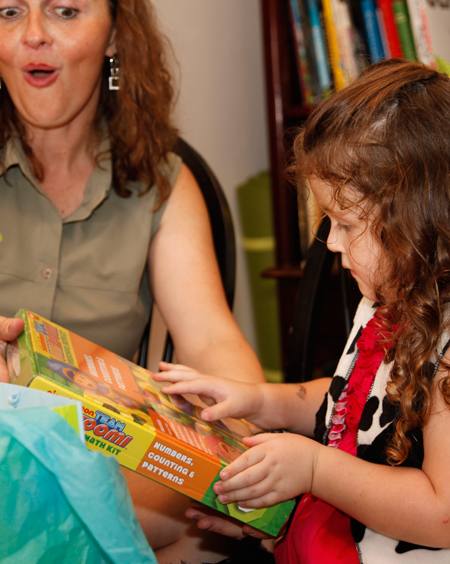
    And we were both excited about the UmiZoomi Preschool Math Kit!

    Even the “Thank You” notes use math!

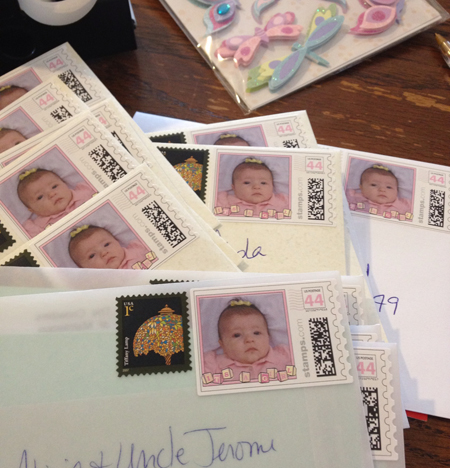
    I pulled out the stamps we ordered for K8’s announcements three years ago. Of course postage has gone up since then so we needed to add one!

    Do the activities with your kids!

    Here are some free downloadable printouts. Use them to play and learn more about Fibonacci.

    Share your thoughts in the comments or on twitter/x.
    Non-disclaimer: We paid for everything at this party. Kaplan gave me a nice discount for the books, though. Thanks, y’all!
    Bad-girl confession: Many of the images on the document stands were stolen from various online sources. Since I was using them for personal use, I neglected to give anyone credit. The downloadable documents shared above have legal images, though.

    You might also like:
  • Birthday Party Fibonacci Style!

    Birthday Party Fibonacci Style!

    This year K8 is turning 3, a Fibonacci number. So we’re having a Fibonacci Birthday Party!

    Her birthday parties the previous two years have been non-math. And I’m fairly certain at some point she’ll want to choose her own birthday party theme. So this might be my last chance to do a Fibonacci birthday party.

    Fibonacci Birthday Party Decorations

    Spiral streamers, pinecones, whole pineapples and sunflowers will adorn the house.

    We’ll have blue painter’s tape outlining the spiral on the tiles of the floor. And we’ll each wear a fun Fibonacci t-shirt!

    Birthday Party Foods

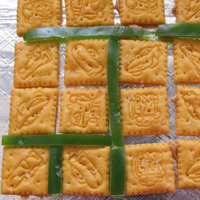
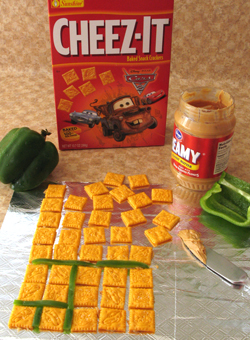
    We’ll have bananas, apples and pineapples as healthy snacks for the kids. And I’ll likely do an arrangement of Cheez-its glued down with peanut butter. Of course there’ll be plenty of free floating Cheez-its too!

    For the grownups, we’ll have broccoli and cauliflower along with cucumbers.

    If we serve a meal, we’ll do lasagna with Fibonacci rectangles outlined in spinach fettuccine noodles!

    Party Favors

    I’ll buy a bunch of Fibonacci paperback children’s books, including Rabbits Rabbits Everywhere and Wild Fibonacci. I’ll print some fun stickers to put on them that read

    And those will be the party favors!

    Fibonacci Birthday Party Gimmicks

    We’ll play some games, including Fibonacci Hopscotch (as suggested by @mathhombre). The adults can play, “What is My Fibonacci Number?” based on the popular party game, Who Am I?

    And the best part – we’ll have live rabbits for the kids to pet!

    What do you think?

    Have you ever given a Fibonacci Birthday Party? or a math party? Do you have any other ideas to make this awesome?

    Please share via twitter or in the comments!

    You might also like:
  • Flash Cards and Marshmallows: Teaching One-to-One Correspondence

    Flash Cards and Marshmallows: Teaching One-to-One Correspondence

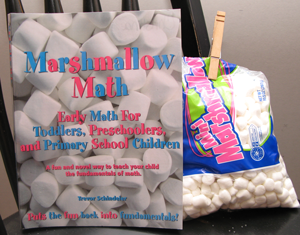
    My mom is a big fan of flash cards. So when she figured out how to use my School Zone Numbers 0-25 Flash Cards with MATH, she was so excited.

    We’ve been doing MATH a lot – but she says we can only do it once a day. I love doing it because I get to eat the MATH after we’re done.

    No fair that we can only do it once each day.

    So here’s what it is…

    There’s a bag full of them in the cupboard. The individual MATHs are tiny white things that taste SO good! They’re chewy and squishy and fun in my mouth.

    They’re about the size of Cheerios. (Oh – and comparing sizes is something called “math” – but Cheerios don’t taste like this, so it must be different).

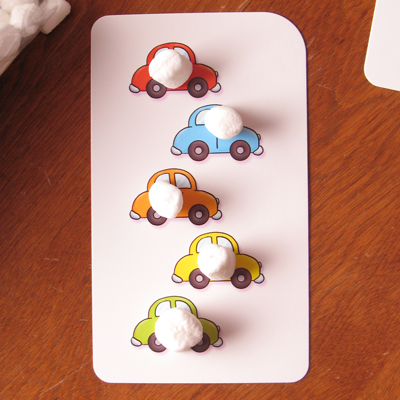
    Taica took the picture at the top of this article so I could show you what I’m talking about. Look to the right of the book in the photo – that’s MATH. YUM!

    You can do it with flash cards.

    She pulled out my number flashcards (made by School Zone and given to me by Granfuffy) and let me pick a card. I chose the one with cars. I like cars.

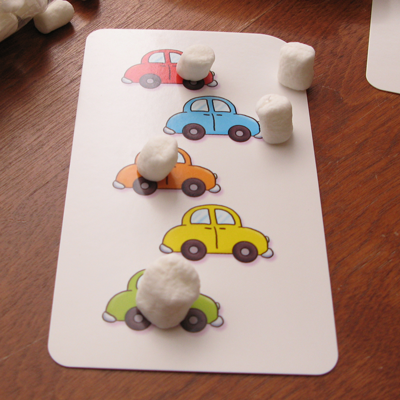
    I put one MATH on each car. Taica counted as I did this. After a while I got really good at putting them on and taking them off. It’s called “one-to-one correspondence,” apparently. Or at least she kept saying that.

    Then she turned the card sideways!

    This was a little harder. But I managed.

    Then upside down – I was really wanting to eat the MATH at this point, but I continued to play along.

    At one point the marshmallow rolled off the car. So I left it there. I knew where it was supposed to be so it wasn’t a big deal.

    When I finished, I was out of MATHs and still had the yellow car left! Like this:

    Taica told me that if I didn’t make sure that the MATH was directly on the car, I would lose the “one-to-one correspondence” and end up with a leftover car.

    We figured it out and then it was time to eat.

    Do you want to try?

    I’m looking forward to the next time – there are some flash cards that have lots and lots of things to match!

    If you want to do it, you can get everything you need at a store. You have to “pay for them” before you take them home, but that’s easy for grownups.

    How do you like your MATH? Let me know in the comments so I can do more stuff. And share this on twitter, too!

    Related articles
  • Egg Hunt Shows Natural Math Ability

    Egg Hunt Shows Natural Math Ability

    I saw natural math ability yesterday!

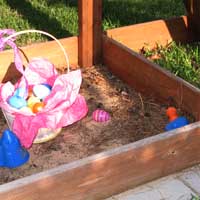
    K8 was hunting Easter eggs at Mawmaw & Pawpaw’s house. She saw an egg inside the sandbox. As she reached into the box she realized the egg was too far away.
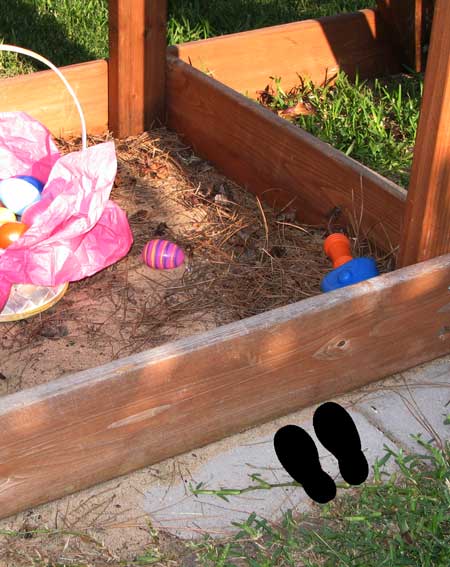
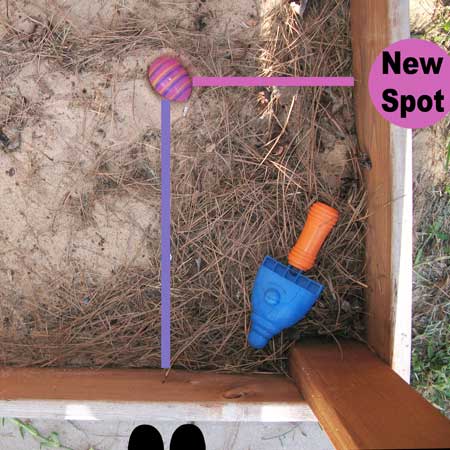
    She was standing where the footprints are. The egg was where the striped egg is:

    She needed to step inside the sandbox.

    The “easy” answer was to step inside the sandbox. But she wanted no part of the gritty sand.

    With no hesitation, she moved from her location, around the sandbox to the new spot:

    This took some effort because she had to squat to get under the ladder. But she had seen that avoiding the sand was possible if she accessed the egg from the other side.

    She recognized and compared distances!

    With no vocabulary or formal training (indeed she’s 2 1/2 years old) she identified perpendicular distance! She assessed which side of the square sandbox would minimize this distance. And she acted on that assessment.

    It’s normal for parents to believe their children are especially smart, gifted or brilliant. I believe that all children are these things.

    Kids have a natural math ability. And so do you.

    What do you think? Share your thoughts in the comments and make sure to share this story with your twitter network!

    Related articles
  • Addition with Tattoos

    Addition with Tattoos

    Seems that I’m learning something called “addition” these days. My parents say things like “two bottles of vitamins plus one bottle of vitamins equals four bottles of vitamins. That’s addition!”

    I’ve figured out that “addition” means you use the words “plus” and “equals” in the same sentence.

    You can do addition with counting too!

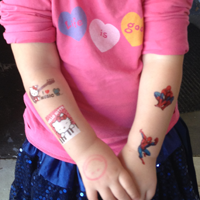
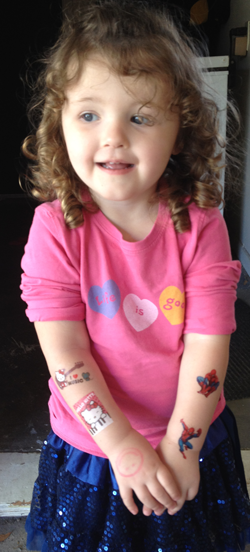
    I’m into tattoos. I have kitten tattoos and Spider Man ones. To put them on, we have to use a wet rag and count – first to 20 and then to 10. My mom says that “twenty plus ten equals thirty.”

    That sentence has both of the important words: “plus” and “equals.”

    So doing tattoos is not just counting, but addition too!

    So tattoos are math!

    My dad doesn’t like me to have so many tattoos. He prefers I use the fun band-aids. Band-aids are okay, but you don’t have to count or add to put them on.

    The more tattoos I put on, the more counting and addition practice I can get. So he should be happy I’m getting lots of tattoos!

    Tattoos and counting teach other stuff also.

    I’m learning “patience.” That means waiting without whining or screaming.

    I don’t mind “patience” when I’m counting. Because I’m doing something fun.

    Do you have a 2 year old like me, that can count? Are you teaching him or her addition too? And what kinds of tattoos do y’all have?

    Let me know in the comments – and don’t forget to tweet out this article.

    Related articles
  • Chuck E. Cheese & Math

    Chuck E. Cheese & Math


    This is a feature article by “K8” Crowder. She is the Daughter of Bon, the publisher of MathFour.com.


    MawMaw & Pawpaw take my cousins and me to Chuck E. Cheese every month. We have a great time running around, playing games and riding rides. There’s not any math lessons there, per se. But Taica (my mom) always manages to get some math in there somewhere.

    Every so often Chuck E. Cheese himself will come out and do a dance with a bunch of kids. Sometimes I go dance too, and sometimes I just hang back and watch.

    Mawmaw says that other people “paid for” Chuck E. Cheese to come out and play. This means I shouldn’t muscle my way in and dance too. I’m not sure what that means. But it seems important to her.

    Grownups “pay for” things.

    Grownups get stuff from other people if they give them stuff. Taica says that’s what Mawmaw means when she says other people paid for Chuck E. Cheese.

    Someone else gave Chuck E. Cheese something so he would dance with their kids. Not with me.

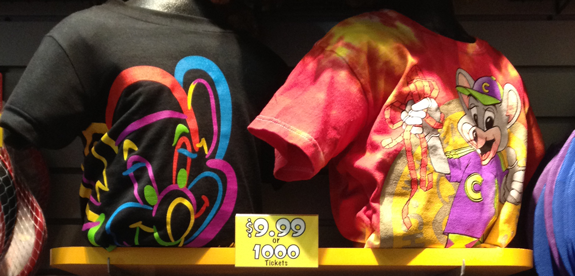
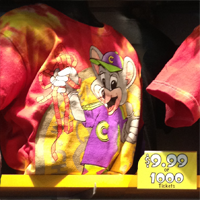
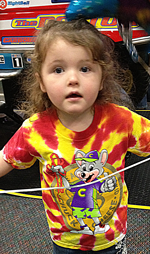
    I got a Chuck E. Cheese t-shirt today – just like my cousin’s. Taica gave the man a bunch of pieces of paper and he gave me the shirt. Taica pointed out to me the sign on the shirts. She said it was math.

    This was it:

    See those numbers on the yellow sign at the bottom? They represent what one grownup has to give another grownup in order for me (or another kid) to score that shirt.

    Taica said that she gave 1000 tickets for the shirt. And then she said, “That means that each ticket is the same as one penny.”

    Tickets are the same as pennies? Really?

    I’ve seen pennies. I like to put them in my mouth. And they do not look like tickets.

    She rambled on about 9 dollars and 99 cents being mostly 10 dollars. And then if you divide 10 dollars by 1000 tickets, you get one penny per ticket.

    I know that dividing means sharing your cookies with your friend. In particular, sharing so that nobody gets mad because the other kid got more. And since dividing is math, cookies are math.

    I’m good with that.

    But I’m not sure how sharing cookies has anything to do with tickets, pennies and shirts.

    But in the end, I got my Chuck E. Cheese t-shirt.

    But I still don’t believe a ticket is the same as a penny!

    What do you think about this tickets and pennies thing? Do you like to give people stuff to get other stuff? Do you use tickets, pennies or something else?

    Write about it below in the comments.


    K8

    K8 is a full time kid who can count to 20 and only miss the number 15. Her favorite songs are “A-B-C-D” and “Had a very shiny nose.” Connect with her in the comments or on Twitter at @KateCrowder.


    Related articles