Here’s another round of good stuff I’ve found online.
One reason we say you can’t divide by zero is because if you divide 0 by 0, you get anything you want. That’s what’s shown in this math cartoon.
David Wees always comes up with some fun stuff: How about some marshmallow math?
Here’s an article about teachers cheating on standardized tests. I’ve heard of this, but it seems to be getting really bad. Of course, if we continue down the road of these horrid tests, I don’t see why teachers wouldn’t do it.
Which language is best for learning math? I would say the native language of the student. These folks over in Borneo seem to think math should be learned in English.
What are the links that you’ve found recently? Share them in the comments!
Here’s a FREE Activity Packet to read and share with your children to get them thinking about how numbers got started.
Somewhere in the past we recognized that we have these “digits” on the ends of our hands. Using these, we created numbers, adding, subtraction, multiplication, division and even fractions!
I’m in Las Vegas for the DevLearn conference this week. Since I’m always thinking math teaching and now I’m seeing casinos, I’m noticing some comparisons between the two. Here they are:
1. You don’t know if you’ll be successful when you sit down at the table.
We think math is something kids can just learn if they sit down and focus. But learning math is as squirrely and unpredictable as the gambling table.
2. Sometimes it’s exciting and sometimes it’s stressful.
When a kid’s totally getting it, it’s very exciting. And when they’re not, they’re pretty stressed.
3. Everyone has a preference.
Just like some people prefer slots over blackjack, kids will tend toward liking one type of math over the other. Even grown-ups do this – I can’t stand calculus.
4. It’s not about who you think it’s about.
When you’re in a casino, you think it’s about you. But it’s not. It’s all about the house.
When a kid’s doing math, it should be all about them. But it’s not.
Often it’s about the bureaucracy, politics and laws surrounding education. Luckily in Texas, where I live, homeschoolers don’t have to satisfy any official requirements. But often parents will impose guidelines similar to the state.
Once a child is asked to follow the book, or keep to a schedule that isn’t their own, it’s no longer about them. It’s now all about the house.
5. There are plenty of distractions to get your mind off the real goal.
In the casino it’s noise, lights and fast images that keep you from making sensible decisions with your money.
At the study desk, it’s the clock ticking away as a child isn’t learning fast enough. It’s the textbook with so many pictures and words designed to appeal to every learning style – instead of just that child’s learning style. It’s the pressure of, “If I don’t get this, I’m totally going to be in trouble.”
So many ways to keep a kid from just relaxing and learning.
6. If you play according to the house rules, the house always wins.
Casinos aren’t able to afford the opulence by chance. They make a ton of money because the statistics are in their favor.
The rules of learning math are set by the house these days. Very few people allow children to discover, experience and enjoy math without quickly stacking the deck against them with things like the Common Core Standards.
Play the house rules, and the house wins. Play the Common Core Standards rules, and the government wins.
Yup – only three. Said by you, the parent and grownup. Say them loud, say them often. And contact me when you wonder where math is in your world – or leave a comment here!
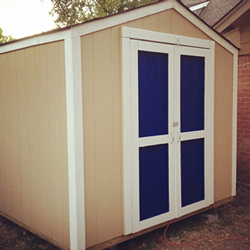
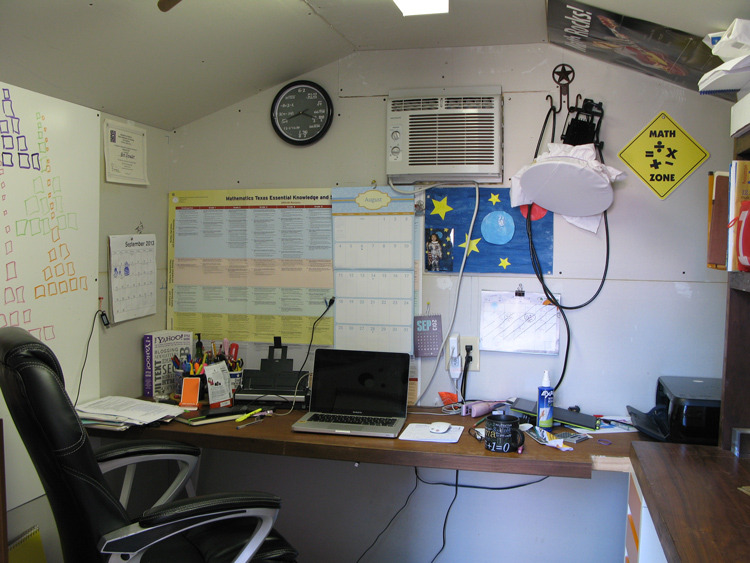
There was a math mom who wanted to help other moms be more math-y. She went into the garage to put together a website. Eight months later her husband was sick of her taking up garage space.
Introducing The Math Shack – safe haven for all things mom and math!
I’ve been collecting some great articles and finally realized how selfish it was that I wasn’t sharing them. So here’re a few:
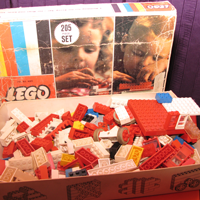
Who doesn’t love Legos? A client of mine gave me a box of Legos from 1973. I can’t wait to use some of Colin’s suggestions in his article 101 Manipulative Lessons with Lego!
Paul Salomon over at Lost in Recursion pretty much has exactly my same opinion of the new “Any Questions” model of teaching in his article Real World Math (Dan Meyer and stuff). The best quote: “Real world math is simply mathematical thinking. It’s personal, it’s real, and it can happen to all of us.”
Richard V. DeMerchant explains some of what happened during a mathematical literacy/numeracy discussion he was involved in. It’s an interesting read to understand some thinking and direction of public schools in the area of numeracy.
I recently read about the difference between a number path and a number line in the book Mastering the Math Rack to Build Mathematical Minds.
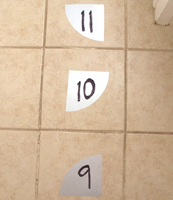
Walking up and down my hallway I noticed the tiles made a very nice number path. So I used some removable whiteboard wall decals and cut them in quarters.
I wrote the numbers 0-11 on them with a permanent marker and slapped them down on the tiles.
Later, while reviewing Carlito C. Caterpillar’s Math House Games for The Homeschool Post, I noticed Carlito suggested the same thing!
My hallway is now a counting lesson!
When we run down the hallway, now, we say the numbers as we step on them. This integrates counting, recognition of numbers and linearity all with body movement – which serves to solidify the learning.
Not only that, but the removable decals don’t hurt the floor!
And there’s more…
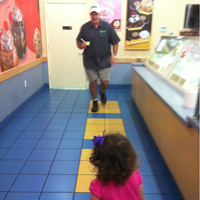
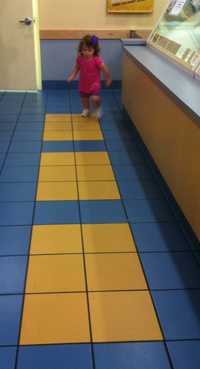
When we were at the ice cream parlor, she noticed the tiles on the floor and started running along them and saying numbers! This was something I didn’t expect at all.
Not only that, the three sets of three tiles created a number path of 11 when you included the two spacers. I don’t know if she recognized this, or if it was merely a coincidence. But it was fun to see.
Will you do it?
You can do this with anything that has a “block” pattern – at home, or in a classroom.
Let me know if you try it – and the reaction of your kids – in the comments below.
Disclaimer: The sweet folks over at MathRack.com sent me a bunch of MathRacks and the book, at no charge, for me to check out and report to you on, if I wanted to. You’ll be seeing more articles about these soon (they are really cool!).
I got engaged in a twitter fight about grammar with Chiew from @aClilToClimb (now @Chiew_Pang). Yes, I’m the math mom, but my college minor is English. And I tend to be a sharpie carrying, sign correcting, grammar vigilante.
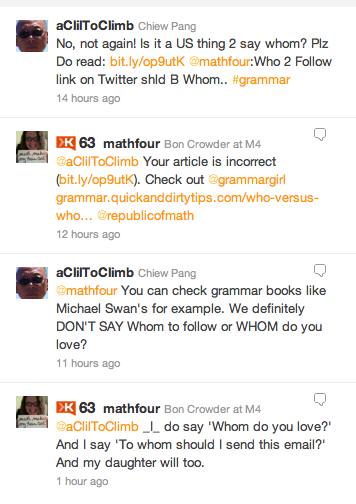
I complained that Twitter has the link “Who To Follow” when it should be “Whom To Follow.” Here’s an excerpt from the fight:
The fight raged on.
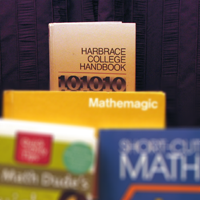
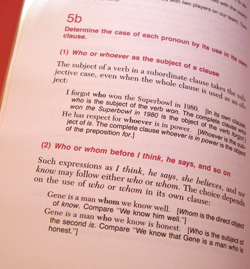
This guy was so adamant that you could use “who” as the object in a sentence (clearly wrong), and just wouldn’t let it go. After quite a few tweets I got curious. “What’s this guy’s deal? All he has to do is pull out the Little Brown Handbook and read it in plain black and white.”
So I went and looked at his site. Holy cow! He’s a grammar blogger!
I couldn’t find his “About” page, but from what I could gather in his fervor in our twitter fight, he’s trying to do for grammar what I’m trying to do for math. Demystify, take away the “have to” rules, and make it accessible, acceptable and appreciated by everyone.
We make the rules!
The rules of grammar, like the rules of math, are created by humans and used by humans. They are changeable.
Of course the difference is that, in grammar, if you deviate slightly from the rules that others follow, you’ll most likely be understood. In math, you really have to define how you’re using things before you begin to work.
For instance, if I wanted to have a conversation with someone about a new way of adding fractions I was inventing, I could totally do it. As long as I started the conversation with, “Here’s how we are going to talk about adding fractions for the next hour…”
Make it your own!
Teaching math and teaching grammar are two of the fundamental things we do for our children. And neither should be hard, creepy or frustrating. They should be a normal, natural flow of who we are as people.
I’d never heard of this thing until grad school. And even then, I never asked what it was. Over the course of time I eventually figured it out, but never really got an opportunity to do much with it. Nor have I had a chance to teach it.
A teacher interview question from Oleg Gleizer’s book inspired me to think about, and learn, this nifty skill.
A ruler-and-compass construction is the construction of lengths, angles, and geometric figures using only a ruler and compass.
This means that you can take one of those “pointer and pencil circle making things” and anything really straight (the side of your new iPhone, the edge of a file folder, etc.) and make pretty much create anything in geometry.
Pretty cool, huh?
I gave it a shot!
I used Oleg’s teacher interview question:
Given a straight line and a point away from it, how would you draw another straight line passing through the point and perpendicular to the original line, using a compass and straightedge as tools?
Can I do it? Of course!
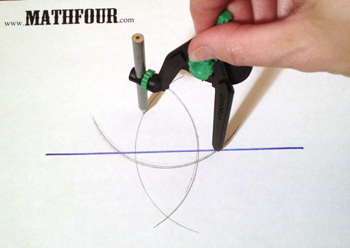
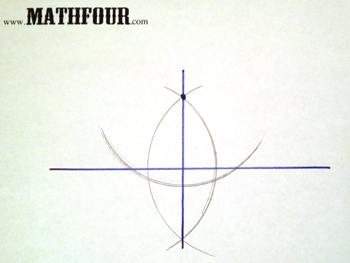
Well… I thought about it and it seemed like I could. So I went out and got a compass, and used a fingernail file as a straight edge. Here’s how I did it:
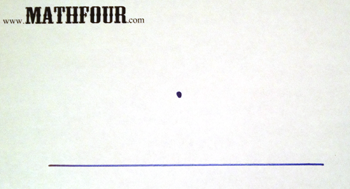
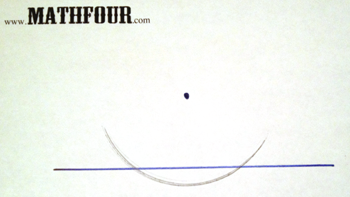
Here’s the line and the point. Easy peasy.
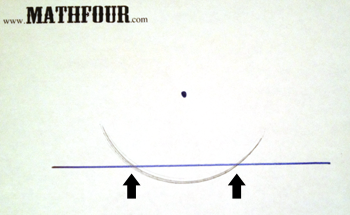
I made an arc from the point through the line, so I would have two spots on the line (where the circle piece went through):
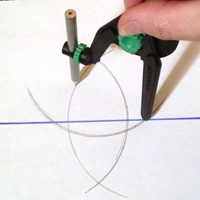
From those two places, I made two more arcs through the point above and long enough to run into each other below:
I connected the point with the intersection of the arcs at the bottom and VOILA: perpendicular line to the other line!
Join me in the journey!
This is the first in my ruler and compass journey. They’re kind of fun, and I want to do more. So I will house them here, for future reference.
Here are the first 10 on my list.
Line perpendicular to given line through given point not on given line. (this one)
Perpendicular bisector of given segment.
Right angle at given point on given line.
Square with given segment as side.
Equilateral triangle with given segment as side.
Hexagon with given segment as side.
Copy a given angle to a given segment.
Line parallel to given line through point not on given line.
Dividing given segment into N equal parts.
Bisecting a given angle.
Grab a straightedge and compass for each member of your family and join me – let me know you’re on board in the comments or via email.






![[50 Word Friday] Say Hi to The Math Shack!](http://mathfour.com/wp-content/uploads/2026/03/image-17.png)