Tag: puzzles

  • Personalized Number Puzzle Gift

    Personalized Number Puzzle Gift

    I’m working on a $0 budget for Christmas this year. And now that I’m in the wrapping phase, I’m noticing some missing checkboxes on my list.

    So my big question this morning was, “How do I stay at $0 — but still give something they’ll love?”

    Make something cool!

    My abilities redefine crafty. Well, they defy crafty anyway.

    I remembered seeing this number puzzle in a textbook a few weeks ago:
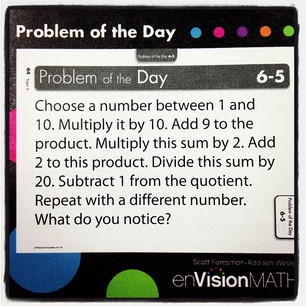
    I dissected it and came up with a formula for recreating the number puzzle using any numbers I wanted.

    And I figured out how to make it so the end result would be anything — not just the number you picked at the beginning.

    Personalized number puzzles as gifts!

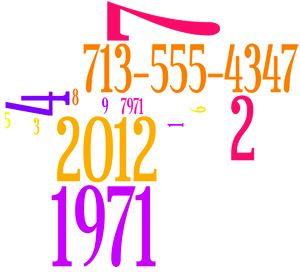
    So I’m taking each person’s “special number” and creating a number puzzle out of it. For some, that’s their birth year. For others it will be their favorite number or last four digits of their phone number.

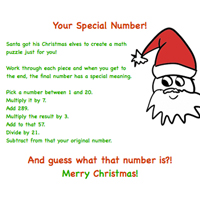
    And I’m making them into a pretty little gift sheet:
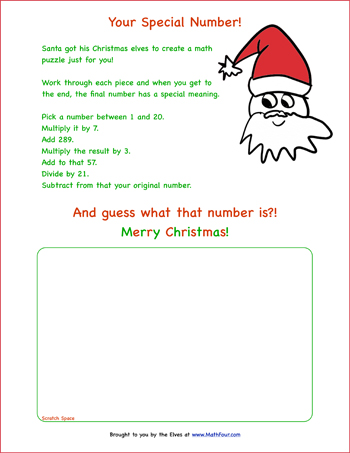
    You can do it too.

    I’ve put all this neatly in a spreadsheet so you can put in your own numbers — and make a number puzzle gift for your cherished math people!

    1. Open the spreadsheet and the document.

    2. Put the person’s number in the green box next to “Number to get.” Use their year of birth, birth date, favorite number, graduation year, etc.

    3. Put some various numbers in the green boxes next to a, b, c and d. Or use the ones that are there. They will work fine.
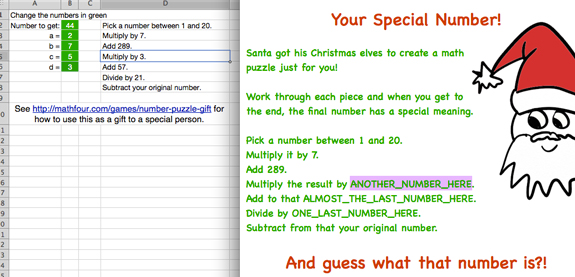
    Christmas number gift by MathFour.com

    4. Copy the numbers in the sentences in the spreadsheet to the corresponding places in the cute document.

    5. Print it, tag it and hang it on the tree!

    Have fun!

    What numbers will you pick? To whom will you give it?

    Share it in the comments and don’t forget to share on twitter/x too!

    You might also like:
  • 8 Digit Puzzle — Rules, Downloadable and Questions to Ponder

    8 Digit Puzzle — Rules, Downloadable and Questions to Ponder

    A friend of mine is putting together an amazing class on using mathematics as meditation.

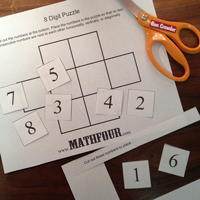
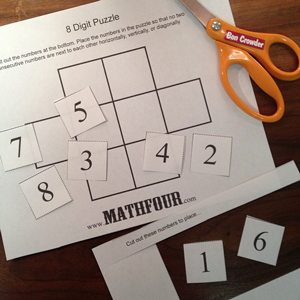
    One of the tools she’ll be using is the 8 Digit Puzzle.

    The 8 Digit Puzzle

    To play, download or draw out the puzzle board on a piece of paper.

    Then cut out the numbers 1-8 from slips of paper. Make sure your numbers will fit in your puzzle board’s boxes.

    You can download the 8 Digit Puzzle Board & Numbers here (it also has some fun questions to ponder).

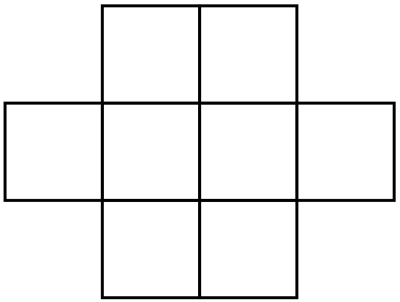
    The board looks like this:

    Place the numbers in the puzzle so that no two consecutive numbers are next to each other horizontally, vertically, or diagonally.

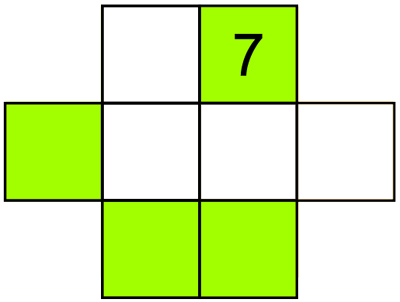
    For example, if you place the 7 as it is in the picture here, the other colored spots are the ones available for 6 and 8. The white spots are “off limits” for the consecutive numbers of 7.

    Play it alone or with your kids.

    The best part about this (and my friend’s class) is that you get to think about how you’re doing the puzzle. How do you process the rules and arrive at a solution?

    And then you can share your methods with others!

    This lets you (and them) discover new and curious ways of doing things — creating new neural pathways for more learning!

    Ask questions!

    If you get frustrated, don’t go right to googling the solution. First ask yourself these questions:

    • For each number, ask, “How many consecutive numbers does this have?” For example, 5 has two consecutive numbers — 4 and 6.
    • For each box in the puzzle area, ask, “If a number is here, where can its consecutive numbers go?”

    And there’s also these questions to ask as you work through:

    • Is there really a solution to this?
    • If there is a solution, is there any other solution?
    • Are there many solutions? How many?

    Get freaky!

    The 8 Digit Puzzle works great. But could there be a 6 digit puzzle with the same rules? Or a 7, 5 or 15 digit puzzle?

    Can you create it?

    Download the 8 Digit Puzzle Board & Numbers now and have fun. Don’t forget to share via Twitter/X. And let me know how it goes in the comments!

    You might also like:
  • A Halloween Puzzle: Rubik's Cube

    A Halloween Puzzle: Rubik's Cube

    Part of Wordless Wednesday

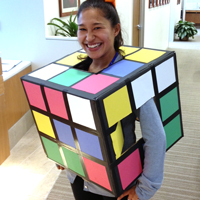
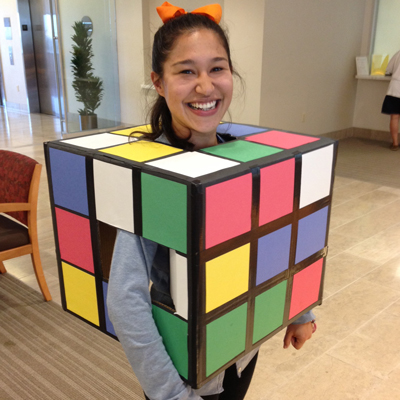
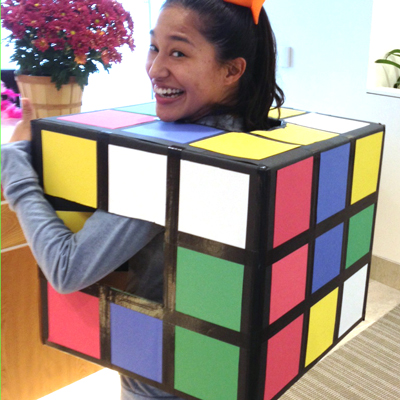
    This is alli (lower case “a”) at my doc’s office, wearing her fun Rubik’s Cube costume. From the photos below, can you deduce what 10 color squares aren’t shown — 9 on the bottom and one where her neck is?

    As a bonus — is it actually possible to twist the Rubik’s Cube to show the patterns of the five sides as she has them?

    Share your thoughts in the comments or on twitter/x.

    You might also like:
  • Riddle: What are the ages of the kids?

    Riddle: What are the ages of the kids?

    I met the dad of a homeschool family on the plane yesterday who told me a riddle. Now that I’ve enjoyed solving it, I thought I would share it with you:

    Two math moms, Lisa and Gwen, are carpooling to a play date with Heather. Lisa is telling Gwen about Heather and her family. The conversation turns to the ages of Heather’s three children.

    Lisa says, “If you multiply their ages together, you get 36.”

    Gwen says, “How nice, but that doesn’t give me enough information to determine their ages.”

    “Good point. If you add up all of their ages, you get that house number,” Lisa says pointing to a house.

    “Interesting,” Gwen says, “but that’s still not quite enough information.”

    Lisa says, “Well, you’ll meet two of them soon. But the oldest is with her grandma.”

    “Oh, great,” Gwen says, “They’re perfect ages to play with our kids!”

    What are the ages of Heather’s kids?

    The end of the riddle is “what are their ages?” But the real value in the riddle is the logic and work it takes to arrive at the final answer.

    The “answer” is easy, but getting there (or explaining how you got there) is much more challenging.

    There’re not that many possibilities. So the trick is to imagine what each mom is thinking as they talk. What makes Gwen think, “that’s not enough information”?

    Share this with your children.

    Tell this riddle to your children. Let them play with it. If they get discouraged and want a hint, ask them these questions — one at a time — and see how far they can get:

    • What are all the possible answers? In other words, what sets of three numbers can multiply to give you 36?
    • Lisa points to a house number. What are the possible numbers that are the house number?
    • Go through each possible answer and imagine what Gwen was thinking when she said, “that’s not enough information?”

    And there’s more…

    When your child solves the riddle, see if he or she can try to replicate it with other numbers. What kinds of things do you need to make another riddle just like this one, but with other numbers?

    And don’t forget to share what happens in the comments below or on twitter/x!

    (P.S. I’m specifically not giving the solution here because I believe it’s valuable to find the solution independently. If this angers you, tweet me and I’ll give you the answer.)

    You might also like:
  • Math Puzzle Inventing – Can You Do It?

    Math Puzzle Inventing – Can You Do It?

    This is the 6th in the draft purge series. It was first drafted in May 2011. If you have examples of this type of math puzzle, please include them in the comments.

    Since the first time I used email back in 1991, people have sent me various versions of the puzzle “I can guess your birth year.” The results end up as something like:

    • This year (and this won’t work for any other year)
    • Your phone number
    • Your birth date
    • Your favorite number and the year you were born
    • Your blood type

    Okay, that’s exaggerating a little. But it seems like these puzzles get wilder and wilder.

    When I receive these emails, it’s usually from a family member with the preface: “Can you tell me how this works?”

    So I’ve dissected tons of these over the years. And I’ve always thought, “You know – I could totally make my own math puzzle like this!”

    You can invent your own math puzzle!

    The trick to this math puzzle is to add zero and multiply by one in clever ways.

    First you pick the result you want. Like the last four digits from my childhood phone number: 4347.

    Factor it into primes, if you can. Let your kids do this by hand if you want them to have practice on factoring. If they struggle, you or they can calculate the prime factors using an online service like this one.

    Mine is: (3)(3)(3)(7)(23)

    If you can’t factor into primes, subtract a single digit number and try it.

    Like 4349 – it’s prime, so subtract 2 and then use that to do the rest of this.

    At the end of the whole math game you’ll just need to put one more step that includes subtracting this number.

    Start constructing the math game.

    The starter line for your game will be “Choose a single digit number from 1 to 9.”

    We’re going to construct our game using this, with x as the chosen digit.

    \(\frac{(x \times 11)-x}{10} \times 3 \times 3 \times 3 \times 7 \times 23 \div x\)

    Here’s how it will work. Let’s say they choose the number 8. It will look like this:

    \(\frac{(8 \times 11)-8}{10} \times 3 \times 3 \times 3 \times 7 \times 23 \div 8\)

    But we can’t just give them that.

    We have to make it nifty. After all, a math game with very little math isn’t much of a math game.

    Change some of the prime factors into addition or subtraction problems. And combine some of the smaller ones.

    Instead of (3)(3)(3)(7)(23), we now have (7-4)(63)(20+3).

    \(\frac{(x \times 11)-x}{10} \times (7-4) \times 63 \times (20+3) \div x\)

    Keep on playing, calculating and being clever!

    I’ve left off my playing here:

    \(\frac{(x \times 11 \times 7)-(x \times 7) – (x \times 11 \times 4) + (x \times 4)}{10} \times 63 \times \bigg(\frac{20}{x}+\frac{3}{x} \bigg)\)

    I’ll keep going until I have a nice set of instructions. Then I can do this on my Ma, Paps, my siblings and all my childhood friends that remember that phone number.

    And it’s a great learning tool!

    Kids will learn and practice order of operations and algebra. At the same time, they create something they can email or perpetrate on another person – preferably a grown up – and impress them!

    Share your thoughts in the comments or on Twitter/X.

    You might also like:
  • Highlights Magazine Math Puzzle – More than Meets the Eye

    Highlights Magazine Math Puzzle – More than Meets the Eye

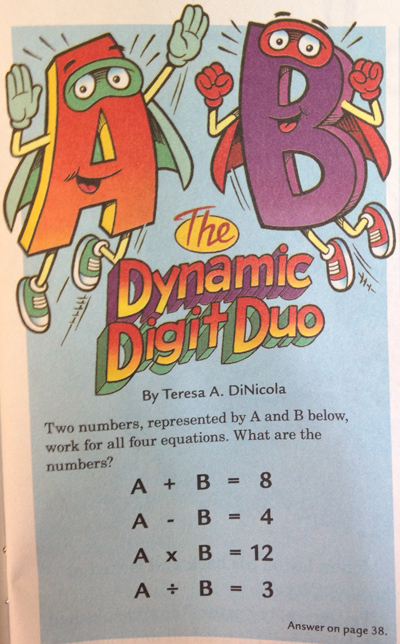
    The March 2012 edition of Highlights magazine for kids fell in my lap this morning. Thumbing through it, I found a fun little algebra puzzle.

    After looking at the equations and discovering my solution, I began to wonder some things. Then I realized that these ponderances of mine were good for kids to consider as well.

    Let the curiosity flow!

    Here are the extra questions you can offer your children in case they’re curious:

    • Did you use all four equations to decide your answer?
    • Could you have used three, two or only one of the equations to decide your answer?
    • Try to use only one equation to decide an answer. Did you discover anything?
    • Try to use only two equations. What did you discover now?
    • How about three – what happens when you choose three equations?
    • Can you make a puzzle like this of your own?

    How about you?

    As a grown up, what do you discover about math in this Highlights puzzle? What do you see your children doing with these extra questions?

    Share in the comments – and don’t forget to tweet this out!

    You might also like:
  • The Tower of Hanoi Math Game

    The Tower of Hanoi Math Game

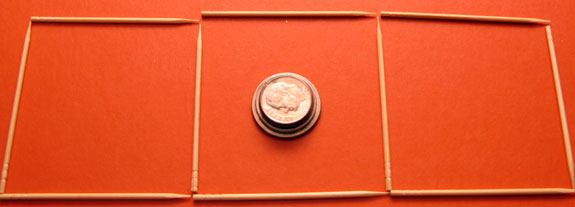
    One of my favorite math games as a kid was The Tower of Hanoi. I had no idea what it was called until college, though. To me it was another cheap wooden puzzle. Or a game you could play with four coins and 10 toothpicks.

    The object of the game:

    • Move the stack from where it is, to another square or post.

    The rules of the game:

    • You can only move one disk (or coin) at a time.
    • You can only put a disk (or coin) on top of one that’s bigger – physically. (I.e. you can’t put a big one on top of a smaller one.)

    You can play it online for free or buy a physical version in classic or kid-friendly versions.

    How can you use The Tower of Hanoi with your kids?

    In the Tower of Hanoi puzzle, the math is vast – especially for such a simple little puzzle. But the math can be discovered gradually.

    Present these challenges to your kids, one at a time:

    1. Move the stack according to the rules (just get it to another place.)
    2. Move the stack according to the rules in as few moves as possible. How many moves is that?
    3. Make the stack smaller or larger. Then move the stack according to the rules in as few moves as possible. How many moves is that?
    4. Repeat challenge #3 with many different numbers of coins/disks. Use cut out pieces of paper if necessary.
    5. Determine how many moves it would take to move a stack of 100 disks. Or 1000 disks.
    6. Then figure out a way to say this without numbers. In other words, create some sort of formula that will tell you how many moves you need to move any number of disks.

    These challenges might range over many many years. I first learned of The Tower of Hanoi when I was about ten. And I’m still learning about it 30 years later.

    Oh, and try to resist giving them any answers – ever. Instead let them work on it in their spare time.

    Your turn!

    Have you played The Tower of Hanoi math game, or a version of it? Do you remember the first time you came across it? Did you learn or teach math with it?

    And how will you introduce it to your kids?

    Share your thoughts in the comments!

    Related articles
  • Frabjous Puzzle Sculpture from the Museum of Mathematics

    Frabjous Puzzle Sculpture from the Museum of Mathematics

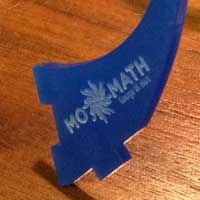
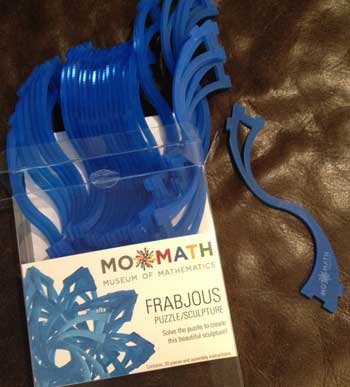
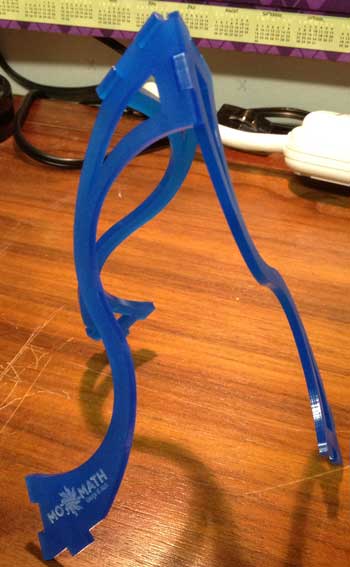
    MOMath, the Museum of Mathematics, sent me their new puzzle Frabjous – a design by George W. Hart.

    I had to wait for Daughter to be in bed before digging in – the box states, “Recommended for ages 16+.”

    I was pretty sure that a precocious 10 year old could handle it but I was unwilling to risk a 2 year old eating my cool puzzle.

    My “solution” to the puzzle…

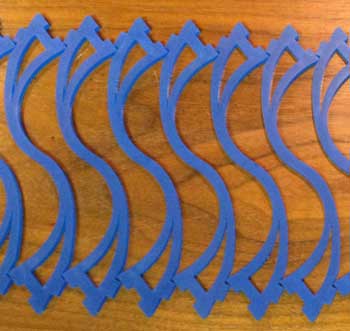
    Oh, my… all the pieces are exactly the same!

    No biggie, though – I’m pretty smart. “I can do this!” I thought.

    I thought.

    After a while, I felt like maybe I was doing it right, and maybe not. Here’s the view from the top when I had 12 of the 30 pieces left to go:

    Guess what – the instructions clearly state “check that no parts are touching in the interior.”

    Everything in mine is touching!

    I’m (maybe) throwing in the towel!

    I keep looking at the mostly-built thing. It’s pretty, even in its unfinished state. I’m not one to quit, but I will pause temporarily.

    So for now, I have the wad of blue looking at me everyday. Staring. Saying, “Are you smart enough to finish me?”

    Sometimes I tell it to hush.

    Sometimes I google it.

    Windell Oskay, an Evil Mad Scientist, has some great images on his writeup of making your own Frabjous. I’ll likely use these when I get the courage tackle this thing again.

    I could just watch the video.

    I’m against looking in back-of-the-book answer pages. So I’m certainly not about to let a video tell me how to work a puzzle.

    But my cantankerous attitude doesn’t mean that you get deprived. Here’s the video:

    You can buy the Frabjous online for $29 plus about $7 shipping within the U.S. Technically, you can save the $36 bucks and build your own. But that might be a real pain. Plus, if you buy it from the Museum of Mathematics, you support them!

    What do you think? Do you want one? Have you built one? Share your thoughts and links to pictures in the comments.

    The Museum of Mathematics (MOMath) will open in New York City in 2012.

    Related articles
  • HELP – Logic Puzzle Announcing The Homeschool Blog Awards

    HELP – Logic Puzzle Announcing The Homeschool Blog Awards

    Okay, y’all, I’m in over my head. I’m trying to create a logic puzzle as a nifty way to announce The Homeschool Blog Awards. Having never created a logic puzzle before, I thought, “How hard can it be?”

    Well, pretty darn hard.

    So I thought I’d put my start out there, as well as the solution, and see if I can get some help from y’all.

    Read the puzzle, try to figure out the solution, then suggest in the comments one or more clues that I should add (or get rid of).

    The Puzzle

    The Homeschool Post is the sponsor of The Homeschool Blog Awards every year. Writers of The Homeschool Post aren’t allowed to win, nor be nominated. So some of the writers of thought it might be fun to do a “within the family” blog award for themselves.

    After all was said and done, they decided to pass all information over to me, the math mom in the team, and let me figure out the winner. Alas, the information wasn’t well organized. So I had to figure out which blog went with which person, who voted for whom and who was the winner.

    The Clues

    Six of the writers decided to participate. They were

    • Lana (like Banana)
    • The writer of OK Homeschool Mom
    • Heather
    • The writer of Knit 1 Kids 4
    • Gidget
    • Rachel
    1. Heather said, “I love everyone. I’m just voting for them all!”
    2. Someone suggested that nobody should vote for themselves. So they agreed on that.
    3. The writer of Finding Joy voted for three people, including Heather and Kristal.
    4. Everyone who voted for Rachel also voted for the blog I Love My 5 Kids.
    5. Everyone but Gidget voted for the author of the blog SprittiBee.
    6. The author of  Homeschooling Unscripted only got two votes.
    7. Donnetta and Gidget got the same number of votes. As did the authors of SprittiBee and Knit 1 Kids 4. Also, Rachel and the author of I Love My 5 Kids had the same number.
    8. The author of Finding Joy is very popular – everyone voted for her.

    The Solution

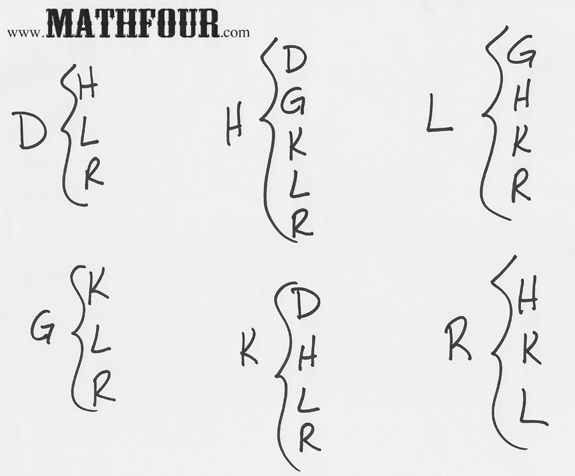
    Here is the solution of who voted for whom. The initial of the person is on the left and the initial of the people for whom they voted is in the curly brackets. Click on the picture to enlarge.

    Owners/writers of the blogs are here:

    • Donetta publishes OK Homeschool Mom
    • Gidget publishes Homeschooling Unscripted
    • Heather publishes SprittiBee
    • Kristal publishes Knit 1 Kids 4
    • Lana publishes I Love My 5 Kids
    • Rachel publishes Finding Joy

    Don’t forget…

    Suggest a clue in the comments!

    Related articles
  • In How Many Ways Can You Solve the Thiagi Circles Jolt?

    In How Many Ways Can You Solve the Thiagi Circles Jolt?

    I was at a seminar yesterday with world famous (and awful fun) Thiagi. He keeps his participants on their toes with small activities called jolts. Jolts are defined at interactive experiential activities and:

    …force participants to re-examine their assumptions and revise their habitual practices.

    One jolt we did yesterday got me to thinking about math. Okay, many of them had me thinking about math. But this one was about the multiplication principal of counting and sets.

    The multiplication principal says that if you have 7 ways to do the first thing and 3 ways to do the 2nd thing, then you’ll have 3 * 7 = 21 ways to do them together. Assuming you pick one of each.

    So if I want a sandwich (tuna, ham or turkey) and a side (chips, onion rings, fruit or fries) for lunch, I will have the option of 3 * 4 = 12 different lunches.

    The Thiagi Circles Jolt

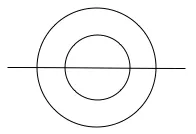
    Here is the Circles Jolt that Thiagi offered: Draw this figure without ever lifting your pencil or retracing over any lines (or curves):

    It isn’t hard, as you probably see. It takes anywhere from 10 to 45 seconds to figure it out. The question is, “Is there another way to do it than the one I thought of?”

    So here are the ways I immediately thought of in the Thiagi Workshop:

    The fancy pants teacher’s pet, Mark, was asked to demonstrate the answer. And he did it in an even different way! So I saw that there were 8 more ways to do it:

    Trying to trump Mark and be the new teacher’s pet, I announced that there were indeed 16 ways to accomplish Thiagi’s goal.

    And here I am. Still trying to win the favor of the teacher by producing the 16 ways via blog and video.

    There are 16 ways because of the Multiplication Principal of Counting.

    Notice there are four questions to answer when solving this:

    1. Do you start from left or right side of the drawing?
    2. Do you start by drawing the outer circle or go through and start at the inner circle?
    3. Do you go up or down on the first circle you draw?
    4. Do you go up or down on the second circle?

    Each question has two different options. So there are

    2 sides to start from * 2 circles * 2 directions to go in the 1st circle * 2 direction in the 2nd circle

    2 * 2 * 2 * 2 = 16 different ways to draw the diagram!

    Teach this with experiments.

    Although you now know how many there are, don’t teach it this way. Instead, just give the jolt to the kids. Once they solve it, show them “your way,” which should be any way that is different than theirs.

    Then tell them that for ever unique solution, you’ll give them $1. (Thiagi gave out $1 bills yesterday, too!)

    Once they come up with all 16, offer the extra $4 for some way they can show the number 16 with numbers (logically based on their solutions). They might come up with 2 * 8 or 4 * 4, as long as they can group their drawings in logical bundles.

    What do you think?