

Tag: money

  • The Math Behind Carpooling Toddlers

    The Math Behind Carpooling Toddlers

    But should it be?

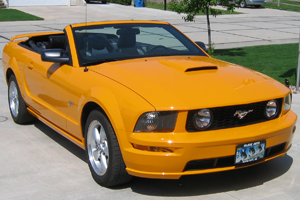
    In my Mustang I get 20 miles to the gallon. Currently gas is hovering at three dollars per gallon. Which means for every 20 miles I drive, it costs me $3.

    It’s 5 miles to school from my house. If I take her to school and back in the morning, and then retrieve her in the evening, it takes me 20 miles – or $3. (These are true numbers – even though they are working out rather nicely.)

    Which means in addition to tuition, it’s another $15 a week. So in a 40 week school year, I spend another $600 in gas!

    Maybe I should consider toddler carpooling…

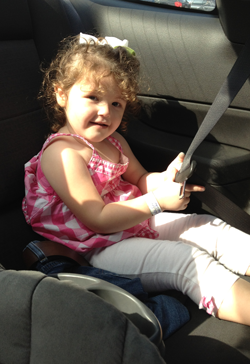
    But is it worth it to buy another car seat?

    Some forward facing car seat models can go up to 80 pounds. Even in the 97th percentile of weight, our daughters won’t grow out of one of these car seats until they’re about eight years old. That’s another five years!

    The first car seat I find on Amazon.com that goes to 80 pounds is the Cosco Juvenile High Back Booster Car Seat. It’s $46.54 and eligible for free shipping. Add tax, and you’re right at $50.

    Sharing the duties with my neighbor means cutting my gas bill in half. So I would save $7.50 each week by carpooling. After seven weeks of carpooling, I would save

    \(7 \times \$7.50 = \$52.50\)

    That car seat would pay for itself after less than two months!

    Will it be worth it long term?

    After this year, I have three more years of carpooling available before we start homeschooling.

    Three years at 40 weeks/year in school and $7.50 savings per week gets me at

    \(3 \text{ years} \times 40 \text{ weeks} \times \$7.50 = \$900\)

    I’ll save $900 over the next three years. And so will my neighbor!

    I’m off to buy the carseat!

    What will you do?

    Do you take your kids to a co-op or day-school? Is there a family you can carpool with that you haven’t yet considered because of the logistics? Will you now work the numbers to see if it makes sense?

    Share your thoughts in the comments!

    Related articles
  • A Human Interest Story Involving Math: The $100 Battery Charger

    A Human Interest Story Involving Math: The $100 Battery Charger

    My day job colleague told a beautiful story yesterday. He had been washing his car late at night, in the dark, and was approached for assistance. He is generous beyond belief, and apparently he made a real impact.

    Oh, and it involved a little math.

    I was washing my car the other night and really getting after it. I had the scrubbing brush going and was really making progress on getting the car clean. I was totally focused and I felt a tap on my shoulder. It startled me and I turned around to be faced with a large African-American woman who said, “I’m sorry, I don’t mean to interrupt, but we’re having car problems. Is it possible you can help us? I think we need the battery jumped.”

    I looked down the street and saw no other people and no car. Within a split second I remembered my latest purchase: a wireless battery charger that needs no people, no cables and no extra car to jump a battery. I got it out of my garage and handed it to her.

    “I’m in the middle of washing my car. Why don’t you borrow this? It should help.”

    She thanked me and walked away with the charger. I got back to washing my car.

    Five minutes later there was another tap on my shoulder. Another African American woman was standing there holding a five dollar bill. She offered it to me.

    “Oh my goodness, no,” I said. “I’m not taking your money. I’m just glad I could help.”

    Another 5 minutes went by and I saw one of the ladies put the battery charger close to my garage. I was really getting into the car washing at this point – suds everywhere – so I didn’t pay much attention.

    When I was returning my carwash supplies to the garage, I saw a crisp new $100 bill on top of the battery charger!

    That thing was only $40 – and they just gave me $100 to borrow it!

    This is a wonderful and touching story. These ladies were having difficulty finding someone to help them. Not only did my friend help, he also freely gave them something to use and trusted without question that they would return it.

    They, too, were moved by his generosity.

    The numbers don’t work.

    It looks like this:

    • Battery charger cost: $40
    • “Rental fees” offered: $5
    • Shown gratitude: $100

    The numbers don’t make sense. And in a way they shouldn’t. The $100 bill wasn’t really money. It was the biggest, fattest, loudest thank you note ever written. There’s no value you can place on someone being free and generous and trusting.

    It still goes in as $100 in the eyes of the bank. But what do they know?

    Notice the math and share the story.

    When you share this story, point out the math. Especially if you tell this in front of (or to) children. Making the connection of generosity and emotion to math will help everyone see how integral math is in our lives.

    How about you? Do you have a story of generosity that you’re just now realizing involves math? Share it in the comments!

    Related articles