Category: Resources

  • Free Activity Packet – How Your Kids Can Ponder Numbers

    Free Activity Packet – How Your Kids Can Ponder Numbers

    Here’s a FREE Activity Packet to read and share with your children to get them thinking about how numbers got started.

    Somewhere in the past we recognized that we have these “digits” on the ends of our hands. Using these, we created numbers, adding, subtraction, multiplication, division and even fractions!

    Get it free here!

    When you get it, unzip it and you’ll have all this great stuff:

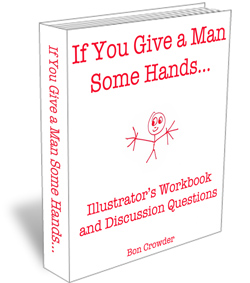
    • If You Give a Man Some Hands ebook (IfYouGiveAManSomeHandsByBonCrowderMathFourDotCom.pdf)
    • If You Give a Man Some Hands Illustrators Workbook (IfYouGiveAManSomeHands_IllustratorsWorkbook.pdf)
    • If You Give a Man Some Hands Supplemental Questions (IfYouGiveAManSomeHands_Questions.pdf)
    • A list of math resources for homeschooling and afterschooling parents (HomeschoolMathResources.pdf)
    • A reprint of the article 9 ½ Ways to Homeschool Math (WaysToHomeschoolMath.pdf)

    Have questions? Ask here or shoot me a note with the contact form.

    Related articles
  • Links for Learning October 26, 2011

    Links for Learning October 26, 2011

    I’ve been collecting some great articles and finally realized how selfish it was that I wasn’t sharing them. So here’re a few:

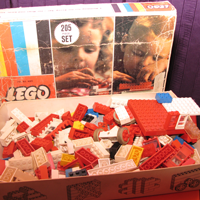
    Who doesn’t love Legos? A client of mine gave me a box of Legos from 1973. I can’t wait to use some of Colin’s suggestions in his article 101 Manipulative Lessons with Lego!

    Educating grace has some interesting comments on designing teacher preparation programs. It’s a little deep, so grab a cup of coffee before digging in.

    Paul Salomon over at Lost in Recursion pretty much has exactly my same opinion of the new “Any Questions” model of teaching in his article Real World Math (Dan Meyer and stuff). The best quote: “Real world math is simply mathematical thinking. It’s personal, it’s real, and it can happen to all of us.”

    Richard V. DeMerchant explains some of what happened during a mathematical literacy/numeracy discussion he was involved in. It’s an interesting read to understand some thinking and direction of public schools in the area of numeracy.

    And then I found this article about Danica McKellar, including an interview with her, about the image her math books for girls are portraying. Curious. And the jury’s still out for me.

    What about you? Found any great links for learning lately?

    Related articles
  • Where to Find the Best (and Cheapest) Math Resources

    I learned something last night from Santo at FoMaP (formerly QED Insight). In his post Students Don’t Read Textbooks he wrote that textbook manufacturers place restrictions on authors so they can maintain profit levels.

    These restrictions include reducing page count (each page costs money to print) and increasing topics (the more topics, the more they can charge). The result is a textbook covering lots of stuff in the shortest amount of space possible.

    Doing math is not the time to save the trees.

    I’ve said this to students at least 1,000 times. I use cloth diapers, so don’t think I’m a wasteful snot. I just know that to do math, you gotta write. A lot. And squishing things up when you do it never yields a happy ending.

    So I was horrified to learn of this artificial condensing of math topics in textbooks. This led me to consider some alternatives.

    You can find non-condensed math books in lots of places.

    There are the Life of Fred books which offer math using stories. The Living Math! folks have done tons of reviews of math literature. And it doesn’t have to be contextual lit, either. Dan Bach at Dan’s Math is writing an algebra book to be released this summer that doesn’t have the restrictions mentioned above.

    And you can find free stuff.

    There is Free Math Help everywhere online. Homeschool Math has a list longer than your arm of online stuff. There’s Khan Academy, Math.com (cool url, huh?), and even the U.S. government has one!

    So there’s no reason students or parents have to tolerate this high priced, squished content textbook thing anymore.

    Do you know of other math resources? Please share them in the comments.