Tag: video

  • How to Calculate Permutations and Combinations

    How to Calculate Permutations and Combinations

    Yesterday’s post showed how to tell the difference between permutations and combinations. The day before, I posted about n! and what the heck to do with it. Now you’re ready to do some calculations.

    Here’re the two formulas and how they compare:

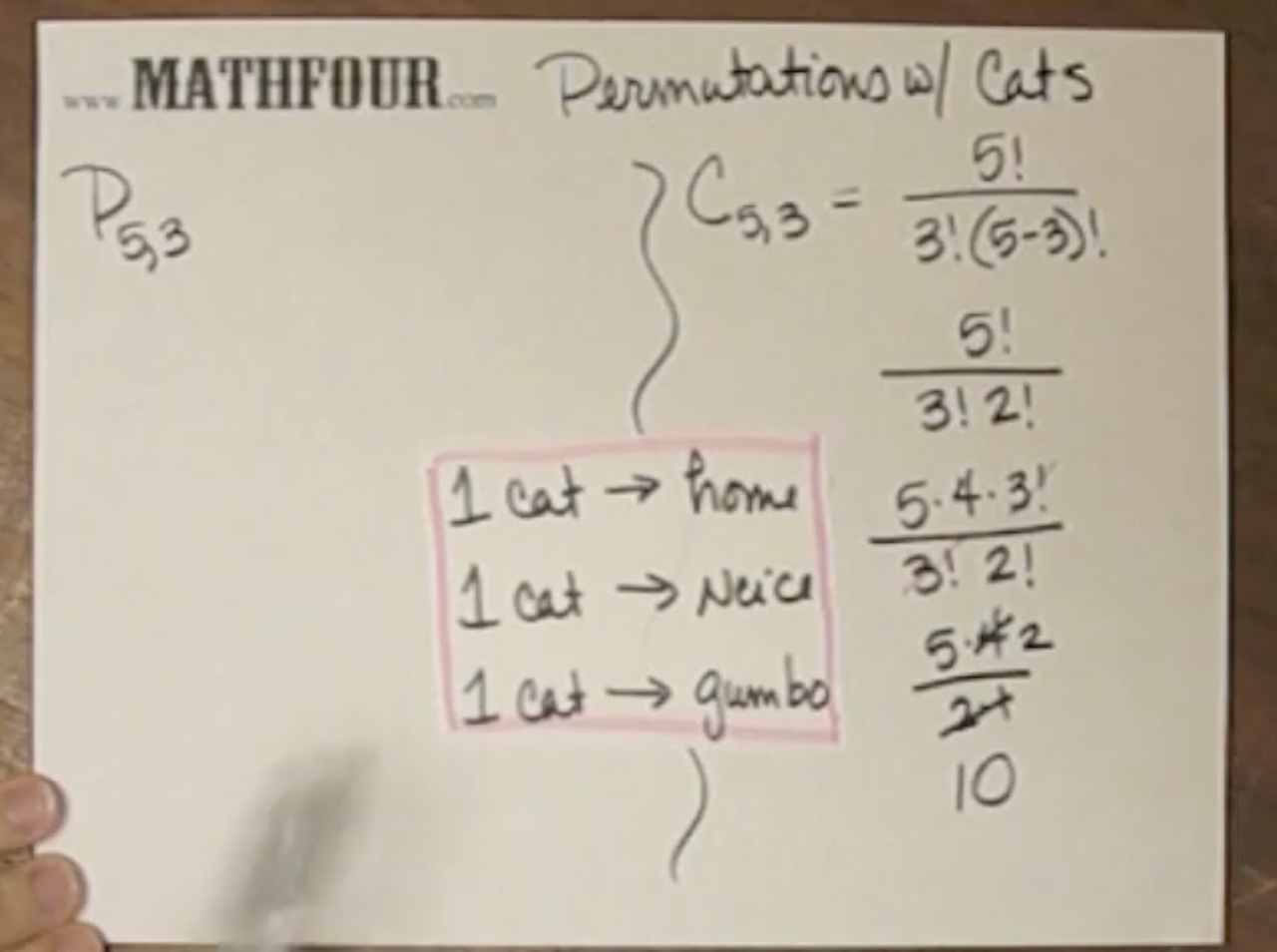
    And here are the numbers worked out from the video above:

    Here’s an application of it using the cat example from the first video of yesterday’s post:

    Post your questions and thoughts in the comments section.

  • Permutations and Combinations – How to Tell the Difference

    Permutations and Combinations – How to Tell the Difference

    Have you ever taught permutations and combinations?

    Do you use the words, “In permutations, order matters”?

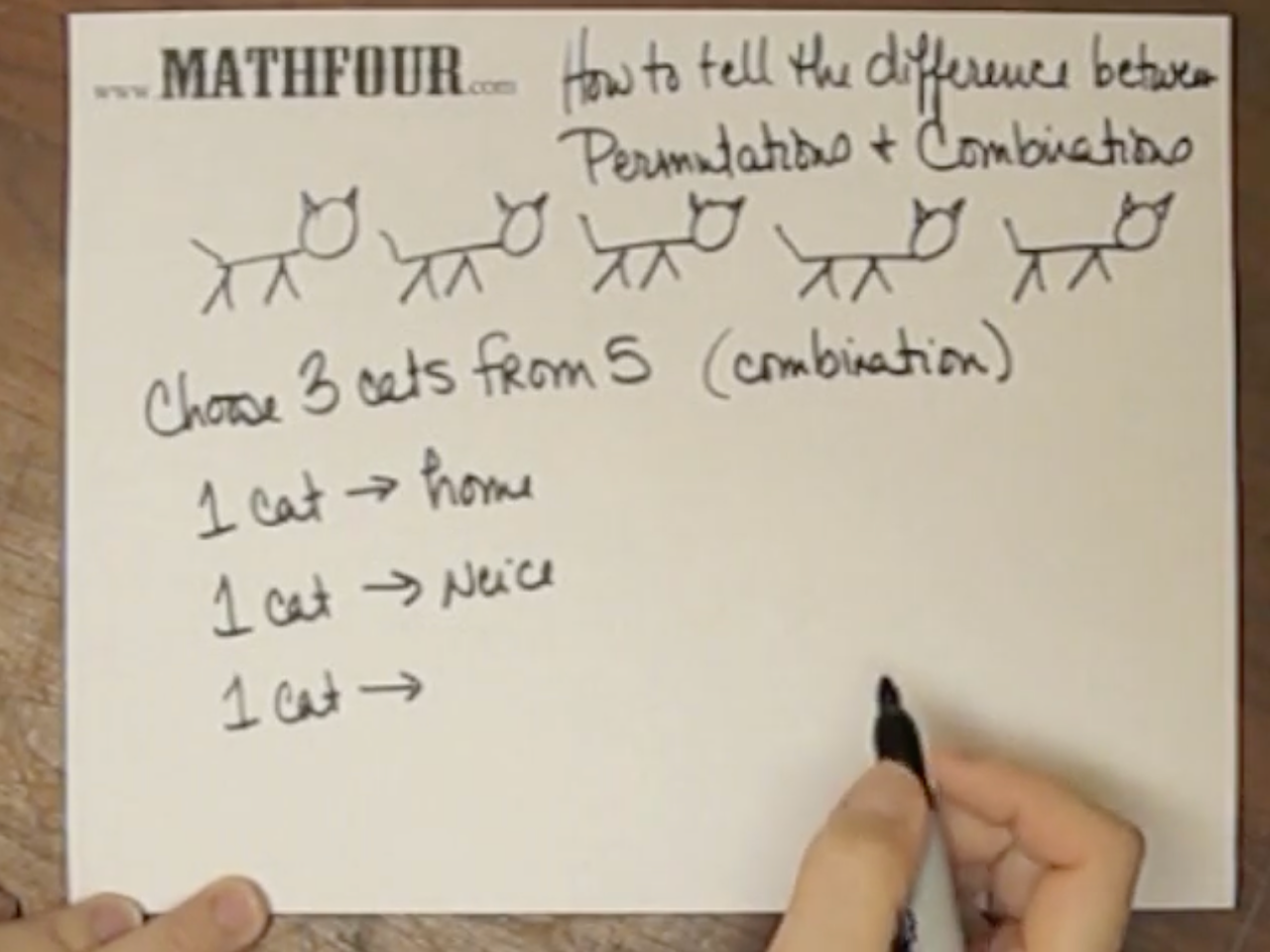
    There are lots of permutation problems where there’s no ordering whatsoever. But they are still permutations. So telling the difference between a combination and permutation can be difficult if you use the ol’ “order matters” rule. Like this:

    Notice there was no “order” in the permutation – each cat is having something different done with it. (And woe for the cat who’s being eaten.)

    The real differentiating factor between permutations and combinations is this:

    If the things being chosen are going to do (or have done to them) the same thing, it’s a combination.

    and

    If the things being chosen will do (or have done to them) different things, it’s permutation.

    Here’s another example, along with a tip to choosing which to use:

    Will this help your students? And check out the next post on how to do the calculations for these.

  • How to Pronounce n! and How to Use Factorials

    How to Pronounce n! and How to Use Factorials

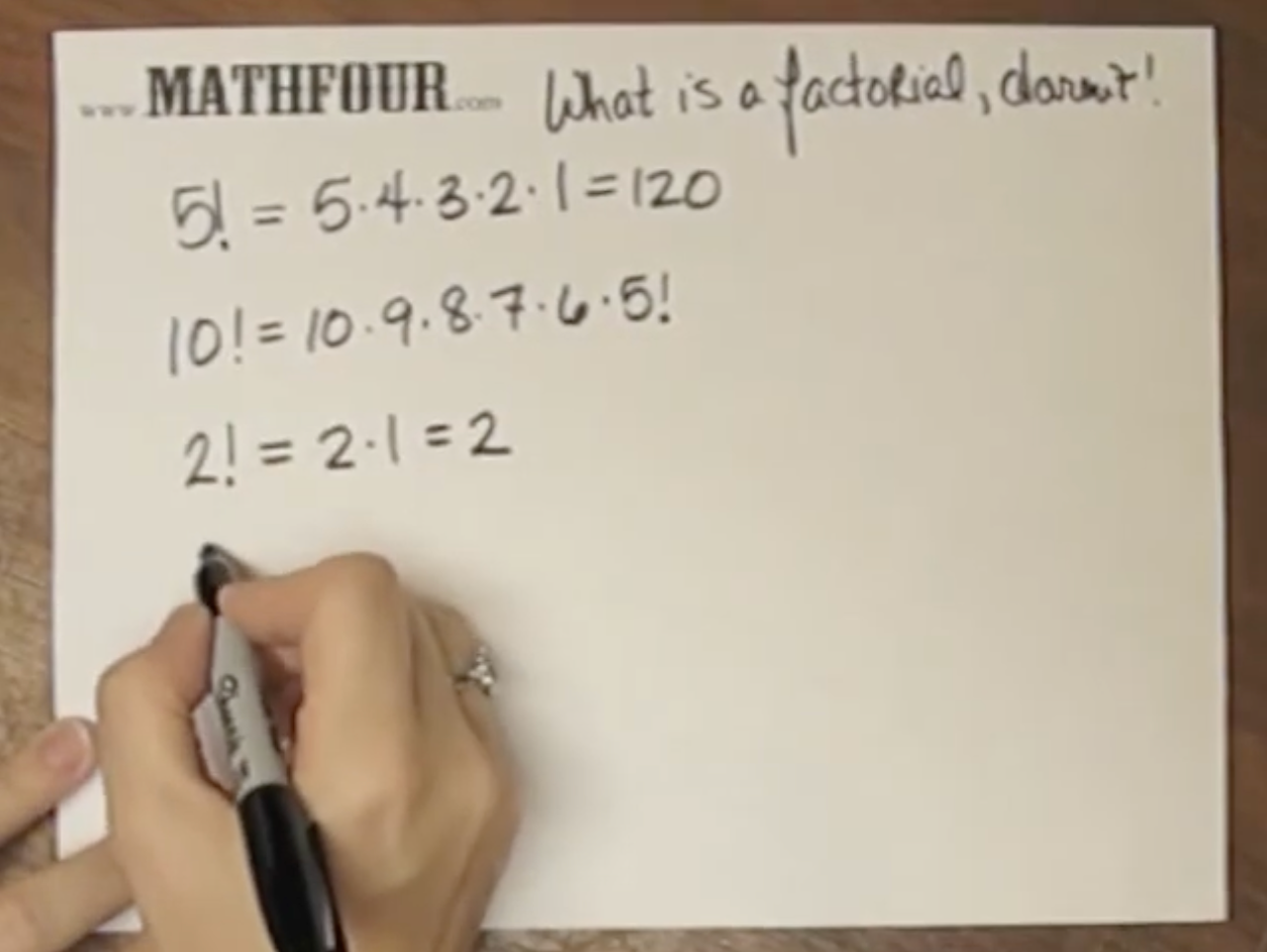
    My favorite professor in college used to pronounce n! as “n, dammit.” He was awesome, and a true rogue!

    The “proper” way to pronounce it is “n factorial.” And here’s what it means:

    When working with factorials, it is important to remember what can and can’t be done. Here’s how to use them in fractions:

    You will have to work with factorials in Permutations and Combinations (info on those coming tomorrow). Here’s what factorial work will look like then:

    These are all important steps for the upcoming post on Wednesday about “How to Calculate Permutations and Combinations”.

    Questions? Need the info faster? Post your thoughts and questions in the comments section.

  • How and When You Can Manipulate Square Roots

    How and When You Can Manipulate Square Roots

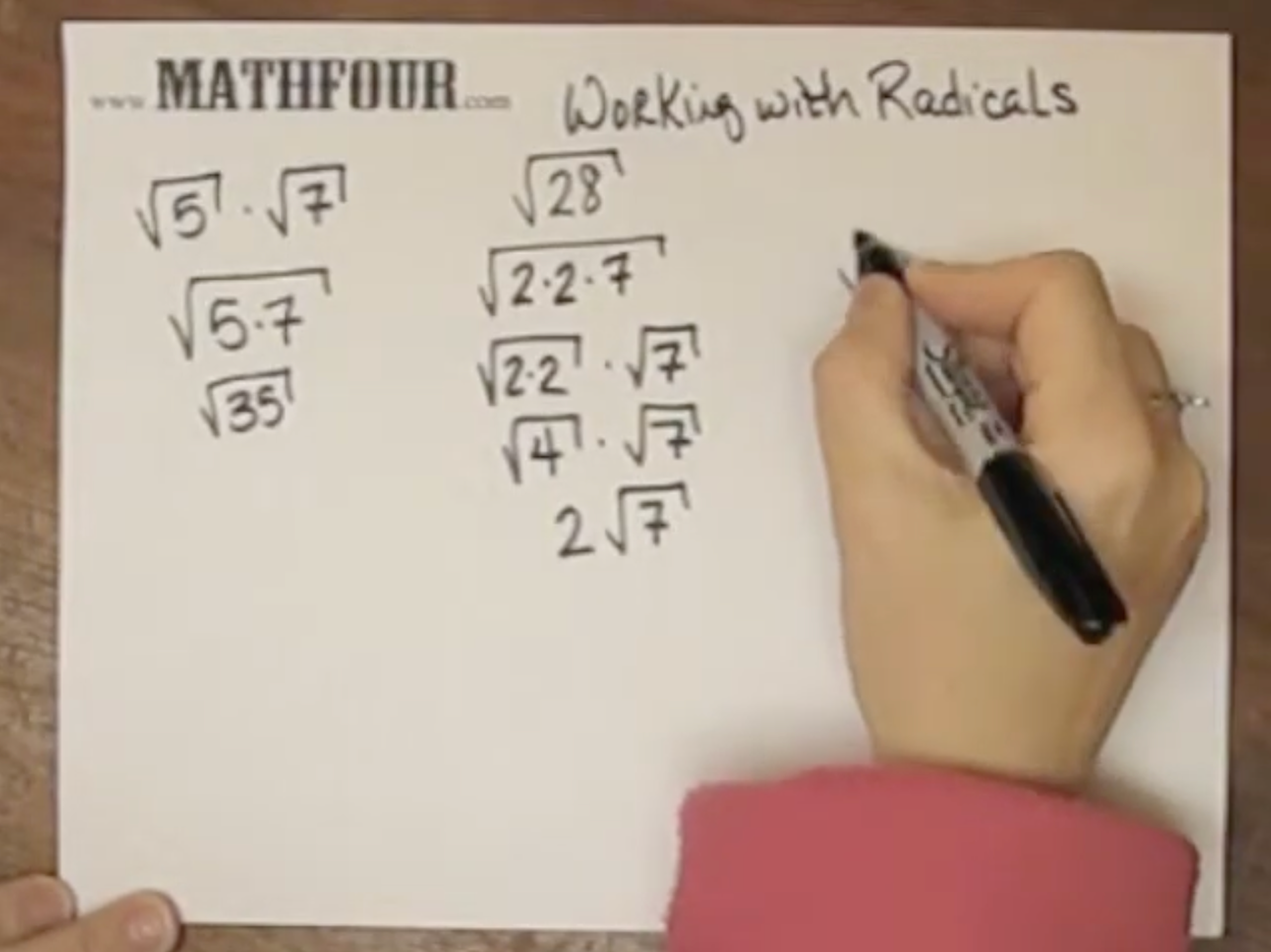
    Square Roots (aka radicals) are part of the multiplication world. They have the same properties, but because they look weird – living in little “houses” – it is hard to grasp what they can do.

    This is how the “houses” (the radicals) can “move”:

    After that, you can work with multiple radicals:

    It is important to note that this little trick works because it’s all multiplication, division and roots. If you have addition or subtraction in there, you’ve got yourself a challenge. Watch this to see how to deal with addition in the mix:

    Thanks to jrobbo at MyMathForum.com for the inspiration for this post.

  • How to Add and Multiply in Base 12

    How to Add and Multiply in Base 12

    In the previous post, I explained some basics about base 12 counting. Since you’re back, clearly you’re a glutton for punishment (or your Algebra book is requiring you to do this).

    Either way, here’s how to add in base 12:

    And how to multiply:

    I cheated a little here here, because to me this is the easiest way. If you need an example or two to do it “right,” post it in the comments and I’ll do a few for you.

    A big thanks goes out to Kellie for the question.

  • What Base 12 Means

    What Base 12 Means

    Algebra books seem to believe that base 12 is a good idea for humans to use. This is only in the case of that pianist in GATTACA that has 12 fingers. We have a base 10 system because we have 10 fingers. (This is why you’re allowed to count and do arithmetic on your hands.)

    Regardless of the general uselessness of a base 12 system, working with it is a good exercise in patience, alternate thinking and puzzle solving.

    Here’s how to “count” in base 12:

    But what if you want to get higher than you can count? For instance, what if some algebra book asks, “What’s after EE012?”

    Now check out how to switch a base 10 number (which is our way) into a base 12 number:

    Want more? Check out how to add and multiply in the next post.

    Thanks to Kellie for the inspiration for this post.

  • What the Heck Is the Zero Product Rule?

    What the Heck Is the Zero Product Rule?

    The fancy answer is, “For all numbers a and b, ab = 0 implies a = 0 or b = 0.”

    The less fancy, and still strange answer is: If two things multiply to get zero, one or both of them better be zero. Like this:

    Too much pixie dust, for my taste. What doesn’t work, for sure, is this:

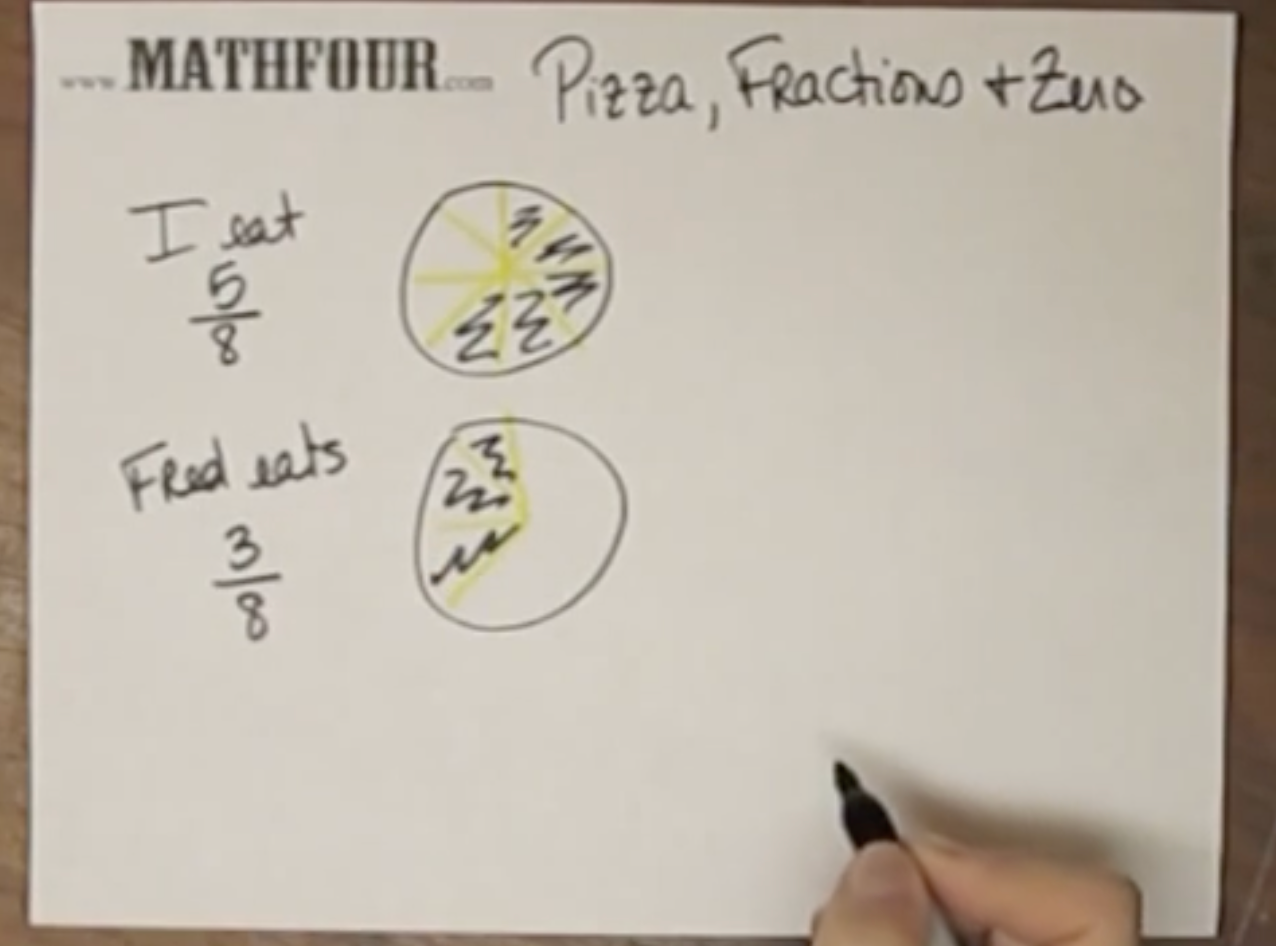
    So why does it work with zero and not three?!? To answer this, we need a little background on fractions and zero. And pizza – pizza’s always a good thing to add to math:

    Using the fact in the video above, the “foorp” in this video shows why it’s true:

    Special thanks to GFC at MyMathForum.com for inspiring this post.

  • Those Pesky Exponents – How to Distribute Exponents over Multiplication

    Those Pesky Exponents – How to Distribute Exponents over Multiplication

    Remember that you can distribute multiplication over addition? You can also distribute exponents over multiplication.

    Here’s how and why it works:

    And here it is written out “long ways” for an algebra problem. Remember, you can use the short version. I do the videos with the long version to help you remember why it works.

    Have any questions? Post them in the comments!

  • 2 Ways to Multiply Mixed Numbers

    2 Ways to Multiply Mixed Numbers

    Multiplying fractions provides an interesting challenge. Put some mixed number into the situation and you could be facing a real bear.

    Here’s one way to work the problem 234×8172 \frac{3}{4} \times 8 \frac{1}{7} by converting it to mixed numbers:

    Or you can use the handing dandy distributive property (or as some might recognize it – FOIL):

    Here’s one more for fun:

    Thanks to NapNinja4 on MyMathForum for this question.

  • How to Convert Mixed Numbers to “Improper” Fractions

    How to Convert Mixed Numbers to “Improper” Fractions

    This isn’t something you do everyday. Therefore it would be helpful to know how to remember it long term.

    The mixed number 2342 \frac{3}{4} really means 2+342 + \frac{3}{4}.

    Notice the PLUS sign? That’s the big key to doing this.

    This video shows the long expanded way that most people won’t show you. You wouldn’t really convert this way, but it helps to see it in the long form. This way you know what your teacher is showing you isn’t some pixie dust magic:

    Now that you can do that, you can probably go the other way too:

    And how about checking your work? Nevermind the devil box (aka the calculator), the more you check your own work by hand, the more your confidence in your own math abilities will be. Try doing this:

    What do you think? Will this help you remember? Do you have another way to remember? Share it in the comments.