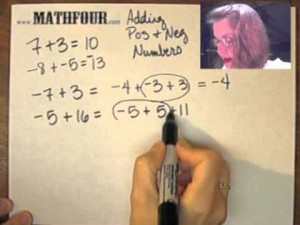
I’ve discovered many ways of teaching math through the years and the most interesting one was the addition of numbers with opposite signs. I learned this from a teacher who said that he never understood the rules – so he made up his own method.
He “breaks” the bigger number into two pieces so it can be cancelled. Here it is:
What do you think? Can you teach it this way? Share your thoughts in the comments.
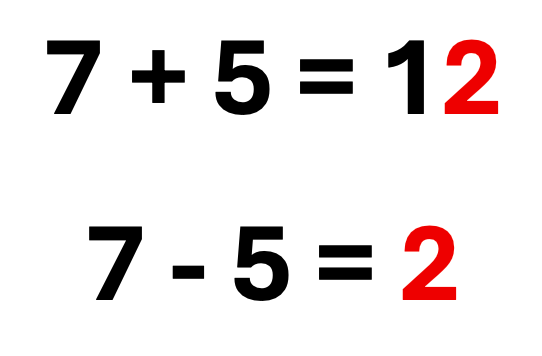
For some reason I have trouble adding 5 to the larger digits (like 7, 8 and 9). I noticed at some point that the last digit of that addition is the same as if you subtracted 5 from that number. Like this:
7 + 5 = 12
7 – 5 = 2
and
8 + 5 = 13
8 – 5 = 3
and
9 + 5 = 14
9 – 5 = 4
So now when I add them, I merely subtract them and slap on a 1 at the beginning!
(Oh, yeah, and there is a good reason this happens – it has to do with 5 being half of 10. And 10 is the base of our number system. Maybe one of the other math blogs can do a proof of this using base n…?)
Do you keep struggling to teach common denominators? Do your kids just not “get it”?
Well, it’s time to quit.
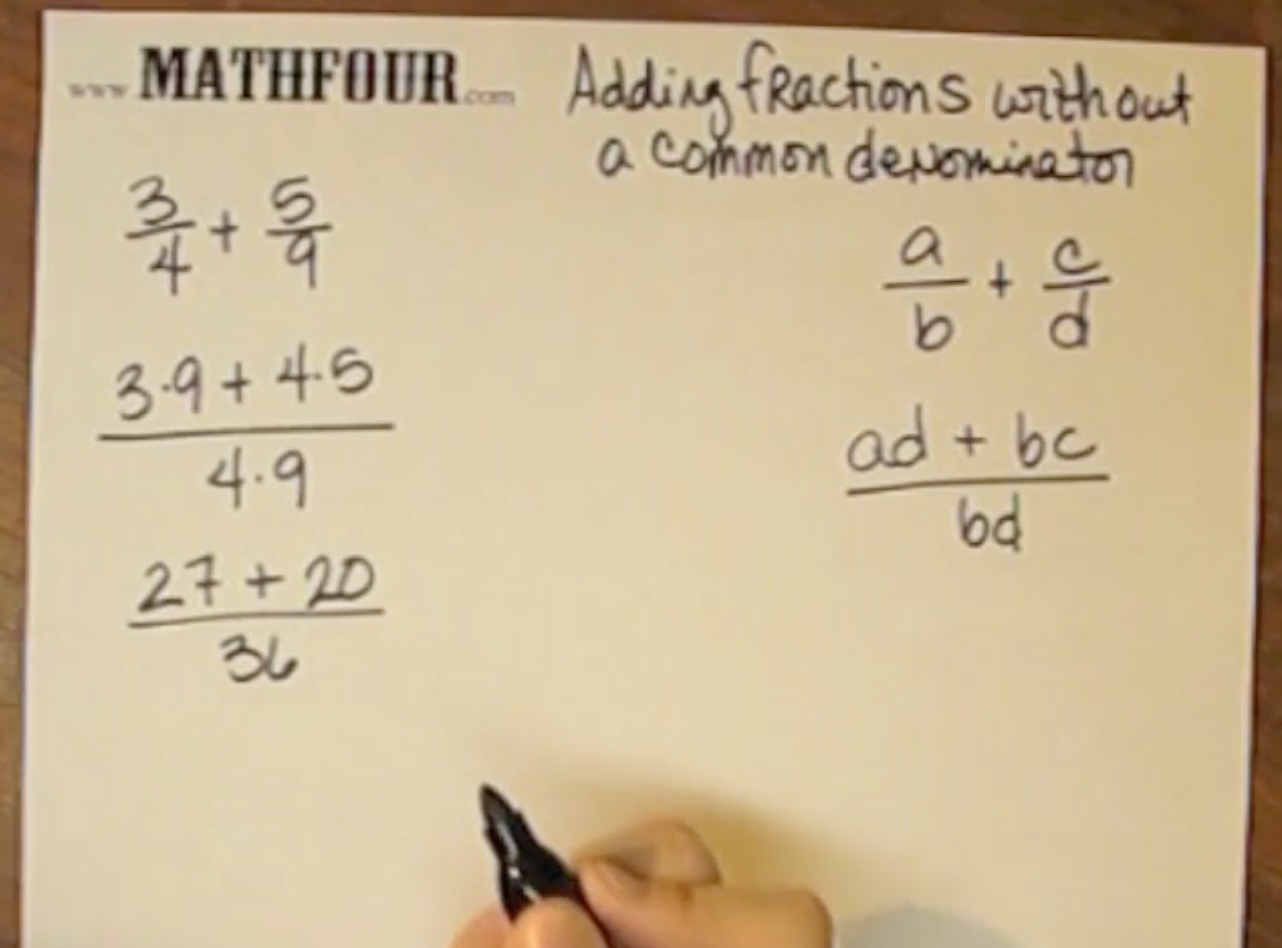
Yep! You can teach (and do) fractions without ever finding a common denominator.
The key is in the definition of addition for rational numbers. If you have two numbers and the sum of them is .
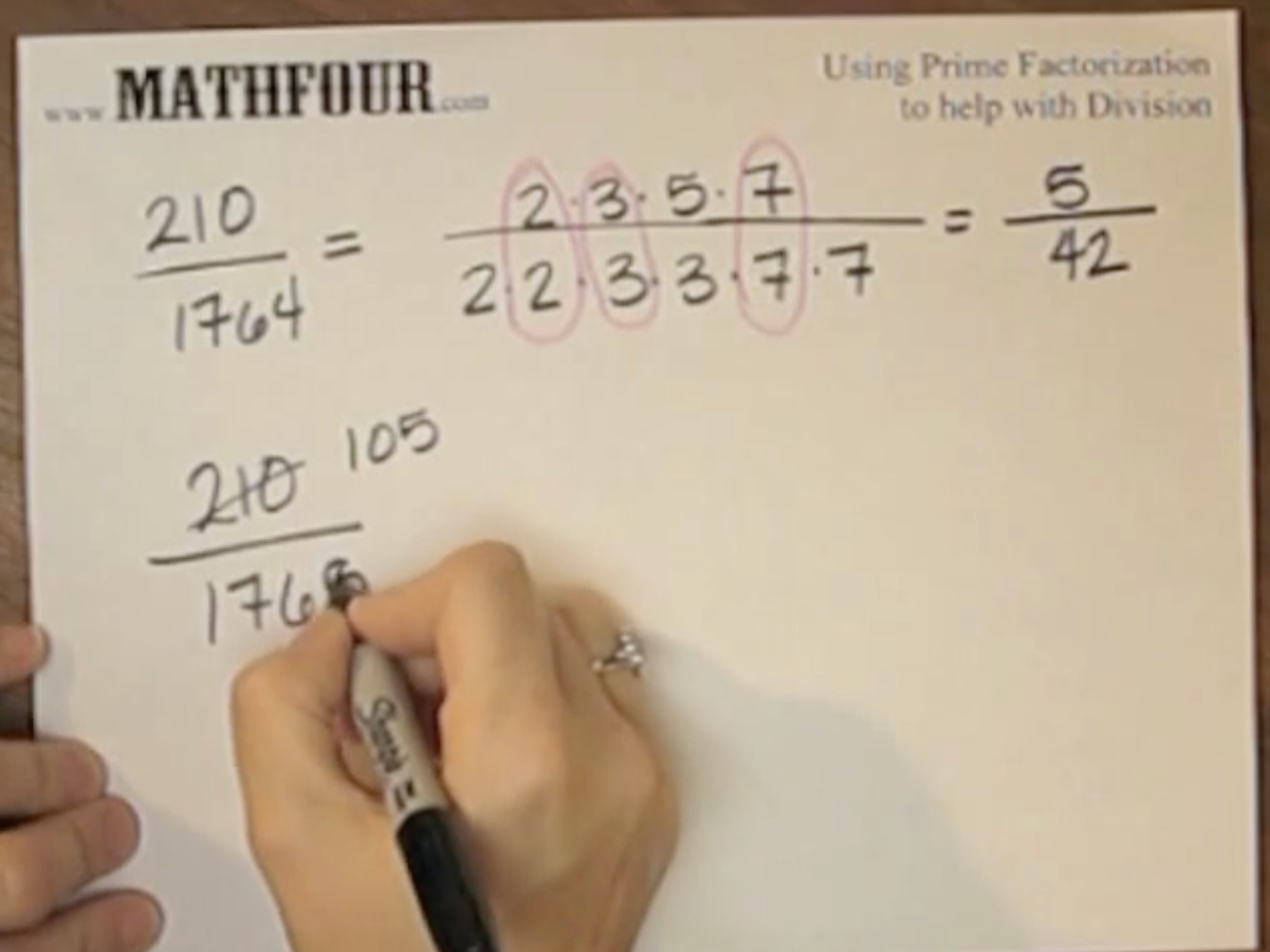
Granted there is the technical issue of reducing, but using a little prime factorization will get you there without an issue. (And you don’t really HAVE to reduce, which I will discuss in a later post.)
Here is an example:
Here’s one with an obviously easy common denominator that works just fine with this method. In it I explain a little about why you would want to do it this way:
You might argue that finding a common denominator is an important learning experience. And you’re right. In the same way that learning about death through the loss of a pet is an important learning experience. But if you can avoid all that pain, why wouldn’t you?
If you teach this method first, kids will get annoyed with having to do so much reducing and discover the common denominator method for themselves. And that’s really what learning math is all about.
What do you think? Can you teach fractions this way? Share your thoughts and experiences in the comments.
Thanks to @padgets for our conversation about teaching fraction on #mathchat a few weeks ago. You inspired this post!
I previously posted about prime factors and about using them in multiplication. Now we’ve got fractions to handle.
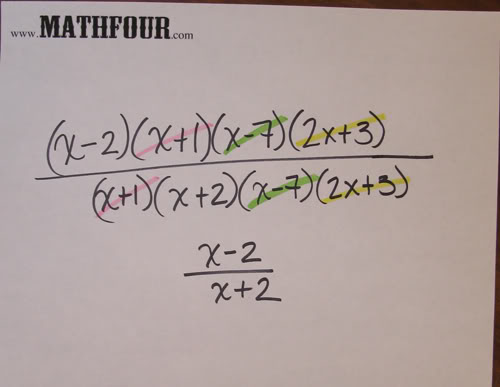
Before we get in too deep, first let me note the main reason why we do this with arithmetic. In algebra, students will be asked to take a rational expression, factor it and reduce it like this:
If they are familiar with how factoring works with numbers, this will be normal to them.
I also find that reducing factors in this neat and clean way helps a lot. In this video I showed the first few steps of reducing the fraction a sloppier way after I did it the “neat” way:
Here’s one that’s a little more complex:
Will be helpful to show your kids? Is there something I’m missing? Share with us in the comments.
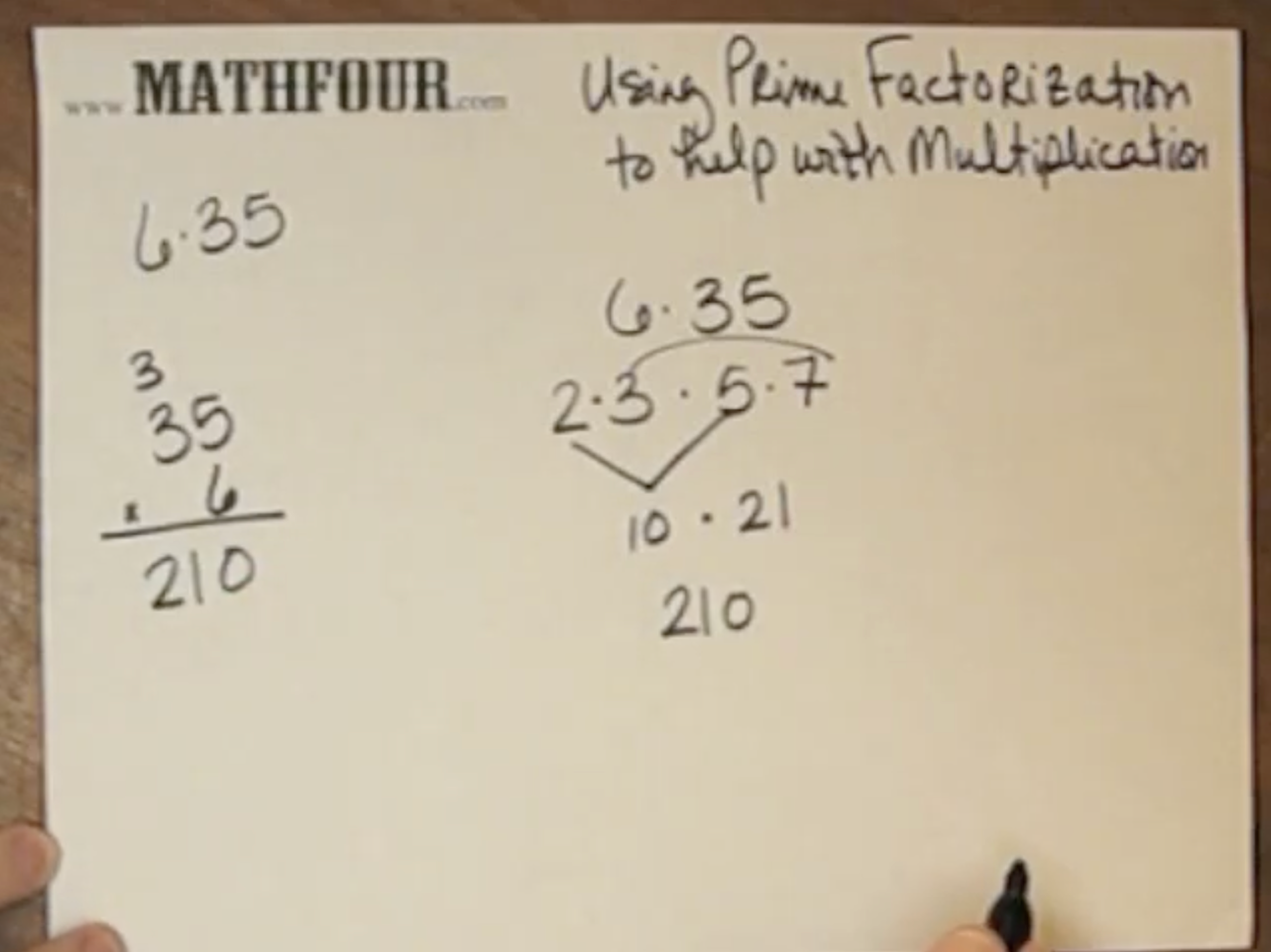
Alright, you might not win friends with this, but the more you can do arithmetic in your head… well… okay, you can’t influence people with it either. Regardless, it’s handy to know and helps with multiplication.
Here’s one that’s a little more challenging. The key is that you can combine the bits to something you’re more comfortable doing. I don’t like multiplying nines, so I avoid those.
Can you use this? Why or why not? Ha ha, just kidding – no essay questions here! – but if you do find a use for this, or if this annoys you, let me know in the comments.
Factoring is traditionally considered an “f-word” for students of math. But it sometimes has its good sides (which I’ll show over the next couple of days).
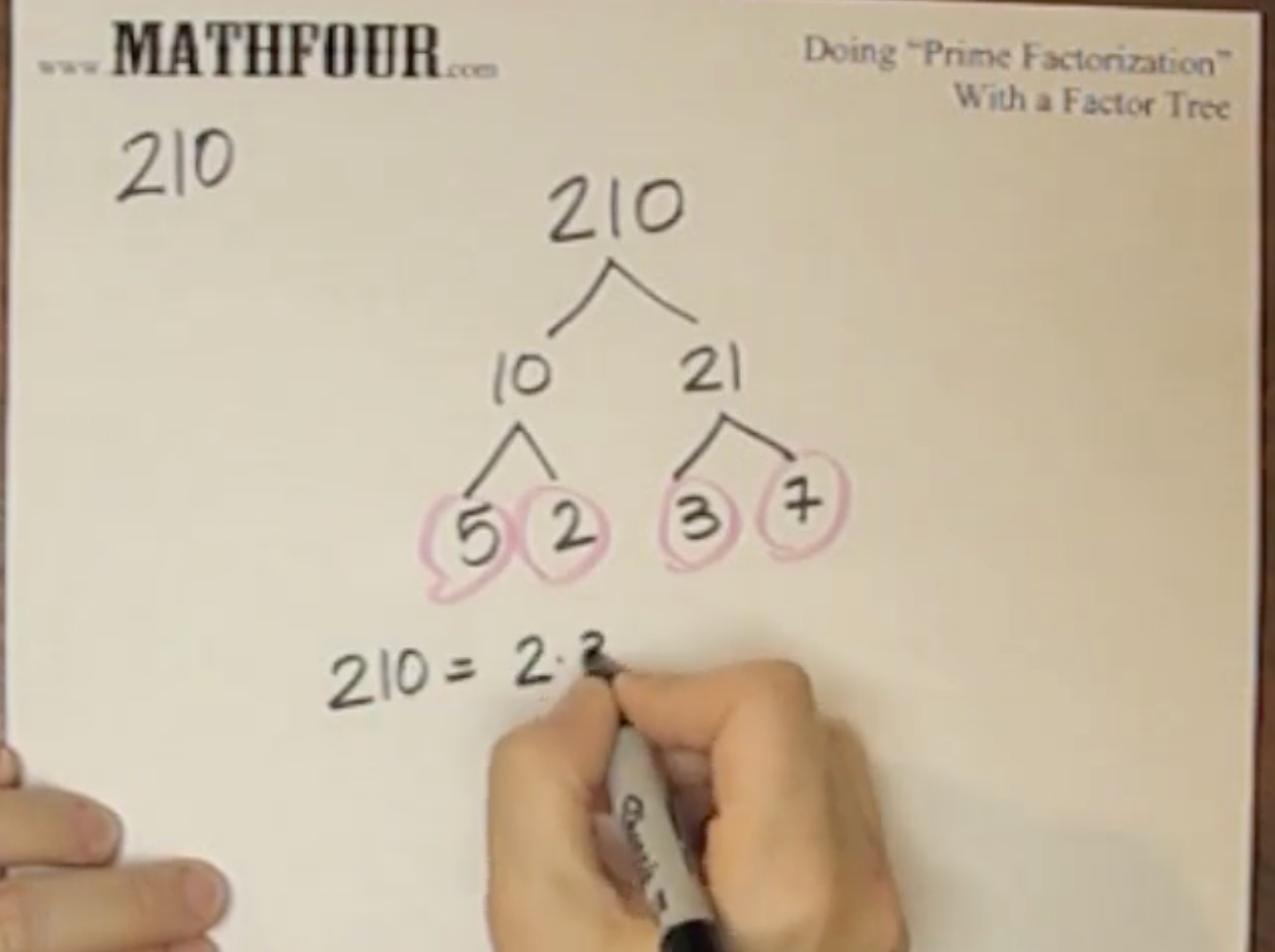
In the meantime, I’ll show the two ways (that I know) to factor numbers.
This method’s called a factor tree:
You don’t have to put the primes in order for it to be “right.” But it helps for later things.
Here’s another tree:
Here’s another way to factor using an upside division bar-type thing:
Remember, we don’t factor for the sake of factoring. This is only a tool to use when we do other stuff. You’ll see some of this in tomorrow’s post. Here’s one last example:
The way you factor is personal preference. Pick the one you like, or flip-flop. There’re no rules!
Share your preference (or a different way) in the comments!
This is a trick that everyone should learn in the 3rd grade. If not, then at least by the 9th grade.
If you’re in the dark on this one, no big deal. Now’s the time to learn. If you’re a parent – this trick will win you points like crazy. Especially if you get to it before the teacher does.
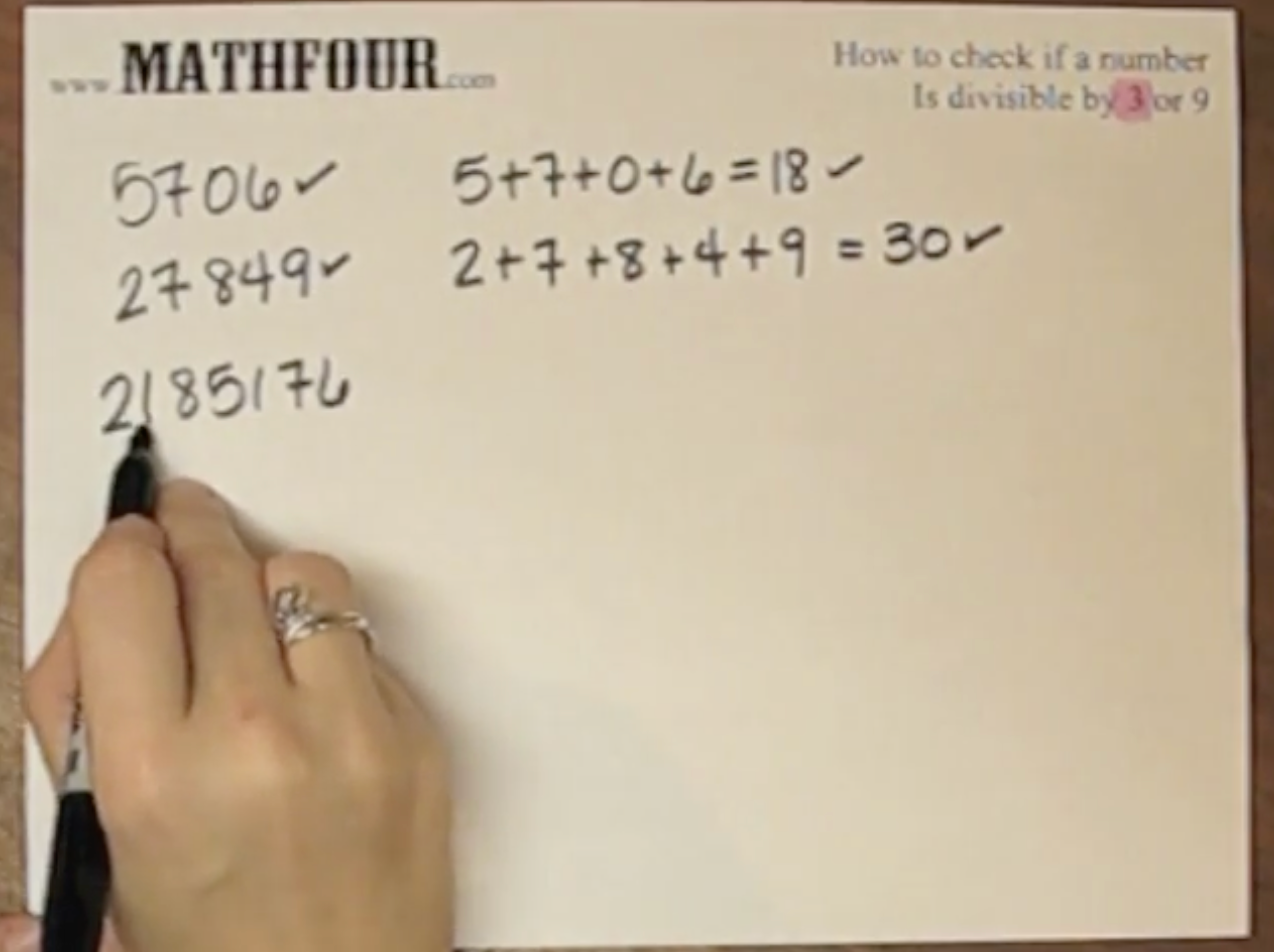
So here’s how it works. For both 3 and 9, start by adding up the digits in the number. If the result is divisible by 3, then so’s the original number. If the result’s divisible also by 9, then… you guessed it… so’s the original number.
If your result is way to big to tell, do it again. Check out the videos for both:
Questions or comments? Leave them in the comment section below.
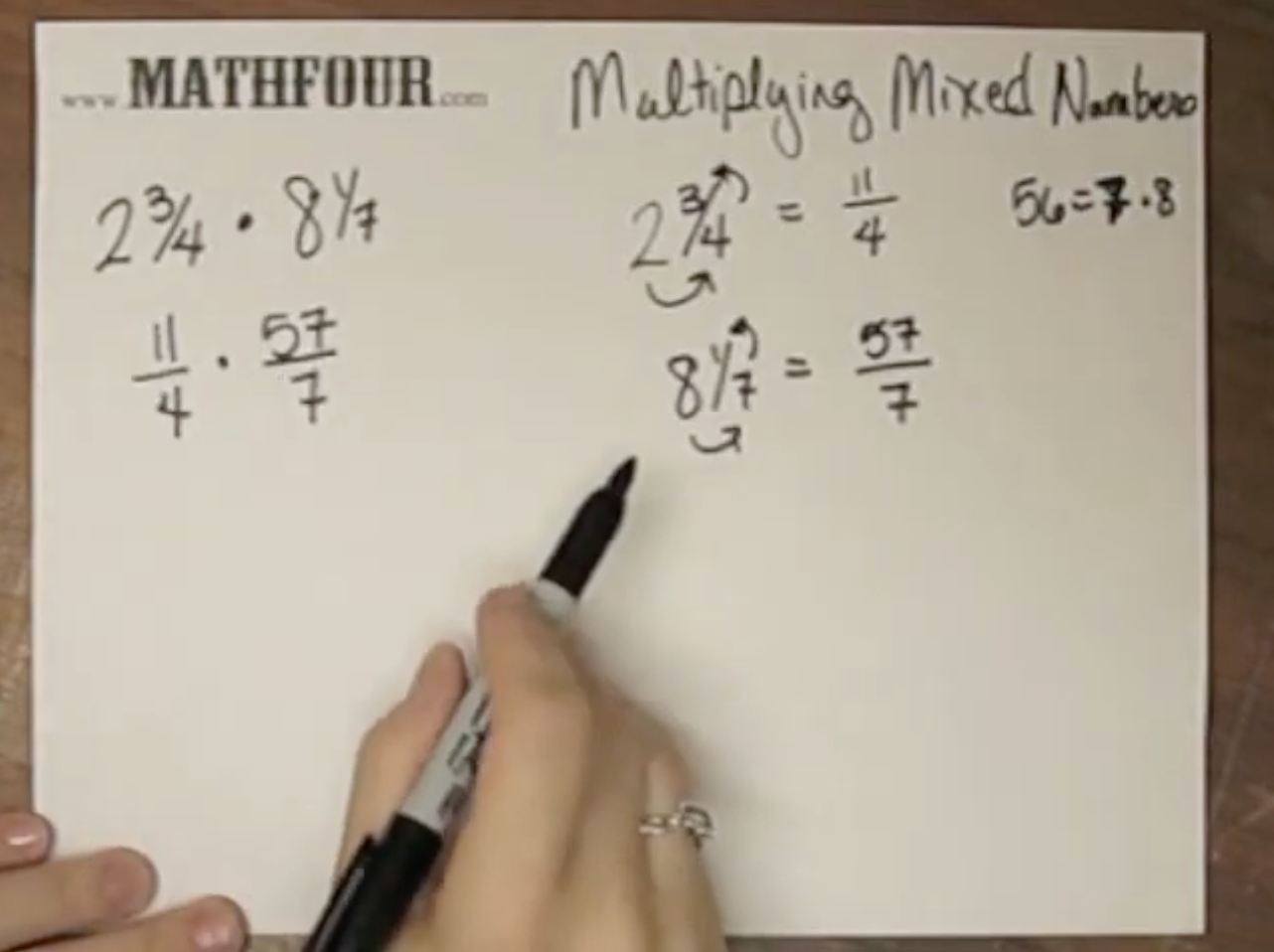
This isn’t something you do everyday. Therefore it would be helpful to know how to remember it long term.
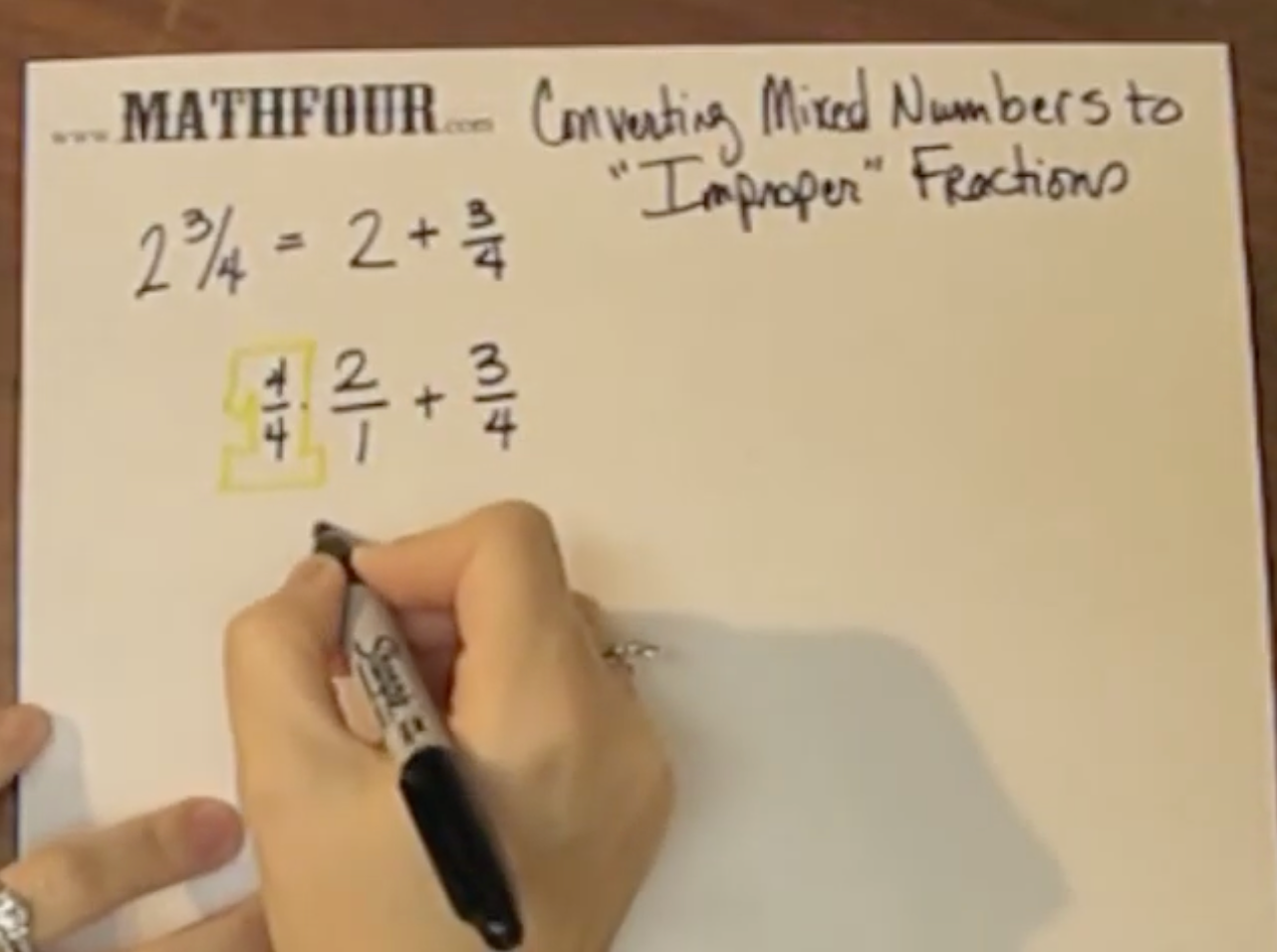
The mixed number really means .
Notice the PLUS sign? That’s the big key to doing this.
This video shows the long expanded way that most people won’t show you. You wouldn’t really convert this way, but it helps to see it in the long form. This way you know what your teacher is showing you isn’t some pixie dust magic:
Now that you can do that, you can probably go the other way too:
And how about checking your work? Nevermind the devil box (aka the calculator), the more you check your own work by hand, the more your confidence in your own math abilities will be. Try doing this:
What do you think? Will this help you remember? Do you have another way to remember? Share it in the comments.
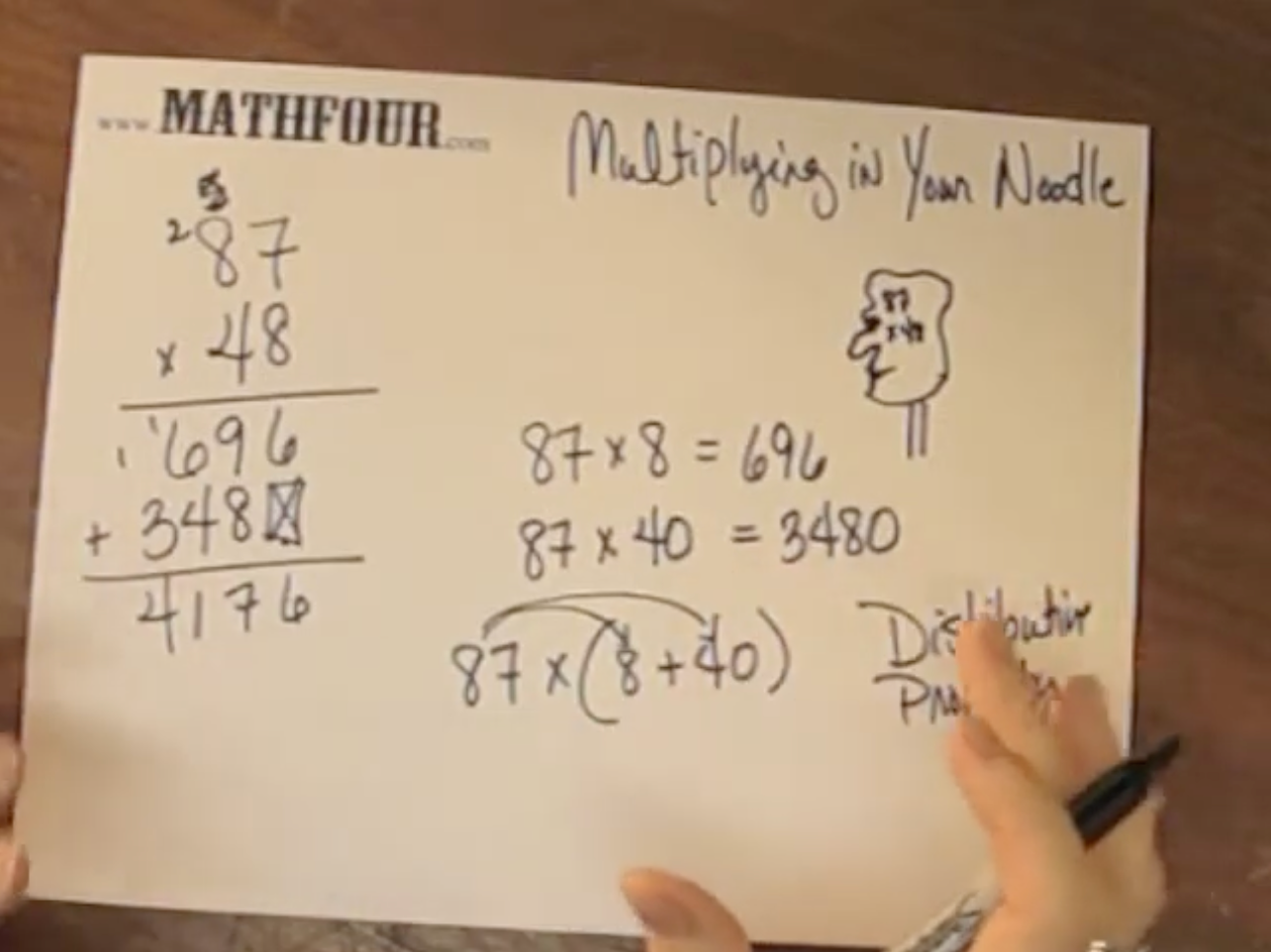
There’s an amazingly fancy tool that I began discussing in the last post. This D-word probably has been a close friend of yours for a while. It’s likely you’ve used it before and just didn’t realize it.
Well, now you can give it a name and give it some practice. It’s the Distributive Property.
Fancy name. Fabulous friend.
Check out what’s really going on with 87 x 48 here…
That one you can do quickly with pencil and paper. Here’s an easier one that you are more likely to do in your head (after practice with P&P of course)…
Have you done this before? Share your stories in the comments.