Tag: learning

  • The Prime Directive in Education

    The Prime Directive in Education

    The Prime Directive in Star Trek is to not interfere with other cultures.

    The Prime Directive in medicine is do no harm.

    The Prime Directive in parenting is to keep the child alive.

    There’s a Prime Directive in Education too!

    Through all my suggestions, recommendations and ideas about math education, the one thing that trumps everything else is the Prime Directive in education:

    If it works for your child, do it.

    If a method, book, course or person helps your child do better in math, then stick with it!

    Everyone has an idea of what great teaching looks like.

    Proponents of Khan Academy like that lectures can be available to everyone, everywhere for free. Opponents say that Khan Academy is still just lectures.

    Proponents of education methods popularized by Dan Meyer say that children need to connect with the math. They need to see it in action.

    Opponents (and there aren’t many) say that sometimes kids just want to do the steps.

    It’s not about great teaching, though — it’s about great learning.

    Only your child knows what great learning looks like.

    Children know how they learn best. They can’t always articulate it, thought, so they need us to watch them and figure it out for them.

    If your child needs more of a top-down understanding of what’s going on in math, then the teacher (you or the classroom teacher) should work to give him that.

    If he needs a to thoroughly practice the basics in math before moving on to something more — then that’s what he should have.

    Even alternative learning methods can be used.

    A friend of mine told me her child needs to practice his cursive writing. Because he thinks cussing and swearing is fun, she’s entertaining the idea of having him write sentences using a swear word. She worried that it might make her a bad parent.

    Enter the Prime Directive in Education. If he improves with his cursive writing, and she explains that swearing is still not appropriate out loud, why shouldn’t he write the bad words?

    If it works for your child, do it!

    Some kids need rote memorization before understanding. Some need understanding first. And some need bizarre means to connect with the task at hand.

    So if you find something that works — by golly, do it!

    What does your child need? How can you make sure he or she gets it?

    Share your thoughts in the comments or on Twitter/X.

    You might also like:
  • Is Math in the 3 Categories of Learning?

    Is Math in the 3 Categories of Learning?

    Our world is struggling with education of all sorts. We know that STEM fields are in trouble. Not enough people are excited about taking the science and math classes needed to jump into them.

    But there’s another piece of the education puzzle that’s missing — writing.

    I talked to a primary school teacher at a social function today. She was telling me how students these days were often taught the algorithms of writing. One of which is the classic intro-supporting paragraphs-conclusion that I remember.

    I said, “Oh, so they don’t get taught to write in their own voice, and stuff like that?”

    “That’s just it,” she said. “They naturally write in their voice. But with the systematic methods we push on them it destroys it!”

    That sounds familiar!

    It pulled on my heartstrings — there was another basic subject that was competing with the almighty and all-powerful queen of subjects — reading.

    Seems writing has the same challenges as math — people think there’s a formula to it when really it’s about voice, personal preference, beauty and art.

    And writing, like math, is something people always do when they have to but rarely do just for fun.

    What do we learn — really?

    It made me really think about learning and teaching. All learning can be boiled down into one of three categories:

    1. Learning information (historical facts, spelling, times tables)
    2. Learning how to get information (reading, researching, googling)
    3. Learning how to give information (writing, speaking)

    Reading clearly has its place in #2, as does writing in #3.

    But where is math?

    When you teach math, are you only teaching facts (like in #1)? Or are you teaching children how to get or discover information (#2)? Or are you teaching them how to give or share information (#3)?

    I’ll leave my answers for next time. Until then — what do you teach?

    Share your thoughts in the comments or on twitter/x.

    You might also like:
  • Differentiated Instruction

    Differentiated Instruction

    I just learned what the phrase “differentiated instruction” means. Jeanette Stein told me on #MathChat that for her, differentiated instruction is

    Meeting kids where they are at to take them where they can go.

    I love it!

    So I read the article Jeanette shared from Teach-ology. Seems differentiated instruction is a fancy term for focusing on the individual students rather than the teacher.

    I’ve been doing it for years!

    The first few semesters I taught math (back in 1996), I would lecture. I mean straight up, lecture. But soon I learned that it wasn’t about me.

    Over the next 16 years I watched the students. I quit spending so much time and energy on preparing lectures and much more time and energy thinking about the comments and questions I got from the students.

    I learned how students get quickly confused by the simplest of things – like solving an equation in one variable with four terms.

    I learned that the way something is said is much more important than what the words are.

    I learned that many of the “math rules” were merely tricks some clever person thought of as a mnemonic device. And that if these tricks are forced on certain students, they’ll likely never understand what’s really happening.

    The biggest trick/hoax is PEMDAS or the Order of Operations. Other math rules that get highly confusing are the Zero Product Rule and cross-multiplying (a term I personally despise).

    And most importantly, I’ve learned that creating a safe and inquiry based learning environment is the key to differentiated learning.

    And there’s more!

    In considering my classroom experiences, I’m finding many other instances and examples of differentiated instruction. So this is the first in a series on tactics to improve your own differentiated classroom. Here are the proposed topics/titles:

    • Eliminating the Fear – How to Engage Students without Calling on Them
    • Show Your Work! – What’s up with that?
    • Grading in a Differentiated Classroom – Why Teaching Math Is Harder than Giving Birth
    • “It’s Your Education!” – How to Empower Your Students
    • If Shakespeare Taught Math – How to Use Metaphors to Teach Math
    • If Picasso Taught Math – How to Use Drawings to Teach Math
    • How to Teach Your Students to Think Like a Mathematician

    Wow – that’s rather ambitious of me, isn’t it?

    I’ll shoot for these once a week and you can find a link to the series (this article) in the sidebar under “Quick References.”

    If you have any requests or ideas, let me know in the comments. And don’t forget to share this series with your PLN on twitter!

    Related Articles:
  • Toddlers Know How to Learn!

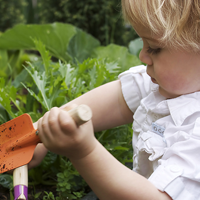
    Toddlers Know How to Learn!

    Ever interacted with a toddler?

    Holy cow. They are learning machines, aren’t they?!

    And woe to the grownup that tries to do something for that mini-human. Especially if that kiddo is in the process of learning it!

    It makes me wonder – what would learning look like if everyone behaved like toddlers?

    Image this: you’re sitting with a student. You reach over and start to “show” him something on his paper.

    “NOOOOO!” he screams, “I DO IT!” and shoves your hand and pencil out of the area of his paper.

    Now THAT’s someone taking charge of his learning!

    Could we do that?

    Give it a shot! The next time someone tries to teach you something and reaches in to poke at your keyboard, say, “Please keep your hands to yourself.”

    And when you’re teaching someone, refrain from doing anything for them that they can do themselves.

    You’ll be surprised at what happens!

    Share your thoughts and experience in the comments. And shout it out on twitter!

    Related articles