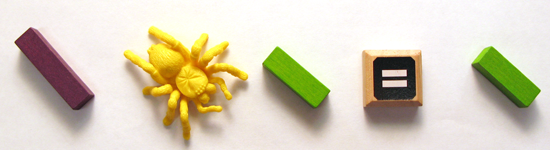
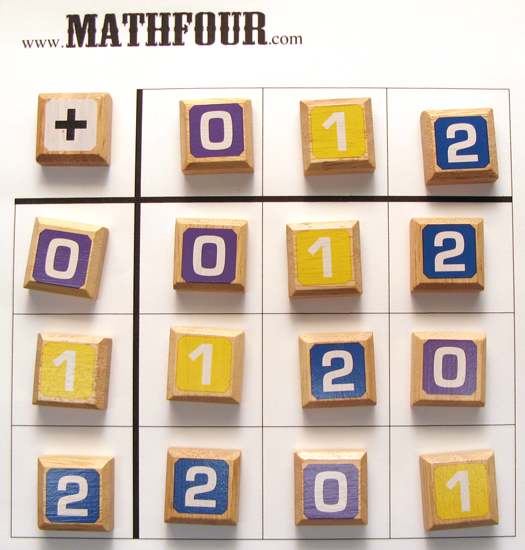
Introduce your children (and yourself) to the commutative and associative properties by starting with some fun toys. Get crazy and get weird!
We know that if you start counting at one object the number of thing is the same as if you start with something different - but kids don't. Here are some thoughts on counting that can put you in a different mindset when dealing with children and counting.
Balances are normally used for science stuff. Here's how to teach subtraction using a balance.
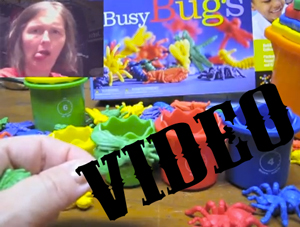
Ordinal numbers are "1st, 2nd, 3rd, ..." but we need these to count items to arrived at the final cardinal numbers. All this fancy math talk - why not make it fun with some colorful bugs!
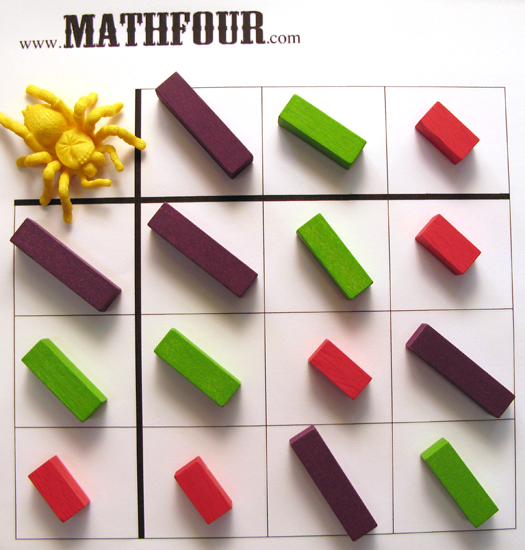
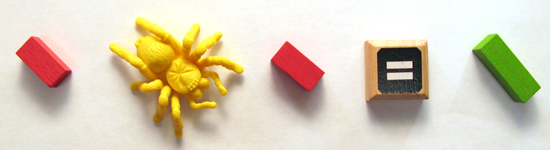
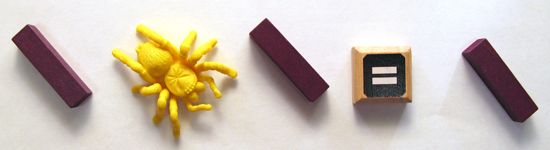
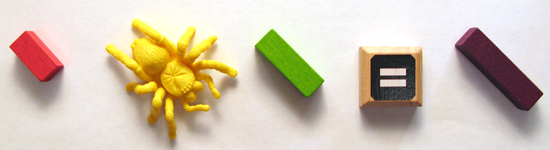
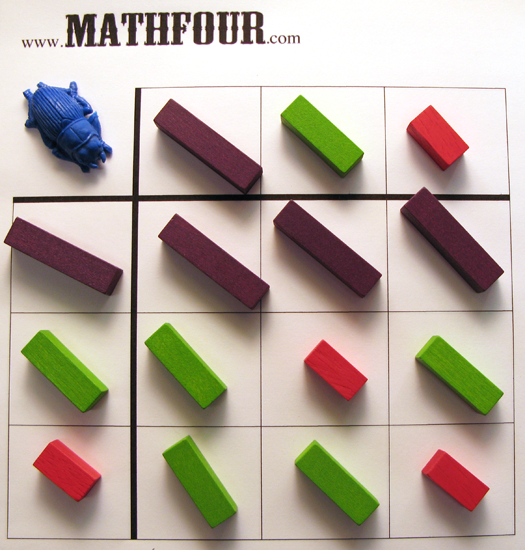
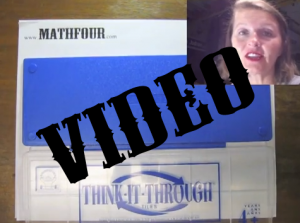
Using Discovery Toys' Think-It-Through tiles you can train the brain for the Transitive Property.
Seeing division helps a great deal with understanding division. Especially when it comes to remainders. This video offers a tangible way to do this.
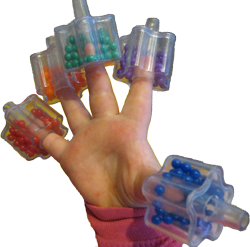
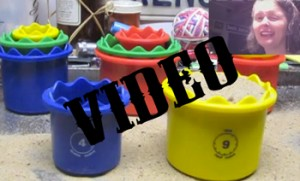
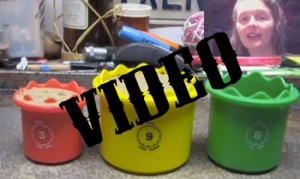
Cups that are "built to scale" stop being just toys and start being the ideal curriculum tool to teach math and arithmetic!
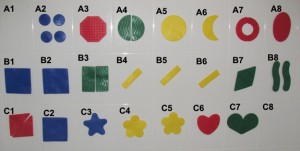
Differentiation is the foundation of learning. Curiosity comes in the form of "Why is that different?" And right behind it is "Why is that the same?"
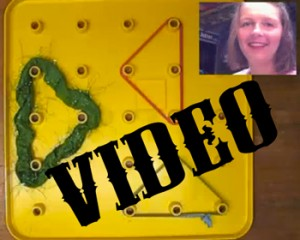
Similar triangles can be different from congruent triangles. Here's how to play with them on a nifty toy.
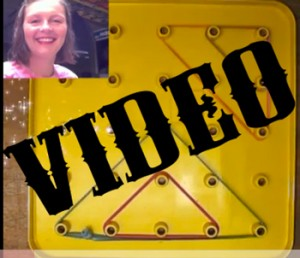
What's the difference between congruent and similar triangles? This post shows it - AND there's a video on how to demonstrate and learn congruent triangles with the Discovery Toys Giant Pegboard!
Introduce your children (and yourself) to the commutative and associative properties by starting with some fun toys. Get crazy and get weird!
We know that if you start counting at one object the number of thing is the same as if you start with something different - but kids don't. Here are some thoughts on counting that can put you in a different mindset when dealing with children and counting.
Balances are normally used for science stuff. Here's how to teach subtraction using a balance.
Ordinal numbers are "1st, 2nd, 3rd, ..." but we need these to count items to arrived at the final cardinal numbers. All this fancy math talk - why not make it fun with some colorful bugs!
Using Discovery Toys' Think-It-Through tiles you can train the brain for the Transitive Property.
Seeing division helps a great deal with understanding division. Especially when it comes to remainders. This video offers a tangible way to do this.
Cups that are "built to scale" stop being just toys and start being the ideal curriculum tool to teach math and arithmetic!
Differentiation is the foundation of learning. Curiosity comes in the form of "Why is that different?" And right behind it is "Why is that the same?"
Similar triangles can be different from congruent triangles. Here's how to play with them on a nifty toy.
What's the difference between congruent and similar triangles? This post shows it - AND there's a video on how to demonstrate and learn congruent triangles with the Discovery Toys Giant Pegboard!
Introduce your children (and yourself) to the commutative and associative properties by starting with some fun toys. Get crazy and get weird!
We know that if you start counting at one object the number of thing is the same as if you start with something different - but kids don't. Here are some thoughts on counting that can put you in a different mindset when dealing with children and counting.
Balances are normally used for science stuff. Here's how to teach subtraction using a balance.
Ordinal numbers are "1st, 2nd, 3rd, ..." but we need these to count items to arrived at the final cardinal numbers. All this fancy math talk - why not make it fun with some colorful bugs!
Using Discovery Toys' Think-It-Through tiles you can train the brain for the Transitive Property.
Seeing division helps a great deal with understanding division. Especially when it comes to remainders. This video offers a tangible way to do this.
Cups that are "built to scale" stop being just toys and start being the ideal curriculum tool to teach math and arithmetic!
Differentiation is the foundation of learning. Curiosity comes in the form of "Why is that different?" And right behind it is "Why is that the same?"
Similar triangles can be different from congruent triangles. Here's how to play with them on a nifty toy.
What's the difference between congruent and similar triangles? This post shows it - AND there's a video on how to demonstrate and learn congruent triangles with the Discovery Toys Giant Pegboard!
Introduce your children (and yourself) to the commutative and associative properties by starting with some fun toys. Get crazy and get weird!
We know that if you start counting at one object the number of thing is the same as if you start with something different - but kids don't. Here are some thoughts on counting that can put you in a different mindset when dealing with children and counting.
Balances are normally used for science stuff. Here's how to teach subtraction using a balance.
Ordinal numbers are "1st, 2nd, 3rd, ..." but we need these to count items to arrived at the final cardinal numbers. All this fancy math talk - why not make it fun with some colorful bugs!
Using Discovery Toys' Think-It-Through tiles you can train the brain for the Transitive Property.
Seeing division helps a great deal with understanding division. Especially when it comes to remainders. This video offers a tangible way to do this.
Cups that are "built to scale" stop being just toys and start being the ideal curriculum tool to teach math and arithmetic!
Differentiation is the foundation of learning. Curiosity comes in the form of "Why is that different?" And right behind it is "Why is that the same?"
Similar triangles can be different from congruent triangles. Here's how to play with them on a nifty toy.
What's the difference between congruent and similar triangles? This post shows it - AND there's a video on how to demonstrate and learn congruent triangles with the Discovery Toys Giant Pegboard!