
Tag: William Devine

  • 3 Statements to Reset Educational Assumptions

    3 Statements to Reset Educational Assumptions

    Forget it. If they don’t want to pay attention and learn, so be it.

    Perhaps you’ve heard others say this, or felt it yourself. It can be extremely frustrating trying to teach a child something who just doesn’t get it, doesn’t pay attention, doesn’t seem to care or who doesn’t seem to want to learn.

    There is an alternative.

    However, if we consider the bigger picture, we see another possibility. Much of a student’s behavior can be a protective front to keep them from feeling like a failure – after all, who likes that?

    Perhaps they act this way because the material is unfamiliar and therefore they don’t know if they can understand it. The uncertainty is a bit scary.

    “Well they don’t have to be scared,” we say.

    But they are. So… if they pretend they don’t care, and if they don’t try or if they hold back on really applying themselves, they can’t fail. Problem solved.

    What does this have to do with me?

    Those students who experience these negative feelings can exhibit behavior that can make it seem as if they don’t care. And then we take it personally. “They’re just really ungrateful of everything I do.”

    It’s our job to meet them where they are — in their distraction, interest, frustration, intimidated state, excitement, fear, wonderment, avoidance, etc. But if we are burned-out, frustrated, or feel unappreciated, it’s hard to do that.

    So how do I get there?

    Adjusting just a few assumptions can put us in a more relaxed, sustainable place to offer reassurance and hope to kids who feel this uncertainty. Doing this is just as much for our self-care as it is for their education.

    Use these statements to reset your assumptions.

    These guidelines are designed to help us “reset” our assumptions in the service of positively impacting our approach to students.

    1. It’s about them, not us.

    When kids avoid or check-out, most of the time they aren’t doing it to “get back” at us. They do it to avoid the concern they feel about whether they’ll be able to meet a challenge. Or because they’re worried about looking incompetent in front of their peers.

    They may even act out to divert attention away from their academic ability. This is another protective feature — again, not about us.

    Adjusting this assumption can free up the compulsion to defend ourselves. It can also allow for more time and energy for them.

    2. Kids have different levels of abilities. Period.

    If we assume this, all of a sudden we aren’t expecting Joe to perform as well as Roger, or vice versa. This allows us to determine, without judgment, where Joe and Roger are with their abilities and to ask independent, non-comparative questions.

    “What does Joe need to further his learning and education.”

    And completely separately…

    “What does Roger need to further his learning and education.”

    3. They ARE trying.

    There’s an assumption that all students CAN understand “if they just try” hard enough.

    When we take this into the classroom, it’s easy to become frustrated (All they have to do is…), become resentful (I am so tired of busting my tail and they’re not caring) or even retaliate (If they don’t want to work in class, I’m just gonna load them up with a ton of homework. That’ll teach ’em!).

    Assume that they ARE trying and ARE understanding as much as they possibly can. Doing this rids us of the temptation of doing things such as shaming and scolding — which has been shown to be counterproductive to learning.

    It also puts us in a “glass half full” position of recognizing what they DO learn, rather than focusing on what they don’t. (Half cup of motivational praise, anyone?)

    Keep these statements handy.

    Write the above sentences down and keep them nearby. Read them at the beginning of every day, or every lesson or class even. It helps to have brief, yet constant reminders.

    After a couple of weeks, see if you can tell a difference in how you feel, your stress level, and the reaction of your students.

    Try them out and share know how it goes in the comments or on twitter/x. Did you come up with some of your own assumption adjustments?


    You might also like:
  • How to be Part of the Education Conversation

    How to be Part of the Education Conversation

    There are a number of ways to be an education advocate. Facilitating or encouraging change is definitely one of them.

    Communicating, getting support for change, and making that change happen can be a bit of an art. Especially because we’re asking others to be part of it.

    Here are some ways to make this easier.

    Get their ear.

    Communicating is perhaps the most important tool in advocacy. It’s more than just having a voice and speaking up.

    As parents and education advocates, we must let others know what’s important to us and why – AND be ready to listen to the their concerns.

    It’s a conversation.

    Use “We” instead of “You.”

    If we’re wanting change, we can’t just criticize. We need to offer ideas of what that change could look like.

    The difference between being an advocate for change and being a complainer is this:

    • Complainer – “I don’t like this. YOU need to do something about it.”
    • Change advocate – “I have concerns about this. This is why. I think these changes may help. I think this is a way we might be able to make that happen. What do you think?”

    Being an advocate comes with having ideas of what TO DO and HOW to change, rather than just criticizing what IS.

    Be an advocate (and not a complainer).

    It’s important to know what we want before talking to others about it. Being unhappy with what is currently happening in education is the first step.

    From there, ask yourself what specifically you don’t like. What could replace this that would be more effective, appropriate, or helpful? How could that transition occur? Who’s involved and what will that change look like for them? How will they handle the transition to this change?

    You don’t need to completely answer all these before starting a conversation about educational change. But keep those questions in mind. Be willing to offer ideas on them.

    It can go a long way in getting others to listen.

    Be patient with the process of change.

    Many parents and teachers know the benefit of shifting the focus in the schools. They want to get away from memorization and performance on standardized tests. They want to move toward learning ideas and understanding concepts.

    But that’s a tall order.

    For a broad change like this to occur, there must be (near) unanimous support. There must be a sense that this change is not only helpful, but is needed and required.

    Convincing people who are married to the “traditional” way of the teaching/learning method can take time.

    Make the change easier for others.

    Advocating for change isn’t just pushing for it or convincing others that it needs to happen. It is important to support those who will be a part of that change.

    Help teachers and administrators understand you’ll be around to support those changes. Let them know you don’t expect them to do all the work. Then they’ll be more willing to support and make those changes happen.

    Talk to everyone.

    You never know where you’re going to find the ally – or someone ready to consider something new.

    And start here. What do you think? How will you start the conversation?

    Leave your thoughts in the comments. And share this post on twitter!

    MathFourWilSignature_100

    Related Articles:
  • Everyday Math Exposure: Just Saying It Helps

    Everyday Math Exposure: Just Saying It Helps

    Previously in an article about math anxiety parents may feel, I mentioned how grown-ups inadvertently teach kids to be scared of certain things.

    It’s not our fault. We learned it from adults when we were younger.

    But we still do it.

    “I hate rats.”

    “Math? I’ve always had math anxiety.”

    “Ew, roaches, yikes!”

    “Math is hard. I don’t do math.”

    What’s psychology got to do with it?

    From the principles of psychology, we know that hearing other people talk about things, we adopt some of those same attitudes – especially being young and impressionable as kids.

    And your kids are like that, too.

    An example: Think about butterflies. They’re insects and they have erratic movement patterns. So why don’t we hate butterflies like we do roaches?

    Ok, to be fair, roaches invade our living spaces given the slightest chance. And they carry diseases. But are these things the reason why we feel a shiver?

    Not really – it’s seeing others freak out when they see a roach.

    And seeing others say, “Ooo, how pretty!” when they see a butterfly!

    And the research shows…

    In the previous article, I mentioned that the reason why this is important lies in the immediate and long-term effect on children. I presented on how this impacts math anxiety recently at the Western Social Sciences Association Conference.

    Research and experience show that when we display math anxiety or a negative attitude toward math, kids do to. And this causes them to have lower confidence in their math ability, higher math anxiety, and more avoidance toward doing math.

    And when we (or our children) don’t engage in something, we don’t have an opportunity to learn.

    But noticing everyday math gives them more confidence – and more opportunity!

    Is it up to parents?

    You might have heard (or even said), “That’s the teachers job.” Well, they can only do so much. The best prescription for helping kids to learn is to make it enjoyable. Or at very least, neutral so they don’t avoid it.

    The less avoidant (and more engaging) they are on their own, the more they take it upon themselves to do math things. They’ll see the everyday math. And they’ll do it without having someone over their shoulder all the time.

    Learning then happens even outside the math class.

    They’ll do math on their own?

    Yes.

    Learning doesn’t just happen in the classroom. It occurs when we explore, follow our curiosity, ask questions, and think about why something is the way it is.

    Math is no different.

    Ever wonder how many packs of taco shells you need for everyone to have two?

    Math.

    Or how long it will take to wash and dry all the laundry?

    Yup – everyday math again.

    Confidence in doing math make these things more palatable, and more likely to be thought of as math.

    We don’t need an “answer” for there to be math.

    We’re a bit trained (brainwashed may be a little harsh, but accurate) to think that doing math is sitting with a pencil and paper, and with numbers, letters, lines and answers.

    If you think about it, it’s like saying reading only happens in the library or bookstore. The idea of doing math has a fairly limited scope.

    Because of this, we don’t realize how much we really do it.

    So what can WE do.

    Say it when it happens. Say it when you recognize it. Say it when you see someone else doing it.

    Tacos in the grocery store? Yep, there it is again. Say it out loud to your kid.

    How about how long it takes to get somewhere walking vs. driving in a car.

    “Hey, little Billy, it takes us longer to walk to the store than to drive. That’s math.”

    Any time we compare two things and decide one is larger than the other, we’re doing math.

    If we count items to determine how many we have, we’re doing math there, too.

    When you recognize everyday math, just say whatever you’re thinking out loud. And watch as the “Ew, roach!” avoidance turns into the “Ooo, butterfly!” interest.

    Share your thoughts on this in the comments and tweet it out, too!

    Related Articles:
  • Education vs. Technology – One Advances and the Other Doesn't

    Education vs. Technology – One Advances and the Other Doesn't

    Wil, the research guy, notices how technology has advanced, but education is being left behind.

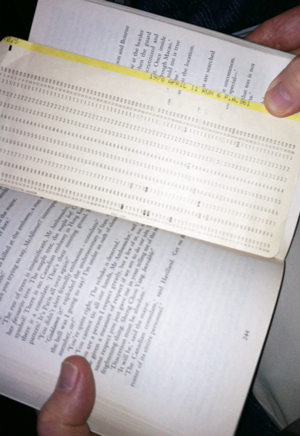
    While on vacation recently, I met an English professor who was using a 70s era computer programming punched card as a book mark.

    During a brief exchange, he said “Forty years ago we never imagined we’d have things like this,” pointing to my iPhone.

    What struck me was the manner in which he offered anecdotes of the days in which they were still in use. He didn’t imply loss or anger. He didn’t express any resentment for discontinuing the now antiquated and obsolete programming medium.

    On the contrary, he jovially stated, “Now, I use them as bookmarks and my wife uses them for her grocery lists.” Talk about recycling!

    Embracing change.

    I began to wonder why advances in technology have been embraced so well and completely, and why we are still in the “punched card” age of education.

    Many “upgrades” to effective learning are not universally applied… yet.

    For a considerable number of our public schools, we still approach the teaching-learning interaction in a way that is decidedly contrary to what research has not only indicated, but has, in many cases, shown to be true.

    It’s not just data transfer.

    Some still believe that education means opening the knowledge portal of students (whatever age) and simply depositing information. This is unrealistic and grossly simplified. Education – learning – must be received more than it can be given.

    Let them lead.

    Autonomous students not only having a say in what they engage but to a large degree feel their education is self-directed. This has a huge impact on their motivation, level of focus and ultimately how much they learn.

    Support with information, and don’t forget the “Way to go!”

    Research has provided us with concepts such as scaffolding to help children with mastery.

    Less acknowledged and utilized (perhaps due to less educator proficiency) has been emotional support and encouragement. But this is just as important in a child’s education.

    You may have the best information in the world for how to do something. But if the student is disengaged, it’s just not going to happen.

    Start with a conducive learning environment.

    This could be a post all by itself. The jist: it’s less about giving something, and more about ensuring the student is engaged. So the educational paradigm must focus on how we can facilitate the student’s learning, whatever that looks like.

    This means focusing on the student and HOW they learn right now. Instead of “he just needs to pay attention” or “she needs to work harder”.

    Back to the punched cards.

    We’ve been given these specifics that have been presented to us over and over in the research. They are being applied with successful and definitive results. So why are we resistant? And who are the “we” we are talking about?

    Look at the inevitable and constant changes in technological advances. Now consider the stagnant, upgrade-resistant public educational system. What’s the difference?

    What you can do.

    Be informed. Ask questions. Request and support educational “upgrades” in your schools.

    You and your children are the customers. Only you can create the demand for improvements in your child’s education.

    Have a voice. Be the squeaky wheel. And support schools when they move in that direction.

    They may already be doing so. If they are, let them know this is what you want.

    For more on how to support your schools in embracing conducive learning environments, contact us or leave a comment.

    Related articles
  • Palindromes – What's Your Palindrome Number?

    Palindromes – What's Your Palindrome Number?

    A palindrome is a word or phrase (or string of numbers) that reads the same front-to-back and back-to-front.

    Wil, the research guy, in mirror image

    There’re the little ones, like Wow, Mom, Dad and Hannah.

    Then there are big ones, like this one from Jon Agee:

    Go hang a salami, I’m a lasagna hog.

    But there are also words, phrases and names that are almost palindromes.

    But how “almost” is an almost palindrome?

    You can measure the “almost” of a palindrome with a palindrome number (or PALN for short). Here are the rules:

    Adjust the word or name using any of these:

    • Switch any two adjacent letters.
    • Insert a letter anywhere in the word.
    • Remove any letter from the word.

    For each of these increase the PALN by one. The smallest numer of these adjustments that can be made and still have an intelligible sounding “word,” is the palindrome number or PALN.

    Watch how it works…

    Start with something that is an “almost palindrome” – something that has a palindrome in it or lots of the same letters. The go crazy, like this:

    William – the bold part is a palindrome

    We can remove three letters to be left with “illi.” Or we can add A, M and W to the word to get “Mawilliwam.” Either is pronounceable and yields the PALN=3.

    mathchat – the bold part is a palindrome and the parts in italics are the same letters

    Remove the M and then switch the first A and T. So the resulting palindrome is “tahchat.” PALN=2.

    Susannah – bold part is a palindrome and so is the italics part

    As nice as this looks, its PALN is much larger than the other two. Removing the H is helpful, and then adding an extra SUS at the end gives a PALN=4. The result is “Susannasus.”

    Hanna – SO close!

    PALN=1. Simply remove the H or add an H for Hannah or Anna.

    You can use this to teach math!

    Math is about patterns as much as it is about numbers. Recognizing those almost palindromes and playing with them improves cognitive thinking.

    Keep your eyes peeled everyday for almost-palindromes. Use the opportunities to teach math in a way that doesn’t even seem like math.

    Your turn!

    What’s the PALN of your name? Share it in the comments or on Twitter/X.

    Related articles
  • Do Parents See the Math Monster? Or Just Think It's There?

    Do Parents See the Math Monster? Or Just Think It's There?


    There were several thoughtful and intense comments to the Sylvan commercial. As promised, here is a follow-up article based on the comments. A special thanks to those commenting on the video, as this is what keeps the math-revolution conversation going!


    There is definitely a disconnect from a service or product and those advertising or making the sales. I’m sure a lot of tutors/teachers at Sylvan wouldn’t endorse the commercial or would go about it a different way.

    Our intent wasn’t to beat up on Sylvan for trying to make a buck. We wanted to bring the commercial’s message to the attention of readers more as a way of asking:

    What does it say that a (probably) well paid ad dept. thinks that this would be effective (which it is)? And what does that say about us as a society (‘math stinks, it’s something to fear, I don’t even want to try’)?

    How about the fear?

    What you don’t know or understand is often scary.

    You may have memorized some math at some point, then brain dumped it on some test. If so, do you really understand this math you “learned”?

    If not, the idea of helping your children with math, without the guidance of someone telling you how, is frightening.

    What’s more frightening: wondering what the monster looks like, or seeing him?

    So they will never show you what your “math monster” looks like.

    But what if they did? Is the math monster that bad?

    What would it look like to help make math less scary for parents? Could parents model this “okay-ness” to their kids? Or better yet, would they have the confidence to help little Billy with homework?

    It’s not going to happen if parents really believe they are helpless and shouldn’t even try. The kids see this and do the same thing 25 years later to their kids. (Perpetual pattern?)

    It’s ok, maybe even cool to say “I’m bad at math”.

    This makes the commercial palatable, or even comical, to some who may relate.

    But if this commercial featured a mom running away from little Billy when he asked, “Mom, can you help me with my reading?” folks would be offended!

    Let’s make math okay for parents too.

    I’m not saying places like Sylvan shouldn’t exist. To the contrary, actually. They provide a wonderful service.

    But if parents are running – and encouraged to run – from helping their kids, they are sending a message. Kids see this and learn, “Mom doesn’t do or like math, so it’s really not that important.”

    Little Billy might end up passing, even making an A, but he’ll continue the pattern with his kids.

    So now’s the time to interrupt the pattern. If you’re a parent, find ways to see and say math around you. If you run from math, pretend you don’t.


    What do you think? Keep the conversation going in the comments! And share this article on twitter.


    Feature image by jez.atkinson | Flickr.com | CC BY

    Related articles
  • Anxiety Safe Learning Environments

    Anxiety Safe Learning Environments

    Would you like to create a safe math learning environment free from anxiety? What would that look like? Let’s first peek at what it doesn’t look like:

    Okay class, what’s the answer to number 12?

    I think it’s 75, Mr. Jones.

    No, Emma. That’s wrong. Have you been paying attention?

    Unintentionally or not, this is often taken as ridicule by Emma and her classmates.

    They quickly learn to avoid this verbal punishment and the anxiety it causes.

    And the easiest way to avoid it is by not trying.

    There is a power-dynamic, a vulnerability, that goes along with any instructor-student relationship. In these situations, students must feel safe to engage. Encouragement and support are ideal. But more importantly, the learning environment must be free of criticism, shame, or overwhelming frustration.

    If a student feels that there is threat of criticism, shame and frustration in a math class, it’s curtains. Even if forced to “stay in that chair and listen,” they won’t mentally stick around to learn much of anything.

    So how do you get your learning environment safe from anxiety?

    Praise the “wrong.”

    Being wrong means the student’s trying. Trying means they are engaged. Engagement gives an opportunity to learn.

    Without the opportunity, learning can’t happen.

    When you praise the incorrect answers, you praise the trying. When you praise the trying, the students are more engaged in math class. They have an opportunity to learn.

    So when they’re “wrong” – praise them.

    Exercise patience

    You may say, “But they didn’t give the right answer!”

    Got it.

    But before performance, or getting the right answer, a student must take in and process information at a pace where they can retain it. Getting the right answer is only an indicator of understanding and effective learning of math. A confirmation. It’s not the learning itself.

    Letting them be wrong and process how they got the wrong answer is part of the process of learning. And sometimes this can be slow.

    But giving a student time to think about and mull over questions and answers is more effective for learning in the long run, than requiring the right answer.

    Yup – you’ve got things to do, kids to teach. So it might leave you feeling frustrated when you allow wrong answers and give them time to ponder it.

    So when your patience is running thin, step away. Adults need breaks, too. Take one to avoid a damaging experience.

    Learn from the “wrong”

    When an incorrect math answer is given, ask them how they got there. Get them thinking about it. There are more learning opportunities in the wrong than the right.

    Right answer given. Say: Good job! Let’s move on to the next one.

    Incorrect answer given. Say: Excellent. Let’s talk about how you got there…

    We can praise the attempt and find something in the incorrect answer to build on and learn from.

    Think about the teaching implications of this. How many more folks would be willing to try something if being wrong is okay? How many more kids will you engage if there’s no criticism or humiliation to avoid?

    Be ready, don’t force it

    Your students might have been trained to avoid verbal punishment by not trying. Remember Mr. Jones from above? Mr. Jones is everywhere. So take it easy when creating this “anxiety safe” environment.

    When the more vocal students get wrong answers, praise like crazy, be patient and help them learn from the wrong answers. The rest of the students will follow.

    And whatever you do, don’t be Mr. Jones.

    Your turn…

    How do you create a learning environment safe from anxiety? Have I missed anything? Share your thoughts in the comments.


    William Devine

    William Devine is a licensed professional counselor in private practice. He has joined the MathFour.com team as the Director of Research. Connect with him in the comments, on the contact page or via twitter @MathPsych.


    Feature image adapted from an image by Marshall Astor – Food Fetishist | Flickr.com | CC BY SA

    Related articles
  • Performance vs. Understanding

    Performance vs. Understanding


    This is a feature article by William Devine, MA, LPC, CART. Wil is the Research Guy at MathFour.com.


    Racing

    The “old guard” of academics focused on rote memorization, correct answers, and academic performance – performance based, measurable objectives. To a large degree some of these focuses continue to prevail.

    But a different way of teaching is emerging. Based on the research, this new way is more helpful, sustainable, and effective.

    Research was done in the everyday math classroom.

    Teachers were profiled in a research paper titled The classroom environment and students’ reports of avoidance strategies in mathematics: A multimethod study.

    They were studied in an attempt to understand the affects of teaching styles on the students. And they were observed during regular, non-testing times.

    It was noticed that their teaching styles tended to fall into roughly two categories: performance based and understanding based.

    Performance-based teaching was found lacking.

    When the teachers focused only on math performance, students were more likely to disconnect and feel intimidated.

    In these cases, if a student gave an incorrect answer, they were told as much. Then another student was called on and so on until the correct answer was given. The problem with this search for the right answer was the lack of instruction that followed. It became all about doing it right instead of teaching the kid how to do it.

    The instructor would then approach the next math problem with little or no discussion on how the correct answer was determined. Where was the teaching?

    As we all know, if we feel uncomfortable with something, have anxiety, we tend to disengage or avoid the situation. This was observed to be the case in the classrooms of performance-focused teachers .

    Students disengaged and were concerned about not only doing something the wrong way but feeling unable.

    Understanding-based teaching was effective, helpful and encouraging.

    Other teachers focused on helping students understand where he or she may have come up with the incorrect answer. The observed results were very different.

    Teachers would help students arrive at the correct method. They would work to help them understand how to do the problem. Ultimately, students would arrive at the correct answer.

    Furthermore, they would engage on each of the next questions – and get those right too!

    So what can we do right now to move toward this idea of supportive academic encouragement?

    Be careful with the words “wrong”, “incorrect”, and “bad”.

    Kids are sensitive to these terms because they imply doing something they aren’t supposed to do and that lead to things they don’t want. And then we wonder why they don’t want to try!

    We want them to continue engaging and putting forth effort because this is how learning happens. A “wrong” answer is so much better than no answer at all.

    We’re not proposing that you stop using these terms altogether. Just do so sparingly.

    Encourage improvement, not performance.

    Focus: How much time do we focus on the incorrect answers? Instead, acknowledge what was correct and build on this. Recognition and praise for what they are doing well will encourage them to continue to stay engaged in the exercise.

    Before: “I graded your paper and you missed 4. Let’s try those again until you get them right.”

    After: “Good job! You got 6 right. Let’s try a few more.”

    Help them discover how they got to where they got.

    How: Understanding how they arrived at a particular answer can help determine what needs to be corrected in how they are doing something. It becomes a truly instructing experience rather than a performance (you got this one wrong and this one right). We want them to learn how to do something. If they feel pressure to get the right answer the first time, they will hesitate to offer any answer at all. This stifles trial and error learning and instills an aversive experience (fear) into the learning process.

    Before: “5 is the wrong answer. Try this next one and really concentrate.”

    After: “I see that your answer is 5 here. Walk me through how you got there.”

    A note of concern: I have found in the research literature an indication that some teachers think if a child is having fun while learning, they aren’t really learning. Wow.


    William DevineWilliam Devine is a Licensed Professional Counselor in private practice. He has joined the MathFour.com team as the “Research Guy”. Connect with him in the comments, on the contact page or via twitter @MathPsych.


    Feature and post images by ukanda | Flickr.com | CC BY

    Related articles
  • Math Anxiety Research

    Math Anxiety Research

    My business partner, William Devine, a licensed professional counselor, has been doing lots of research these past few weeks. He’s been reading up on math anxiety and the effects of adults’ attitudes and behavior on children’s math performance.

    He started looking into this because I was basing the That’s Math product we’re developing on my experiences with student math performance – both high and low.

    Of course I’ve been watching student math performance some 20 years. But he still wasn’t about to spend hundreds of hours building a product based on my soap-box rantings.

    Indeed, what I was offering was merely…

    Proof by Blatant Assertion.

    I’ve been using the standard proof by blatant assertion method on MathFour.com for a year. So it seemed that building That’s Math on the same premise would work.

    Everyone knows that the things grownups say in front of kids about math has a huge impact.

    When I brought Wil in as a partner, the first thing he said was, “You can’t just say it’s true.”

    “Well, it is true,” I said.

    “You may be right, but saying it really loud doesn’t make it true. And pushing it on people doesn’t make them believe it.”

    Proof by Research.

    So here we go. Off into research world – finding out what causes math anxiety. Or at least what pieces we can help change to relieve math anxiety.

    Thankfully Wil’s great at it. And I’ve managed to convince him to share a little with y’all – even before we launch That’s Math.

    I’m officially introducing William “Wil-with-one-L” Devine, MA, LPC, CART, as a writer on MathFour.com.

    We’ll be sharing what he finds, each week. And of course I’ll give my two cents when I’m inclined.

    What do you want to know?

    If you’re interested in knowing more, let us know in the comments. And what do you think is true about math anxiety and its effect on math performance? What about the effect of adults on the math performance of children?

    Feature image by xb3 | Flickr.com | CC BY

    Related articles