
Tag: logic

  • Logic Skills — Ornery Kids Develop them Naturally!

    Logic Skills — Ornery Kids Develop them Naturally!

    I got to see a natural use of logic yesterday — but it was disguised as an ornery kid!

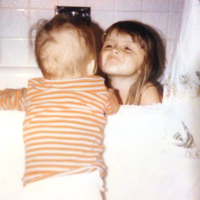
    Parenting experts (and magazines) suggest that giving options to kids is a great idea — but only if they’re real. You’re not supposed to ask your little one if he wants to take a bath when you intend to give him a bath anyway.

    Instead, ask him which bathtub he wants to use. Or which towel he prefers when he gets out of the tub. Or even if he wants to take a bath alone or with a sibling.

    It’s a clever way of saying, “It’s time for your bath, but you get some autonomy in the activity.”

    Kids like this.

    And it’s formal math!

    Yup — in formal logic terms it looks like this: p∪q, where p and q are the options. And that little ∪ means “or.”

    For instance, I give K8 the choice of taking a bath alone or with me. So it looks like this:

    p = Take a bath alone.

    q = Take a bath with me.

    So pq = Take a bath alone or take a bath with me.

    But she’s more clever than I thought!

    Yesterday I gave her this option. She responded:

    I don’t want to take a bath alone and I don’t want to take a bath with you.

    Ornery little thing she is!

    But in our formal math lingo, this is

    ¬p∩¬q

    (Those little thingies in front of p and q are the “not” part. And the ∩ is the “and.”)

    If you look it up (or know formal logic) you can find out that ¬p∩¬q is exactly the same as ¬(p∪q).

    She was clearly saying to us that she does not want to take a bath at all!

    Math is built in.

    I’ve claimed before that we all have a built in ability to do math. Now it looks like that’s not just with numbers — it’s also with logical processing.

    She doesn’t get that she’s doing formal logic, but she understands in her gut that saying, “I don’t want to take a bath alone and I don’t want to take a bath with you” is negating the “take a bath” statement.

    Encourage it!

    I know it seems like she’s being a snot. And as she gets older it’ll get worse. I’ve seen my niece do it with my sister — play these logical games that feel like back-talk.

    But logic is the foundation of learning math. So instead of admonishing children, discuss it with them. Talk about a way to phrase your statements or rules so that there’s no logical loopholes.

    Allow them to argue with you on these little things — they’re building skills that will make them into super math thinkers!

    Your turn…

    What do you think? Has your child shown natural logic skills? How do you handle it?

    And how do I get K8 into the bath now!?

    Share your thoughts in the comments or on twitter/x.

    You might also like:
  • Math Basics — The Real Ones!

    Math Basics — The Real Ones!

    I hear often that the “basics of math” are important. What people mean is that kids should memorize their math facts.

    The basics of mathematics that are required for a student to learn and do mathematics aren’t math facts. They are these: Logic, Joy of Failure and Familiarity with Math.

    1. Logic

    Children start learning what an if/then statement is at an early age:

    If you clean your room then you can go to the park and play.

    The more parents have normal conversations with their children, the more children will understand the other subtleties of logic — like negation, contradiction and contrapositive. We all understand these, even if we don’t know the proper math words for them:

    • Negation: “I am not going to listen to you whine!”
    • Contradiction: “That dog is green.” (and K8 says, “Nu-uh! That dog is brown!”)
    • Contrapositive: “Oh, I see you’re not at the park. I guess you didn’t get your room cleaned!”

    Once the basics of logic are understood, a child is able to pick up a calculus book and work through it. At any age!

    2. Joy of Failure

    Teachers often well rehearse their lectures before they present them to the students. The struggle and failure that he or she goes through figuring out how to smoothly demonstrate the problem is kept from the children. Teachers know the job of failure, but they keep it hidden.

    Thus children believe that failure is not an element of mathematical thinking. And nothing could be farther from the truth.

    Parents can support their children in finding the joy of failure by allowing them every opportunity to attempt, reattempt, and fail at everything.

    Promoting failure is tough, but important.

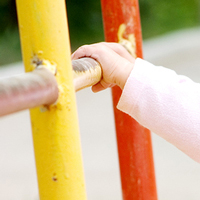
    If your toddler is trying to climb a ladder, resist the urge to jump in and help. The more the child fails a climbing the ladder, the more insight he or she will gain into what else might work. (Like different hand positions, different footing, etc.)

    You helping them climb the ladder might get them to the top faster, but resisting helping them (until they ask at least) will help them get used to learning from failure.

    Mastery may seem a pleasant goal, but it merely means there is no more learning to be done and it’s time to move onto something else. Don’t give them a false sense of mastery — let them learn the joy of failure.

    3. Familiarity with Math

    Children are quite confident and very engaged in learning the craziest things. It may be how to skateboard, how to make funny noises or how to repair their bike. One of the reasons they are competent and engaged in these activities is because they are familiar with them. Everyone is doing it!

    It’s difficult to be fearful of something that you see as a normal everyday part of life.

    Parents can help children gain a familiarity with math by pointing out where they themselves use math every day.

    This can be challenging to some parents, because they truly believe they don’t use math. But finding where the math is — and saying it out loud — will help your children a great deal.

    How are you doing?

    Do you talk to your children and let them read users’ manuals? (This promotes logic.)

    Do you let your kids mess up? (Helping them find a joy of failure.)

    Do you talk math to your kids? (Showing them how math is everywhere.)

    Will you start?

    Share your thoughts in the comments or on twitter/x.
    You might also like:
  • Riddle: What are the ages of the kids?

    Riddle: What are the ages of the kids?

    I met the dad of a homeschool family on the plane yesterday who told me a riddle. Now that I’ve enjoyed solving it, I thought I would share it with you:

    Two math moms, Lisa and Gwen, are carpooling to a play date with Heather. Lisa is telling Gwen about Heather and her family. The conversation turns to the ages of Heather’s three children.

    Lisa says, “If you multiply their ages together, you get 36.”

    Gwen says, “How nice, but that doesn’t give me enough information to determine their ages.”

    “Good point. If you add up all of their ages, you get that house number,” Lisa says pointing to a house.

    “Interesting,” Gwen says, “but that’s still not quite enough information.”

    Lisa says, “Well, you’ll meet two of them soon. But the oldest is with her grandma.”

    “Oh, great,” Gwen says, “They’re perfect ages to play with our kids!”

    What are the ages of Heather’s kids?

    The end of the riddle is “what are their ages?” But the real value in the riddle is the logic and work it takes to arrive at the final answer.

    The “answer” is easy, but getting there (or explaining how you got there) is much more challenging.

    There’re not that many possibilities. So the trick is to imagine what each mom is thinking as they talk. What makes Gwen think, “that’s not enough information”?

    Share this with your children.

    Tell this riddle to your children. Let them play with it. If they get discouraged and want a hint, ask them these questions — one at a time — and see how far they can get:

    • What are all the possible answers? In other words, what sets of three numbers can multiply to give you 36?
    • Lisa points to a house number. What are the possible numbers that are the house number?
    • Go through each possible answer and imagine what Gwen was thinking when she said, “that’s not enough information?”

    And there’s more…

    When your child solves the riddle, see if he or she can try to replicate it with other numbers. What kinds of things do you need to make another riddle just like this one, but with other numbers?

    And don’t forget to share what happens in the comments below or on twitter/x!

    (P.S. I’m specifically not giving the solution here because I believe it’s valuable to find the solution independently. If this angers you, tweet me and I’ll give you the answer.)

    You might also like:
  • Is Math a Language?

    Is Math a Language?

    I’m taking Keith Devlin’s course “Introduction to Mathematical Thinking” on Coursera for the next seven weeks. We’ve started with some thoughts and readings on set theory and logic.

    And the first big thing in set theory is the way the stuff is written.

    We invented shorthand to help us write stuff.

    You may be old enough to remember Gregg shorthand. They discontinued the class the very year I intended to take it in high school. But I remember seeing it and really wanting to learn it.

    The idea behind shorthand, both Gregg and any other, is that you have agreed upon symbols that allow you to write things quickly, or more concisely.

    Logic and set theory both use shorthand to do this. And in fact, you’re not a stranger to it either!

    We live in an age of texting shorthand.

    FYI and CC have been around for a long time. But LOL is relatively new. So is IMHO.

    And every now and then I come across a brand-new one that completely throws me.

    Logic and set theory shorthand works the same way. Consider the statement:

    For every number that’s a positive number, we know that that number is bigger than the number -13.

    That’s a math mouthful!

    So instead we have invented some shorthand to make that easier.

    We use variables like pronouns.

    The first shorthand we use is variables. If the number were a guy, we would say,

    If some number is positive, he’s bigger than the number -13.

    Unfortunately numbers aren’t people. So instead of using he and she, we use x and y. So we say,

    For every positive number x, we know that x is bigger than the number -13.

    Then we get freaky!

    Because math and set theory have been around a really long time, we have symbols that are easy to write with pencil and paper. But not so easy to write with typing!

    Let’s start with one of my fav’s: \(\forall\).

    That upside down A stands for “for all” or “for every.” If we were to invent that notation now, we would probably use FA or something easy to text.

    But we didn’t, so we’re stuck with it.

    Here’s how we would use it in our example:

    \(\forall\) x such that x is a positive number, then x is bigger than -13.

    You can also use it like this:

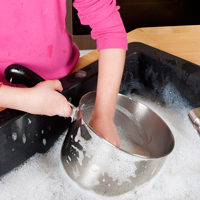
    \(\forall\) x such that x is a dish, you will wash x before you go to bed.

    How about some more…

    \(\exists\) means “there exists” and can be used like this:

    \(\exists\) a dish in the sink, so you’re not going to bed yet.

    \(\therefore\) means “therefore” or “thus” or “because of that, this will happen…” Here’s a way to use it:

    \(\exists\) a dish in the sink, \(\therefore\) you’re not going to bed yet.

    \(\land\) means “and” — to be used like this:

    \(\exists\) a dish \(\land\) a glass in the sink, \(\therefore\) you’re not going to bed and you just might lose your phone privileges tomorrow.

    Math isn’t a new language — it’s a shorthand of normal language.

    And it isn’t really hard. Give this sentence a shot. I’ll be you can figure out what the symbols mean!

    \(\exists\) a dish \(\lor\) a glass that isn’t washed \(\Rightarrow\) you’re getting into serious trouble!

    Want more? Check out this list of logic symbols. And make sure your share how you use them with your kids in the comments or on twitter/x.
    You might also like:
  • HELP – Logic Puzzle Announcing The Homeschool Blog Awards

    HELP – Logic Puzzle Announcing The Homeschool Blog Awards

    Okay, y’all, I’m in over my head. I’m trying to create a logic puzzle as a nifty way to announce The Homeschool Blog Awards. Having never created a logic puzzle before, I thought, “How hard can it be?”

    Well, pretty darn hard.

    So I thought I’d put my start out there, as well as the solution, and see if I can get some help from y’all.

    Read the puzzle, try to figure out the solution, then suggest in the comments one or more clues that I should add (or get rid of).

    The Puzzle

    The Homeschool Post is the sponsor of The Homeschool Blog Awards every year. Writers of The Homeschool Post aren’t allowed to win, nor be nominated. So some of the writers of thought it might be fun to do a “within the family” blog award for themselves.

    After all was said and done, they decided to pass all information over to me, the math mom in the team, and let me figure out the winner. Alas, the information wasn’t well organized. So I had to figure out which blog went with which person, who voted for whom and who was the winner.

    The Clues

    Six of the writers decided to participate. They were

    • Lana (like Banana)
    • The writer of OK Homeschool Mom
    • Heather
    • The writer of Knit 1 Kids 4
    • Gidget
    • Rachel
    1. Heather said, “I love everyone. I’m just voting for them all!”
    2. Someone suggested that nobody should vote for themselves. So they agreed on that.
    3. The writer of Finding Joy voted for three people, including Heather and Kristal.
    4. Everyone who voted for Rachel also voted for the blog I Love My 5 Kids.
    5. Everyone but Gidget voted for the author of the blog SprittiBee.
    6. The author of  Homeschooling Unscripted only got two votes.
    7. Donnetta and Gidget got the same number of votes. As did the authors of SprittiBee and Knit 1 Kids 4. Also, Rachel and the author of I Love My 5 Kids had the same number.
    8. The author of Finding Joy is very popular – everyone voted for her.

    The Solution

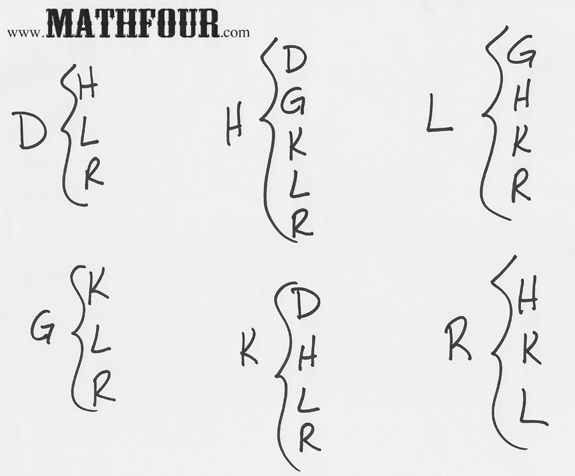
    Here is the solution of who voted for whom. The initial of the person is on the left and the initial of the people for whom they voted is in the curly brackets. Click on the picture to enlarge.

    Owners/writers of the blogs are here:

    • Donetta publishes OK Homeschool Mom
    • Gidget publishes Homeschooling Unscripted
    • Heather publishes SprittiBee
    • Kristal publishes Knit 1 Kids 4
    • Lana publishes I Love My 5 Kids
    • Rachel publishes Finding Joy

    Don’t forget…

    Suggest a clue in the comments!

    Related articles
  • Some Fun Ways to Teach Counterexamples

    Some Fun Ways to Teach Counterexamples

    This post is inspired by a discussion with Betty Ann on the www.Teachers.net math chatboard. She writes:

    I’ve got a high school student doing a very basic geometry course. She’s having trouble with the concept of a counterexample. I’m writing a worksheet on counterexamples and would love to have some more simple conjectures for her to work with.

    A counterexample is a special kind of example that disproves a statement. We start using these in Geometry because that’s the first course that really teaches proving things.

    Counterexamples are an essential part of logic.

    They don’t really need to be associated with math (or even philosophy) to be applicable. Which is the cool thing about them.

    Suppose someone says, “I always get to school on time.” It only takes one day when he isn’t on time at school to negate this statement. That one day would be considered the counterexample.

    We do this all the time and never use the fancy math term “counterexample.” So when we teach it, it’s helpful to tap into these everyday uses.

    Counterexamples are everywhere.

    Here are some statements for which students can come up with easy counterexamples.

    In the house:

    • Any four legged piece of furniture is a table.
    • If something has a knob on it, it’s a faucet.
    • Everything in the house with hands is a clock.
    • If a living being has eyes, it’s a human.

    In the grocery store:

    • Everything that costs $2.99 is a gallon of milk.
    • Everything that’s hot is fried chicken.
    • If something is white, then it is mayonaise.

    In the classroom:

    • If it’s a book, it has words. (Make sure there are blank journal books around.)
    • All books teach arithmetic.
    • Anything on the wall is a whiteboard.
    • If it’s full of pencils, then it’s a coffee mug.

    You can make your own statements for counterexamples.

    Choose a noun. Notice a feature about it. Then put it together using this MadLibs format:

    • Everything that has <feature> is a <noun>.
    • All <plural noun> have <feature>.
    • If it <has this feature>, then it’s a <noun>.

    You can also reverse them like this:

    • Every <noun> has <feature>.

    For instance:

    • Every cow is brown.
    • Every lightbulb is 60 watt.
    • Every hammer has a wooden handle.

    Which counterexamples or counterexample building method do you use?