This is the 4th in the draft purge series where I’m throwing stuff out over a three week period.
Discalculia (pronounced dis-kal-COOL-yu) is the official word meaning a learning disability in math. Some think that math anxiety is just another way of saying discalculia. Maybe because people with this learning disability often have math anxiety.
But you can certainly have math anxiety without having discalculia. I did once. So it’s not exactly the same thing.
Here are some resources and descriptions you might find helpful. If you have 8 extra minutes, watch the video at the bottom – it’s a super great intro!
I put this list together on Amazon when I was teaching at the Art Institute of Houston back in October 2002. I wanted the library to purchase a few – but they bought them all!
It was fun to go through the list and see what I’ve read and haven’t read. And what’s still around!
Last minute shopping? Me too! How about some of these math gifts for your favorite folks…
For Kids
Numb ‘n’ Number by Peter Weatherall – A collection of fun math songs.
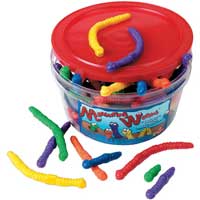
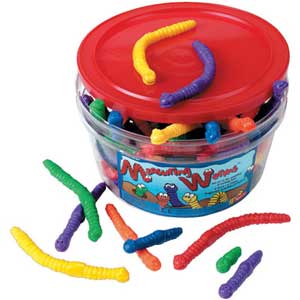
Worms! What kid doesn’t like worms? And these are measuring worms!
For Grownups
Math T-Shirts by ExBoyfriend Collection – Sad? Funny? These are cute for even the “non-math” people.
Want something a little more fancy? How about math jewelry like this Fibonacci necklace!
For Families
Math games are great for full family fun – and games like Uno… well, that’s math too!
For Math Geeks
Old math books! Husband found a College Algebra book from 1947 for me – gave it to me as a “just because” gift. Here’s a Trig book by the same guy. You probably can get an old math book for your favorite geek at any second hand book store!
Math Music! The Klein Four Group’s instant download Musical Fruitcake CD (I just downloaded it, myself!) To give you a sample of how cool these guys were (they are now professors all over the world), here’s a fun Christmas song from them:
How about it – what are you up to for last minute shopping? Are you done?
I’ve been sitting on these links for math learning for too long – wanted to share them with y’all…
Mental Floss offers the “Monday Math Square” – I’m not keen on these types of puzzle, but that doesn’t mean a lot of your kids aren’t! (They’ve been discontinued, but I found some here for you to try.
Here’s another round of good stuff I’ve found online.
One reason we say you can’t divide by zero is because if you divide 0 by 0, you get anything you want. That’s what’s shown in this math cartoon.
David Wees always comes up with some fun stuff: How about some marshmallow math?
Here’s an article about teachers cheating on standardized tests. I’ve heard of this, but it seems to be getting really bad. Of course, if we continue down the road of these horrid tests, I don’t see why teachers wouldn’t do it.
Which language is best for learning math? I would say the native language of the student. These folks over in Borneo seem to think math should be learned in English.
What are the links that you’ve found recently? Share them in the comments!
Here’s a FREE Activity Packet to read and share with your children to get them thinking about how numbers got started.
Somewhere in the past we recognized that we have these “digits” on the ends of our hands. Using these, we created numbers, adding, subtraction, multiplication, division and even fractions!
I’ve been collecting some great articles and finally realized how selfish it was that I wasn’t sharing them. So here’re a few:
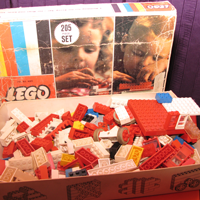
Who doesn’t love Legos? A client of mine gave me a box of Legos from 1973. I can’t wait to use some of Colin’s suggestions in his article 101 Manipulative Lessons with Lego!
Paul Salomon over at Lost in Recursion pretty much has exactly my same opinion of the new “Any Questions” model of teaching in his article Real World Math (Dan Meyer and stuff). The best quote: “Real world math is simply mathematical thinking. It’s personal, it’s real, and it can happen to all of us.”
Richard V. DeMerchant explains some of what happened during a mathematical literacy/numeracy discussion he was involved in. It’s an interesting read to understand some thinking and direction of public schools in the area of numeracy.
I learned something last night from Santo at FoMaP (formerly QED Insight). In his post Students Don’t Read Textbooks he wrote that textbook manufacturers place restrictions on authors so they can maintain profit levels.
These restrictions include reducing page count (each page costs money to print) and increasing topics (the more topics, the more they can charge). The result is a textbook covering lots of stuff in the shortest amount of space possible.
Doing math is not the time to save the trees.
I’ve said this to students at least 1,000 times. I use cloth diapers, so don’t think I’m a wasteful snot. I just know that to do math, you gotta write. A lot. And squishing things up when you do it never yields a happy ending.
So I was horrified to learn of this artificial condensing of math topics in textbooks. This led me to consider some alternatives.
You can find non-condensed math books in lots of places.
There are the Life of Fred books which offer math using stories. The Living Math! folks have done tons of reviews of math literature. And it doesn’t have to be contextual lit, either. Dan Bach at Dan’s Math is writing an algebra book to be released this summer that doesn’t have the restrictions mentioned above.