Author: Bon Crowder

  • Birthday Math: How to Celebrate with Math

    Birthday Math: How to Celebrate with Math

    Do you try to integrate math in everything? Would you like to? How about integrating it into birthdays?

    It’s Husband’s birthday today. He’s 42. But instead of just saying, “Husband’s 42,” I can say he’s 13.37pi years old. (At that site you can also find an “exact” pi birthdays in case you want to celebrate at some other time.)

    He’s also 15,340 days oldThis site calculates months, hours and seconds too.

    He’s 2×3×72 \times 3 \times 7 years old. His age is also the second sphenic number. What’s that? I’m not sure – but if you click on your child’s age on this Wikipedia page, you’ll get some fun sounding words for their number that they can use all day! Here are some for your kids:

    He can go here to find out that he was born in MCMLXIX. This nifty birthday math trick will result in the number 4.22 (April 22 – his birthday!). Or this one which will result in 42269 (also his birthday).

    For some fun birthday math, he (and you) can check out The Birthday Problem – also known as the birthday paradox.

    How will you celebrate a family member’s next birthday? Will you use birthday math? Share your thoughts in the comments.

  • 5 Philosophies of Teaching Math

    5 Philosophies of Teaching Math

    I discovered this video about the philosophies of teaching math from the blog Learning to Teach, The Empty Set of Education. Having degrees in math and not teaching I found it very interesting from a theoretical point of view.

    And I totally love his conclusion – the 5th philosophy!

    What is your philosophy for teaching math? Share your thoughts in the comments.

  • How to Answer ‘When am I going to use this?’

    How to Answer ‘When am I going to use this?’

    If you’ve ever taught or tutored math you’ve encountered the question, “When am I ever going to use this?” Maybe even hundreds of times.

    And no doubt you’ve tried the answers that you’ve heard your math teachers give:

    • You’ll need it in a future job.
    • You’ll want to balance your check book someday.
    • Blah, blah, blah.

    I was on the Teachers.net chatboard last night and there’s a discussion in the math teachers section about how to answer this question.

    I was horrified to read that some teachers actually respond with, “How about as homework, you find the answer to that question.”

    Egad!

    We all know it’s a discrationary tactic. We know that there are lots of good uses of math. And we’ve experienced our answers shot down with, “I’m not planning on doing a math job for a living, so I won’t need it,” or “I’ll hire a CPA to do my checkbook.”

    There’s only one right answer to this question.

    “You’ll never use the math I teach you. Ever.”

    I offer $10 to anyone who can come back to me in 10 years and tell me that graphing functions (or whatever we are learning that day) has actually had an applicable use in their life.

    Of course they’re horrified at this answer. They give me looks like, “What? Are you an alien here to invade our classroom. Did you eat the real Bon?” No teacher has ever been that honest.

    Graphing functions is virtually useless as a real tool. As is most of what we teach.

    I used to get phone numbers from men at bars with my amazing use of the quadratic formula, but that’s only something you can tell college students. And they don’t buy it anyway.

    Teaching math is teaching brain exercises.

    The reason we teach and learn graphing functions (or other math) is to exercise a part of the brain that we rarely get to use. A part that will get used sometime later in a weird way.

    We’re building new paths in the brain. We’re carving a way to alternative problem solving that might one day be useful in solving interpersonal, business, automotive, or other type of problems we have.

    I tell them that math class is a game. A fun time to escape once a day. This is a play time to stretch their brains and do something completely different.

    And I certainly don’t pile pissiness upon pissiness with the attitude of “If you’re going to challenge me, small menial student, then I’m going to give you extra homework.” That really motivates students… to hate math.

    How about you? How do you answer the question? Are you supporting future math happiness? Share your thoughts in the comments.

  • Learning Right Triangles with Discovery Toys

    Learning Right Triangles with Discovery Toys

    I hosted a Discovery Toys party the other day and ended up explaining how to use many of the toys for teaching math.

    Alas, here I am now doing videos of the same. I can’t get over these toys. They are designed proportionally (the cups and weighing ones) and always with the thought “How can this be fun at the same time it’s teaching something.”

    Of course, all toys teach. But the designers of these toys put the extra oomph into the thinking process so that when a kid asks “why?” there’s an easy way for the parent to answer.

    Oh – and they are guaranteed for life!

    So from here out, I’ll be doing occasional videos on how to use them.

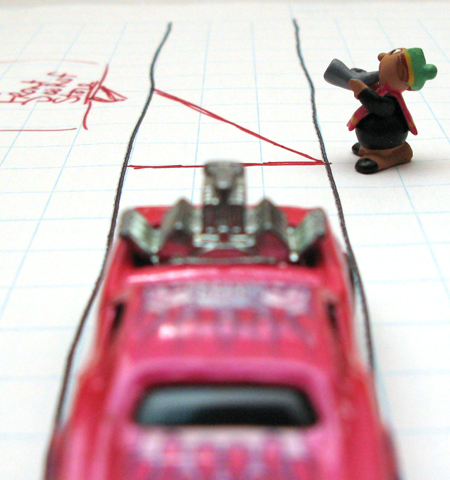
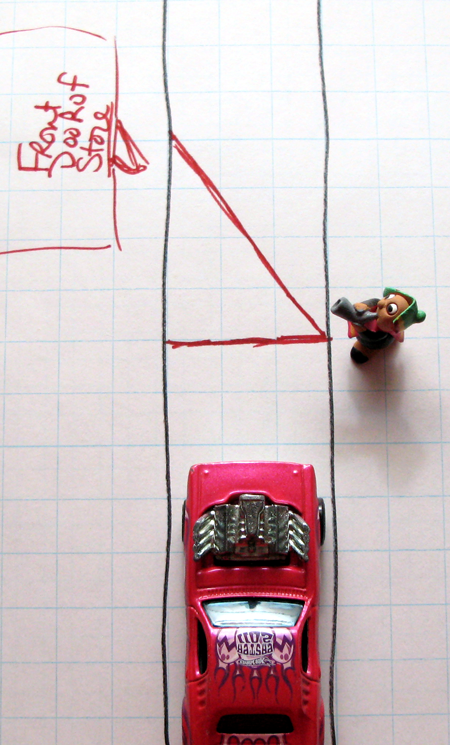
    The first is about right triangles on the Giant Pegboard. Notice in the video that when I say “congruent triangles” I really mean “similar triangles“.

    See what you think:

    Have you played with triangles and pegboards? What other ways can you use them to teach and learn?

    Disclaimer: I tried to become an affiliate of these toys to help pay for this blog. Alas, they don’t have an affiliate program. The only way was to become an official consultant. These toys are so cool and helpful, that I have done it.

  • The Real Place Kids Learn Math

    The Real Place Kids Learn Math

    Where did you learn math?

    I’ll bet the first answer you have is, “in school.”

    In my recent research of different types of math teaching, including dancing, literature and gaming, it’s occurred to me that I didn’t learn math in school. I learned arithmetic, I learned algorithms, but math?

    I learned math at home.

    My dad is an engineer, and by nature not a teacher. But we did puzzles. Cryptograms from GAMES magazine, computer-based role-playing games and TV-based video games. He wasn’t one for shoot-em-up or beat-em-up games (although swords were essential). Everything we did had logical thinking.

    My mother was an English major. She encouraged memorization of both prepositions and multiplication facts. And she played word games with me.

    Puns have a special kind of logic to them. As she was punning around with me, I was learning a unique set of skills.

    Of both of them, I was allowed to ask questions. Any questions. And I did. And they answered them.

    Everyone learns math at home.

    As a parent, your daily actions impact your child mathematically. It’s not your skills with pencil and paper that help you teach math, but who you are.

    You connect with your children and understand them because of your similarities to them. Remember how you learned math. Not how you learned arithmetic and algorithms, but math. The art of math.

    That’s your key to helping your kid learn math.

    How did you learn math? Can you use this to help your children? Teachers – how can you help parents tap into this side? Share your thoughts in the comments.

  • How to Step Things Up in Math Teaching

    How to Step Things Up in Math Teaching

    I found an EdReach article through The Republic of Math‘s site and was so relieved. I’ve been hearing so much about the Khan Academy. Every time I look at it, I can’t help but think, “Same stuff, different medium.”

    Math teaching is about connecting math with people in a way that works for them. If the Khan Academy helps a kid get it, then great. But if that’s the case, then it’s likely that they’ll get it regardless of the medium.

    It’s time to step it up.

    I’ve been hearing about experience selling for a while. You don’t sell a product, you sell an experience. I’m not typing on a Mac right now because it’s a better computer than a PC. I’m typing on a Mac right now because if I have a problem, the cute purple-haired kid at the Apple store 3.2 miles from here will help me fix it.

    The same holds with math. We need the experience. Kids need the experience. It no longer works to sell “you’ll need this in life.” You have to sell the emotion behind it. The “what’s in it for me?”

    And that’s easy – if we just step it up a bit.

    This ain’t your daddy’s math class.

    Nope – not anymore. Once kids are old enough to get it, they need to be allowed to get it. Until then, we can sell them the algorithms and the memorization. But once they hit that threshold (which is different for every kid), they have to be allowed to do it their way.

    Which means no more rules. Math teaching is now about facilitation of learning. No more, “You must do it this way.” We’re losing them with forcing them to rationalize the denominator, simplify the fractions and write polynomials in descending order “because they’re supposed to.”

    They should rationalize the denominator because it compares better when put next to another number. They should simplify fractions because it’s easier to wrap your brain around 1/4 instead of 13/52 (unless you play ). And polynomials add easier when you write them in some designated order.

    They have to know why.

    Just like grown-ups.

  • Where to Find the Best (and Cheapest) Math Resources

    I learned something last night from Santo at FoMaP (formerly QED Insight). In his post Students Don’t Read Textbooks he wrote that textbook manufacturers place restrictions on authors so they can maintain profit levels.

    These restrictions include reducing page count (each page costs money to print) and increasing topics (the more topics, the more they can charge). The result is a textbook covering lots of stuff in the shortest amount of space possible.

    Doing math is not the time to save the trees.

    I’ve said this to students at least 1,000 times. I use cloth diapers, so don’t think I’m a wasteful snot. I just know that to do math, you gotta write. A lot. And squishing things up when you do it never yields a happy ending.

    So I was horrified to learn of this artificial condensing of math topics in textbooks. This led me to consider some alternatives.

    You can find non-condensed math books in lots of places.

    There are the Life of Fred books which offer math using stories. The Living Math! folks have done tons of reviews of math literature. And it doesn’t have to be contextual lit, either. Dan Bach at Dan’s Math is writing an algebra book to be released this summer that doesn’t have the restrictions mentioned above.

    And you can find free stuff.

    There is Free Math Help everywhere online. Homeschool Math has a list longer than your arm of online stuff. There’s Khan Academy, Math.com (cool url, huh?), and even the U.S. government has one!

    So there’s no reason students or parents have to tolerate this high priced, squished content textbook thing anymore.

    Do you know of other math resources? Please share them in the comments.

  • How to Use Flashcards when Teaching Math

    How to Use Flashcards when Teaching Math

    Siggi over at Turkeydoodles wrote a post about her preference of calculators over flashcards. It’s her preference, but her arguments seem to be founded on the misuse of of flashcards. Furthermore, it seems she’s not seen the detrimental effects of early calculator use, yet.

    When you should give a kid a calculator is a topic for another article. In the meantime, here are some tips on good flash card usage.

    Flashcards are educational toys.

    Flashcards shouldn’t be used as testing devices. They’re educational toys. They’re exploratory devices. Let them “peek” as much as they want.

    As a first introduction, use them to build houses of cards. They should be fun and comfortable.

    They are limited in scope.

    The 6 x 8 = 48 card will never be able to give the cosine of 60 degrees. This makes the flashcards so beautiful. Once you understand what happens when you create a calculator addict, and see how that works as the kid enters college, you’ll know how important this limitation is.

    Encourage variation to limit boredom.

    I distinctly remember using flashcards in my dining room, sitting next to the sliding glass door. I was reading them. But because they would get boring, I would chant them. It became sing-songy and fun. I could go through them quickly this way.

    And I looked forward to the ones that rhymed.

    Let the flashcards be rejected.

    If a kid really hates them, let it go. There are other ways to get that information across. Schoolhouse Rock’s Multiplication Rock is a fabulous tool for this.

    And you can sing or chant multiplication facts yourself. My mother learned the most common prepositions by saying them as she jumped rope. You can vary some skip counting with jumping rope to learn multiplication facts:

    • 3 x 1 = 3
    • 3 x 2 = 6
    • 3 x 3 = 9
    • and so on…

    Allow the flashcards to be the context in and of itself.

    It is not necessary that math be learned in context. So many people keep pushing this. Sometimes it’s just fun to know random stuff – including some quick and nifty facts.

    Don’t push math for math’s sake, but offer it. There are kids, lots of them, who just like to do puzzles. Plain math – arithmetic and facts – is a great puzzler.

    What do you think? Is this a better use of flashcards than the ones you’ve seen? Share your thoughts in the comments.

  • 6 Techniques to Brain Training from a Pro Brain Trainer

    6 Techniques to Brain Training from a Pro Brain Trainer

    This is a guest post by Dr. Vicki Parker of The Brain Trainer.

    If your child has always done well in math but has recently had difficulty in one area of math, such as geometry, then tutoring on specific information may be helpful.

    However, if your child has struggled with math year after year, it may be time to look at underlying cognitive skills, the building blocks of thinking. The specific skills that drive math include

    • Attention
    • Memory
    • Visual processing
    • Logic and reasoning
    • Processing speed
    • Number fluency

    If there are weaknesses in any of these areas, there will be learning struggles.

    Attention is the ability to stay focused over time.

    Attention is important for math because you have to be able to focus and attend over time to information, especially as problems get more complex. You can tell if your child has trouble paying attention if he understands the concept of the problem but adds instead of multiplies, or subtracts instead of adds.

    A simple deck of playing cards can be magic for reinforcing cognitive skills. To build attentional skills, have your child raise his/her hand or hit a bell whenever s/he sees the targeted number or suite of card as you flip through a deck of playing or Uno ™ cards.

    To further challenge your child, s/he must say the targeted card or quickly add, subtract or multiply a number to the card. To build sustained attention, add another deck of cards.

    Memory is the ability to store and retrieve information.

    Memory is important to recall number facts and sequence. What’s your child’s ability to hold on to the first steps of a problem or the initial calculation?

    If she cannot hold this information long enough to move on to the next step of the problem, progression will be difficult. She may need to retrieve previously learned information from long-term memory to execute the problems at hand.

    Try showing your child a numbered card, then turning it over, hiding the number, then have your child say the card number. Present another card in the same way.

    Next, have your child remember the two numbers and then add the numbers. Repeat this process with two new cards at a time.

    As s/he gets better, have him/her work on serially adding in this sequence:

    1. See 1st number & hide
    2. See 2nd number & hide
    3. Add the two numbers

    The child will recall last number shown (not the sum), you will show & hide another card and the child will add this new number to the previous number recalled.

    Continue, but remember: don’t add the sum number, only the numbers presented visually.

    Visual processing is the ability to see and manipulate visual stimuli.

    Visual processing is helpful to see shape, size, and relationships. We use it to see groups, understand angles, and other activities in math.

    Quick matching of similar shapes or numbers is helpful here. You can make small tweaks to this activity by sorting by size with various sizes presented and the same for the orientation of the shape – a triangle upside down or at an angle matching a triangle presented in the vertical position.

    Logic and reasoning allows us to see patterns and trends.

    It allows us to order events. You need logic and reasoning to understand bigger concepts. When we decide what’s needed and how to set up a story problem we’re using logic and reasoning.

    Practice copying patterns with young children using such items as beads or blocks. You can even have fun and have them create a pattern for a crown, flower pot border or placemat for dinner.

    For older children, start a pattern and see if they can finish the pattern. This can be easily done with building blocks and Leggo’s ™.

    Processing speed is how efficiently and quickly we can process information.

    Processing speed is very important to be able to do the basics quickly and move to second or third steps.

    To work on processing speed, try timing your child working his/her way through various paper and pencil mazes. Your child will love the competition when you make it a race between multiple participants!

    Number fluency is recognition of written numbers.

    Number fluency is a coding process normally developed by age three or four. If we are delayed with recognition of numbers, it slows us down with calculation.

    You need two decks of cards for this fun task. Deal out one deck of cards, an equal amount of cards for each player. Use the second deck to flip the target cards over.

    The players must match the number on the card, being pulled from the second deck. The first person to get rid of all their cards by matching the numbers is the winner.

    To push number fluency that is more than visual recognition, have the participants say the number before they place their card on the target card and then the game moves on.

    Conclusion

    Knowing your child’s unique cognitive profile will help you understand their performance and take you one step closer to solving their math challenges.

    The good news is weak cognitive skills can improve if targeted and trained. Brain training is a type of mental exercise, carefully designed to stimulate the brain and make lasting changes in cognitive abilities.

    The idea is to improve one’s ability to learn, rather than focusing on one concept of math. It is analogous to learning how to play an instrument (which is a process) and not just a specific song (which is knowledge or data – one concept).

    Vicki Parker, Ph.D. is the founder and director of The Brain Trainer and writes for their blog.

  • How to Get People to Stop Saying ‘I Hate Math’

    How to Get People to Stop Saying ‘I Hate Math’

    Imagine this…

    You’re at a a party. Someone asks you what you do. You say, “I’m an undertaker’s assistant. And what do you do?”

    They say they teach English.

    You say, “Oh wow. I have always HATED English. I can’t even read the street signs!”

    The guy a few feet away overhears this and joins in the conversation: “I know, right! I tried to read and write stuff in high school, but it just never worked for me. I finally decided that English wasn’t my thing.”

    You respond with: “Yeah, when I go to a restaurant I ask the waiter to explain everything. So many letters! I don’t understand how you teach such a dreadful subject. I’m so sorry for you.”

    Have you ever done that? Seen it? No doubt you’ve seen with with math.

    Why can you say, “I hate math” but not “I can’t read”?

    Why is it acceptable, even cool, to be “bad at math” but those who can’t read or write stay in the proverbial closet?

    It’s time to come out, y’all. If we can’t get people to stop saying “I hate math” then let’s water it down by saying “I hate <anything else>.”

    The next time you’re at a party and someone tells you what they do, respond with, “Wow, I’m so sorry for you. I’ve always hated <field/career>. You must be miserable!”

    The more we all do this, the more people will stop giving credence to the words “I hate…” Soon the phrase “I hate math” will be extinguished.

    What do you think? Can you do it? Will it work? Share your thoughts in the comments.