We had a lively discussion at last week’s homeschool math chat about teaching algorithms versus allowing a discovery learning process.
What I can’t help but think about when I reread this discussion is how this compares to teaching a child manners.
Teach kids manners early. Very early.
I know someone who elected to wait until their child understood the concept of appreciation before teaching them how to say thank you. The child is now eight years old and doesn’t say thank you unless prompted.
Daughter, at 18 months old, is being taught please, thank you, ma’am and sir. She has no concept of being polite. Her frontal lobe is about as advanced as the local neighborhood chimpanzee’s. Her favorite phrase these days is, “No. Mine.” I correct this with, “No ma’am.”
At some point it will become habit. Or at least the ritual of, “No,” from her and my “No ma’am” response will become habit.
And at some point shall make the connection that using these polite words will gain her something. She’ll be looked upon favorably, considered one of the “good kids,” or smiled at a little more.
And then she’ll connect it. She’ll see that the concept of politeness is directly tied to the “algorithm” of saying polite words.
Teach kids algorithms early. Very early.
I love the idea of teaching concepts before algorithms in math. But sometimes algorithms have to come first so that the rhythm and habit are in place when the brain is ready to understand the concept.
Each child’s brain is different. One of the beauties of homeschooling and private tutoring is that you can focus on a child and know when they’re ready for algorithms and ready for concepts. As a classroom teacher, it’s a little bit more difficult, but still can be done.
In the classroom you can teach algorithms at the same time as concepts. If you cycle them back and forth, you can catch each student as they are prepared to accept the learning.
But this is reality. And I have two issues with David’s opinion.
The conversation points for each focus is different.
He compares questions like “What is your grade?” with “What did you learn?” If a child takes a test, the question, “What did you learn?” is goofy. You can learn while taking a test, but the intent of the test is to prove what you have already learned.
Grades are specific measurements, learning is a general unmeasurable concept (not mathematically). You would do just as well switching the question, “How far is it to your house?” with “Do you like your commute home?”
The logistical questions about homework and report cards are a trained response for parents. Parents need hear this only once, 20 minutes before the bus ’rounds the corner: “OH NO! I FORGOT TO DO MY MATH HOMEWORK!” Yeah, try telling a mom to switch “What’s your homework?” with “Did you have fun today?”
Sometimes grades are all a kid’s got.
Occasionally there’s no energy around learning a subject. A good student will turn to the competition of the grade to get the job done. Either way, the kid gains some knowledge.
I did this with history. It’s not my bag. I did have a great history prof in college who made things come alive. But I still just wanted to get through. Focusing on the grades got me there. And I learned lots.
If a student doesn’t love math, that’s cool. They can focus on the algorithms to get the job done and measure that with the grades. If it keeps their confidence up, maybe they’ll run into something someday that gets them excited about math. And maybe they won’t.
And that’s okay.
Parents should use both types of conversation points.
David’s intention is pure, though. We should focus more on the learning. But to think that we’ll stop with the grades altogether is crazy. It’s against human nature. We always want to know how we measure up. Kids want to know. And parents want to know. So it’s okay to focus on grades.
As long as where it matters, we focus on learning.
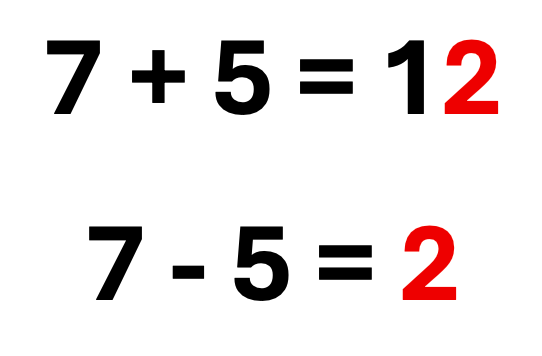
For some reason I have trouble adding 5 to the larger digits (like 7, 8 and 9). I noticed at some point that the last digit of that addition is the same as if you subtracted 5 from that number. Like this:
7 + 5 = 12
7 – 5 = 2
and
8 + 5 = 13
8 – 5 = 3
and
9 + 5 = 14
9 – 5 = 4
So now when I add them, I merely subtract them and slap on a 1 at the beginning!
(Oh, yeah, and there is a good reason this happens – it has to do with 5 being half of 10. And 10 is the base of our number system. Maybe one of the other math blogs can do a proof of this using base n…?)
I was in the 4th grade. We were studying geometry. Mrs. Wilburn was the teacher.
I read the definition of a square in the textbook:
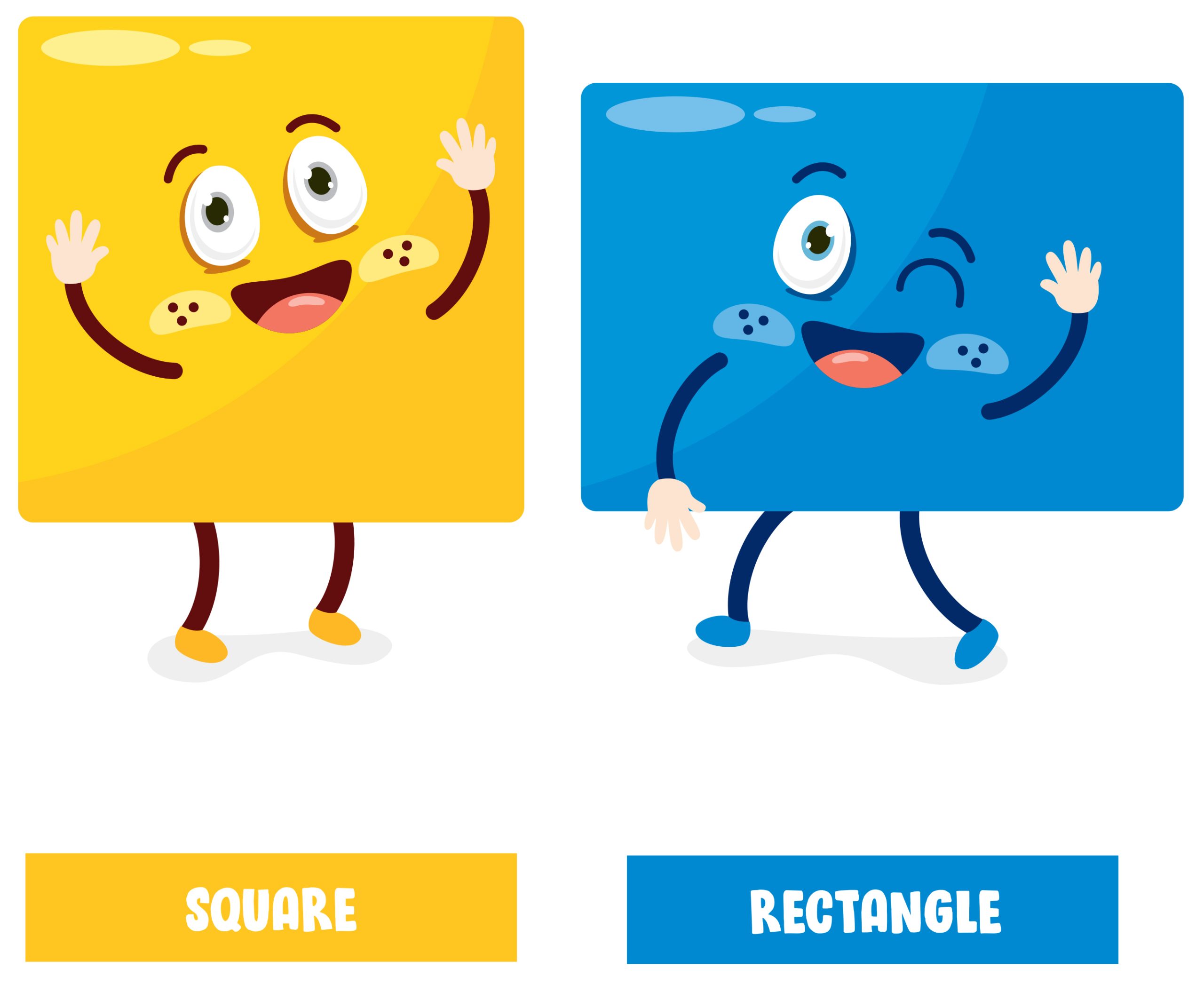
A square is a polygon with four equal sides and four equal angles.
I read the definition of a rectangle:
A rectangle is a polygon with four sides and four equal angles.
I thought, “Okay, then a square is also a rectangle.”
Hoping to be validated and praised, I went to Mrs. Wilburn and asked, “So a square is also a rectangle, right?”
“No,” she said, “a square is a square and a rectangle is a rectangle. A square is never a rectangle.”
So I went back to my desk and read the definitions again. And I thought about it. And I read the definitions. I went back to her desk because now I was thoroughly weirded out.
“But the book says that a rectangle has four sides and four equal angles. A square has four sides and four equal angles. So isn’t a square also a rectangle?”
“No, a square has four equal sides and four equal angles. A square isn’t a rectangle.”
This was the turning point in my math life.
I had two choices:
The blue pill: Believe Mrs. Wilburn and thus believe I wasn’t competent to do math because my logic was clearly faulty.
Swallowing the blue pill, choice 1, would mean that for the rest of my life I would hate math. I would say things like, “I’ve never been good at math,” and “I switched my major in college because what I really loved required too much math.”
But if I took the red pill, it would mean that I would become a math vigilante. Regardless of the topic in math, I would know that I could figure it out no matter what anyone else said.
I would believe and quote a favorite professor, Dr. Fitzgibbon (aka Fitz) when he said: “Once you realize we are all idiots, only then can you do math.”
And I would start a math blog.
I chose the red pill.
I’ll put money on it that 90% of people have similar stories to tell.
They might not have such outwardly facing results like a blog, but some do.
They might not have become math vigilantes or math incompetents – these are the two ends of the spectrum. My extremist personality causes me to swing wildly and severely in one direction.
But I’ll bet that anyone with a story like this, took a turn in their math learning.
Teachers have an incredible power to affect students.
With this power comes the responsibility to talk to our students. Really listen to them. And learn from them. It’s okay to be wrong. It’s okay to be confused. Our job is to facilitate learning, not know everything.
We should welcome questioning. Welcome the alternate method. Welcome the new viewpoints.
Remember, we’re all idiots – we all have to think, be confused and sort things out. Even the PhD math professors.
The difference between a student and us is that we don’t let questions or confusion stop us from struggling through to the solution. Even if it’s a different solution that what we’re used to.
Instill that confidence in your students and you’ll be successful in teaching them.
What do you think? Join the discussion by commenting.
Do you keep struggling to teach common denominators? Do your kids just not “get it”?
Well, it’s time to quit.
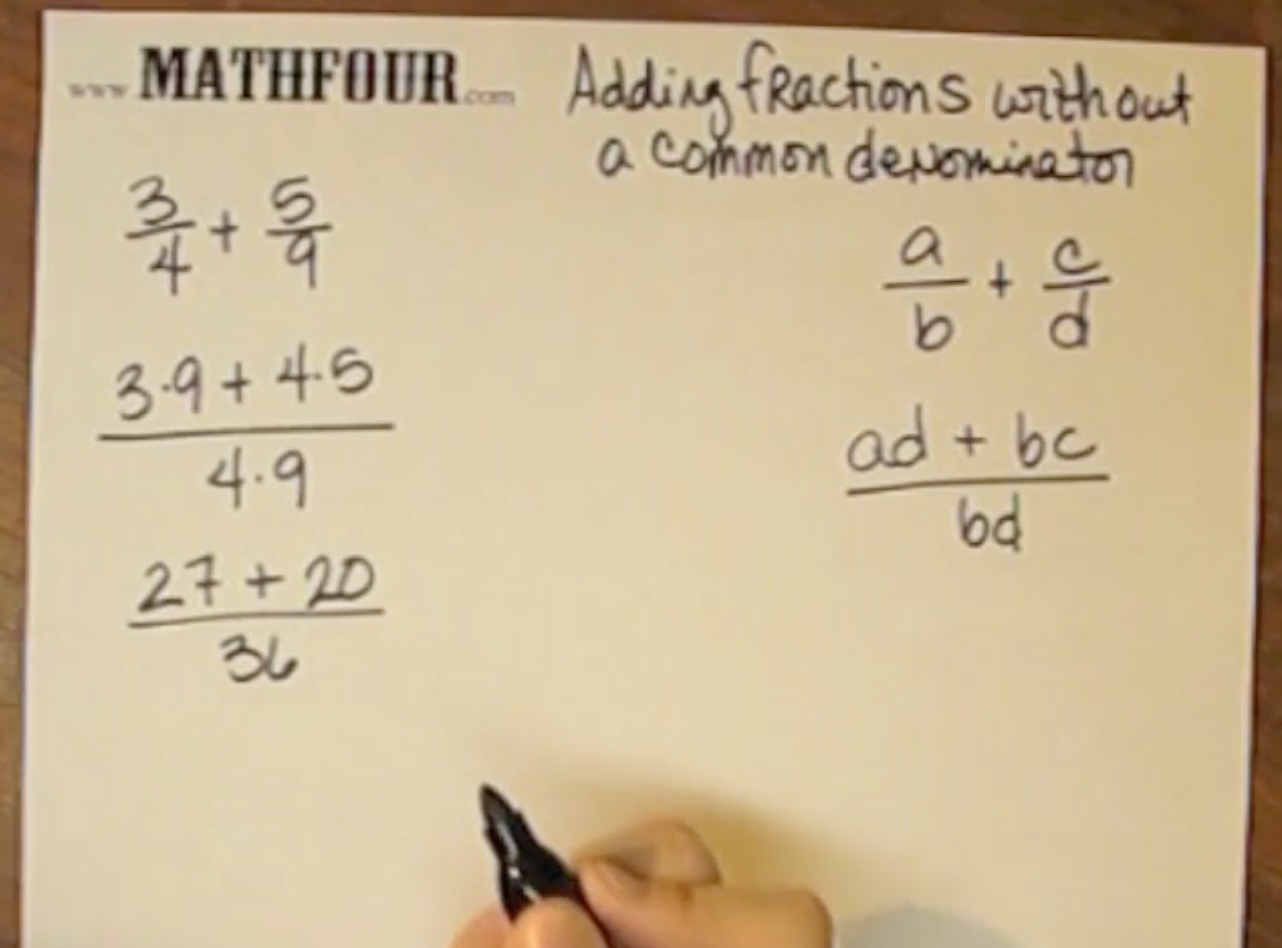
Yep! You can teach (and do) fractions without ever finding a common denominator.
The key is in the definition of addition for rational numbers. If you have two numbers and the sum of them is .
Granted there is the technical issue of reducing, but using a little prime factorization will get you there without an issue. (And you don’t really HAVE to reduce, which I will discuss in a later post.)
Here is an example:
Here’s one with an obviously easy common denominator that works just fine with this method. In it I explain a little about why you would want to do it this way:
You might argue that finding a common denominator is an important learning experience. And you’re right. In the same way that learning about death through the loss of a pet is an important learning experience. But if you can avoid all that pain, why wouldn’t you?
If you teach this method first, kids will get annoyed with having to do so much reducing and discover the common denominator method for themselves. And that’s really what learning math is all about.
What do you think? Can you teach fractions this way? Share your thoughts and experiences in the comments.
Thanks to @padgets for our conversation about teaching fraction on #mathchat a few weeks ago. You inspired this post!
When we teach kids how to drive, we give them a few months in the classroom so they can learn the basics of driving and the rules of the road. Nobody in their right mind puts a teenager behind the wheel and says, while flying down the road, “Now, the brake pedal is the one on the left.”
Not only is it safer, but it makes more sense to teach them outside of the car first. After they pass a competency test then they’re allowed to use the technology (car).
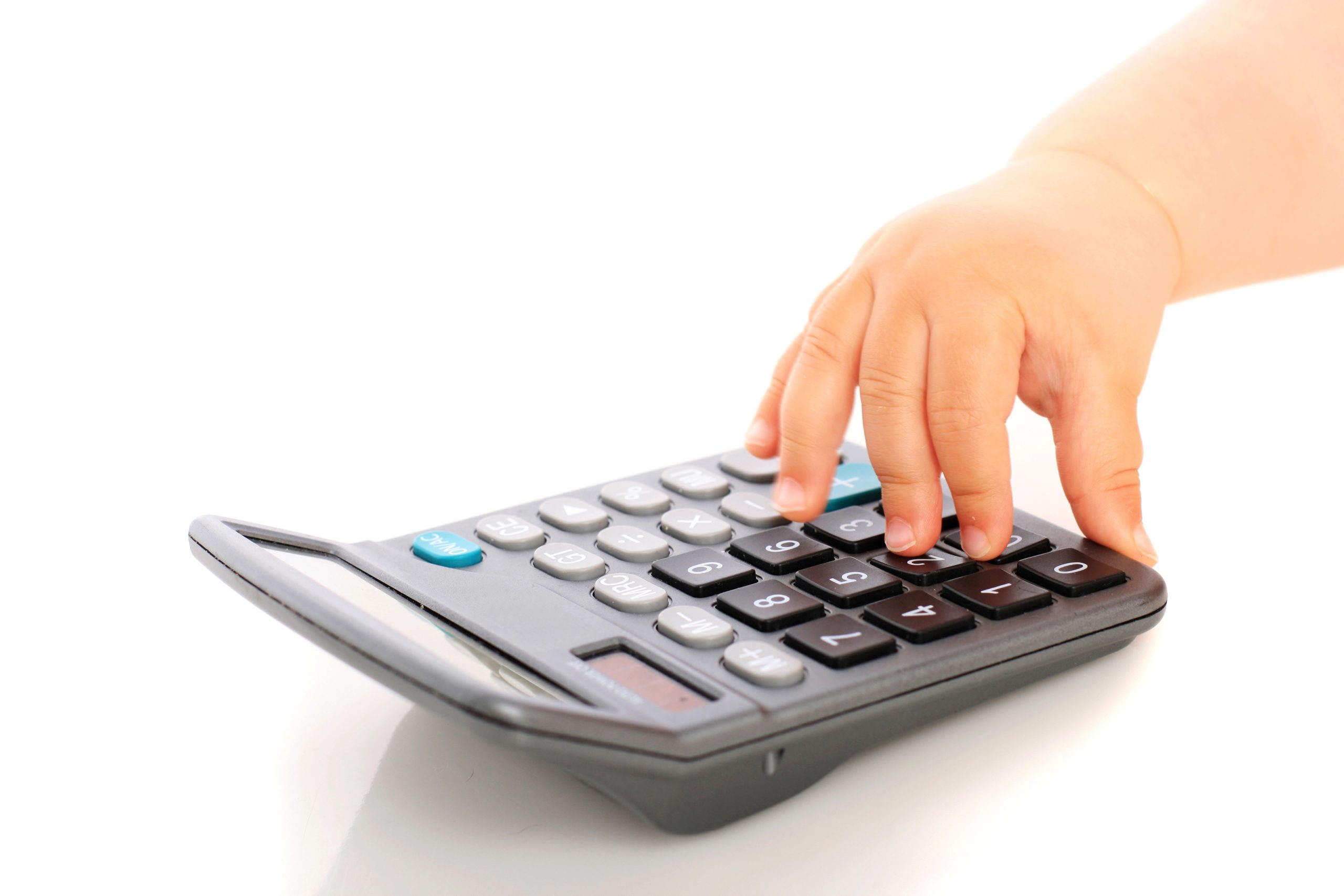
We drop a calculator into the hands of teenagers and ask them to learn math at the same time. There isn’t a safety factor here, but the principle is the same.
There’s a different challenge in learning which buttons to press than learning the reasons behind why you press those buttons. We bring technology into the classroom thinking we’re in service of the children, and instead do them a disservice. We double the concepts and think that one is helping the other. It isn’t.
Begin by teaching user’s manuals.
The use of a calculator, a program or web-based application can be easily taught by teaching children how to read a user’s manual or follow instructions. It’s a device, a tool.
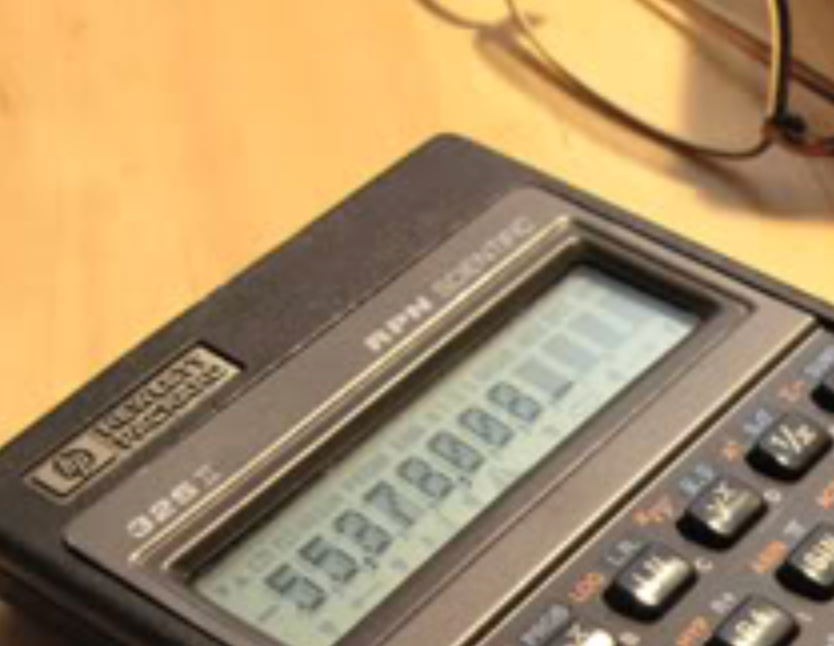
Before they start up their new John Deere riding lawnmower, they should read the user’s manual. Likewise, before they turn on their Hewlett-Packard 32sII, they should bend the spine of its little book.
Math classes and home schools can incorporate user’s manual reading in their curriculum. It will prepare students to learn and understand technology, including calculators and applications.
Introduce the calculator after they have mastered the concept.
Teaching children to do math through calculator use can destroy their sense of confidence in doing it themselves and also make them uncomfortable with the tool. Allow them to fully understand an entire concept in mathematics before giving them technology.
If you want them to learn to graph on a calculator, make sure they can do it with pencil and paper first. Allow a few years between the initial introduction of a concept and learning to make it work on a calculator. This should provide ample time for them to practice it and build their confidence that they can do it without the crutch.
When they are ready, give them the user’s manual to the calculator. Have them do problems by hand on one side of their paper. Have them write the page numbers from the user’s manual and keystrokes for the calculator in a column next to it.
When they have completed this, let them confirm their keystrokes are correct by doing it in the tool. This reinforces the connection between what they have learned, and can do on paper, with what’s being done in the machine.
Do you give your kids a calculator to learn on? Will you continue to do so? Share your thoughts and ideas in the comments.
I was browsing through the book Family Math and found a nifty game called Hurkle. It goes a little something like this:
Someone picks a place on the coordinate plane (in secret) for Hurkle to live.
Others guess Hurkle’s home by giving coordinates and pointing out those coordinates.
When they are wrong, they are given a hint of which way to go (from their guess) to find Hurkle.
The coordinate “space” is around too.
This made me think of the conversation I had with a neighbor the other day while walking our children to the park. When Scotty beams someone in Star Trek, he needs coordinates. But those coordinates must be measured from some origin (0,0,0) in the universe to make any sense. So where’s the origin?
A student of mine long ago found that the origin was Earth. My neighbor argued it should be Vulcan – apparently they started the United Federation of Planets.
And we can find coordinates at work in board games.
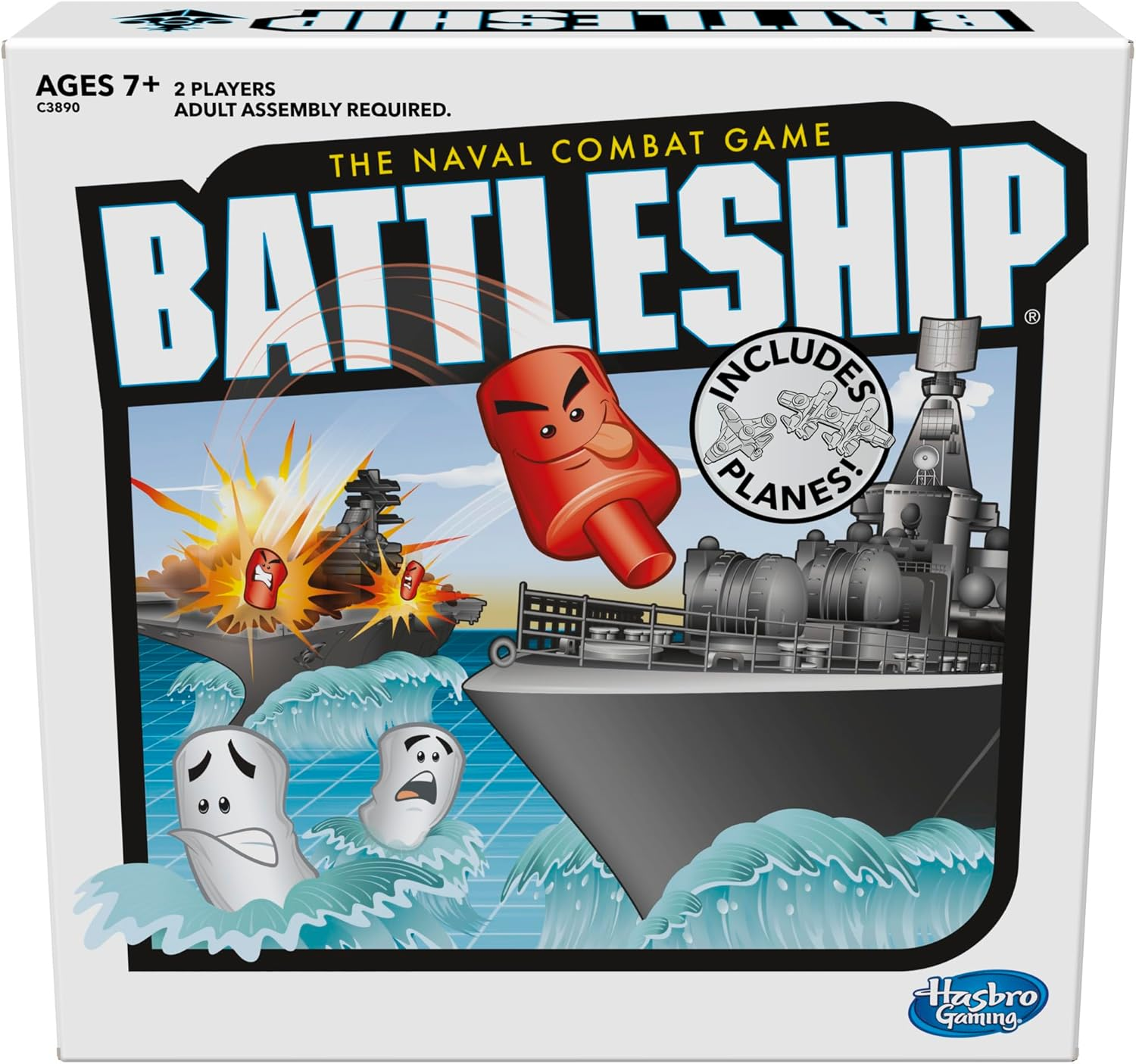
With thoughts of these two in my mind, I wonder what ever happened to the game of Battleship. It’s a great game of coordinates along with logic. Once you hit a ship, you have to go in each direction to determine how big the ship is and in what direction.
I’m excited about looking around my world today for more coordinate systems. Where do you see them in your world? And how do you apply them in your teaching? Leave your thoughts and ideas in the comments.
That little devil does so much damage to a kid’s math-esteem. His cousin is also a bad guy: “all you have to do is…”
It says to a kid, “It’s so easy, and… what? you can’t do it? GOSH!”
Get rid of it. Let your students charge you a quarter every time you say or write either one.
Say instead: “I find that doing this helps me…”
Or: “How would you feel about doing it this way…?”
If you find math easy, great. Give the kiddos a chance to work through the discovery process, too. And allow them to fail and struggle while supporting them. Just don’t say, “just.”
Thanks to Kellie D for this question: “How do I know if a set is closed under the rule of addition, same question for multiplication?”
Closure under addition or multiplication is a concept from Abstract Algebra that’s taught in not-so-abstract Algebra classes. It can be intuitive, if taught properly.
You first have to start with two things: a set and an operation. A set is a bunch of things. Okay, the definition is fuller than that, but for general purposes, it’s a basket full of goodies.
An operation is a way to “combine” any two things in that basket.
You can’t speak of closure without having both of these together. In Abstract Algebra, this pair of things is called an Algebraic System. That’s a fancy math term that isn’t necessary to teach, but might be helpful if you need to look things up.
We say a set is closed under an operation if you can combine any two things and the result is back in the set. Notice that the definition has BOTH the words set and operation. You can’t just be closed under an operation – you gotta have the set to put it in context.
Example 1 – Kitchen Goodies
Suppose your basket of goodies is this: {flour, sugar, chocolate chips, baking powder, egg, butter}.
And your operation is this: “mix two things together in a bowl with a spoon.”
It isn’t mathematical, per se, but it’s a set and an operation.
So if you combine two things from the basket by mixing them together, what do you get? Yummy goodness for sure, right? But the result of the blend is not found in the basket as one of the things!
Mix sugar with butter and then look in the basket. Is it there as a single blob of buttery sweetness? Nope. So the set of goodies is not closed under the operation of mixing.
Note: the opposite of closed is “not closed.” The word “open” isn’t used here.
Example 2 – Math Stuff
Now you have another basket of goodies: all the even numbers (including positives and negatives and zero). We can write this in the fancy math way like this: { x | x is an even integer }
The operation is addition.
If you combine (add) two things from the basket (any two even numbers), what do you get?
8 + 24 = 32
Is it back in the basket, i.e. is the answer an even number? YES!
Try some more to make sure. Technically you should prove it, but usually your intuition is good enough – especially in a high school or undergraduate class.
So we write “the set of even numbers is closed under the operation of addition.” Again, notice that we have BOTH set and operation involved.
Example 3 – More Math Stuff
Here’s your set: all the integers (positive, negative and zero whole numbers).
And the operation: Division.
If you combine (divide) two things from the basket (integers), what do you get?
27 ÷ 3 = 9
Looks good, right? 9 is an integer. But what about 27 ÷ 2 = 13.5?
13.5 isn’t an integer because it has a decimal piece. Some bits (integers) when combined (divided) turn out to be in the basket (another integer). But not all do. And they ALL have to work in order for it to be called closed.
So this is NOT a closed system. Or we can write, “the set of integers is not closed under the operation of division.”
Example 4 – Even More Math Stuff
Set: {1, 5, 6, 7, 14}
Operation: addition.
Is it closed?
1 + 5 = 6 check!
5 + 6 = 11 oops! 11 isn’t in that set.
This set is not closed under the operation of addition. You might notice that a finite set (a set with only so much stuff) of regular numbers won’t ever be closed under addition – just add the two biggest numbers and you “bust” out of the set.
Going Beyond…
Your sets can be just about anything: real numbers, rationals (fraction-like numbers), whole numbers. They can even be bunches of matrices, polynomials, imaginary numbers, complex numbers or functions! The operations would be one of the normal operations that you would use on things in that set anyway.
Questions about how to teach this? Questions on how to learn it? Leave them in the comments.
I remember being allowed in Jr. High to use the calculator to “check my work.” Soon after I learned that the books in High School had the answers in the back! It was like condoned cheating!
How could I go wrong with the magic box and the answers given to me straight from the publisher?
And then I became addicted.
Sometime after Geometry I lost my multiplication facts. I wasn’t just checking my work on the calculator.
Subconsciously I figured there was no reason to trust my potentially faulty memory of math facts if I had the absolute sure thing right there next to me.
For years I stopped doing arithmetic.
And my dad chastised me. Every time some quick calculation came up in the kitchen, garage or grocery store, I would stare at him blankly. Then I would reach for my calculator.
The way he looked at me, you’d think I had reached for a bong, ripped off my bra, sang Kumbaya and spat on the pope.
I ignored him.
For years.
Until one day I realized that I had absolutely no memory of . Yep – was what did it. I started watching myself. I always did simple arithmetic (even addition of single digits) on the calculator!
Then I watched other people. I saw the clerks in the grocery store reach for the magic box to figure out 10% off something. I saw an older man at McDonald’s send the girl into a tizzy because he modified his cash payment after the girl had already typed it in.
“There’s a problem here,” I thought. Maybe Paps was right.
I put it on my syllabi that calculators were strictly prohibited (unless expressly invited by me – in the case of probability and statistics). I growled at anyone who reached for one.
And I taught them arithmetic.
And we were all better off.
Are you a calculator addict? Share your story in the comments.