
Tag: research

  • Everyday Math Exposure: Just Saying It Helps

    Everyday Math Exposure: Just Saying It Helps

    Previously in an article about math anxiety parents may feel, I mentioned how grown-ups inadvertently teach kids to be scared of certain things.
    It’s not our fault. We learned it from adults when we were younger.

    But we still do it.

    “I hate rats.”

    “Math? I’ve always had math anxiety.”

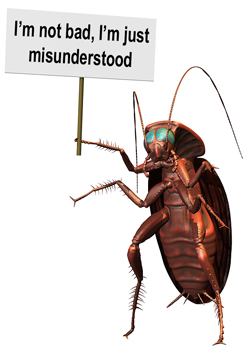
    “Ew, roaches, yikes!”

    “Math is hard. I don’t do math.”

    What’s psychology got to do with it?

    From the principles of psychology, we know that hearing other people talk about things, we adopt some of those same attitudes – especially being young and impressionable as kids.

    And your kids are like that, too.

    An example: Think about butterflies. They’re insects and they have erratic movement patterns. So why don’t we hate butterflies like we do roaches?

    Ok, to be fair, roaches invade our living spaces given the slightest chance. And they carry diseases. But are these things the reason why we feel a shiver?

    Not really – it’s seeing others freak out when they see a roach.

    And seeing others say, “Ooo, how pretty!” when they see a butterfly!

    And the research shows…

    In the previous article, I mentioned that the reason why this is important lies in the immediate and long-term effect on children. I presented on how this impacts math anxiety recently at the Western Social Sciences Association Conference.

    Research and experience show that when we display math anxiety or a negative attitude toward math, kids do to. And this causes them to have lower confidence in their math ability, higher math anxiety, and more avoidance toward doing math.

    And when we (or our children) don’t engage in something, we don’t have an opportunity to learn.

    But noticing everyday math gives them more confidence – and more opportunity!

    Is it up to parents?

    You might have heard (or even said), “That’s the teachers job.” Well, they can only do so much. The best prescription for helping kids to learn is to make it enjoyable. Or at very least, neutral so they don’t avoid it.

    The less avoidant (and more engaging) they are on their own, the more they take it upon themselves to do math things. They’ll see the everyday math. And they’ll do it without having someone over their shoulder all the time.

    Learning then happens even outside the math class.

    They’ll do math on their own?

    Yes.

    Learning doesn’t just happen in the classroom. It occurs when we explore, follow our curiosity, ask questions, and think about why something is the way it is.

    Math is no different.

    Ever wonder how many packs of taco shells you need for everyone to have two?

    Math.

    Or how long it will take to wash and dry all the laundry?

    Yup – everyday math again.

    Confidence in doing math make these things more palatable, and more likely to be thought of as math.

    We don’t need an “answer” for there to be math.

    We’re a bit trained (brainwashed may be a little harsh, but accurate) to think that doing math is sitting with a pencil and paper, and with numbers, letters, lines and answers.

    If you think about it, it’s like saying reading only happens in the library or bookstore. The idea of doing math has a fairly limited scope.

    Because of this, we don’t realize how much we really do it.

    So what can WE do.

    Say it when it happens. Say it when you recognize it. Say it when you see someone else doing it.

    Tacos in the grocery store? Yep, there it is again. Say it out loud to your kid.

    How about how long it takes to get somewhere walking vs. driving in a car.

    “Hey, little Billy, it takes us longer to walk to the store than to drive. That’s math.”

    Any time we compare two things and decide one is larger than the other, we’re doing math.

    If we count items to determine how many we have, we’re doing math there, too.

    When you recognize everyday math, just say whatever you’re thinking out loud. And watch as the “Ew, roach!” avoidance turns into the “Ooo, butterfly!” interest.

    Share your thoughts on this in the comments and tweet it out, too!

    Related Articles:
  • Performance vs. Understanding

    Performance vs. Understanding


    This is a feature article by William Devine, MA, LPC, CART. Wil is the Research Guy at MathFour.com.


    Racing

    The “old guard” of academics focused on rote memorization, correct answers, and academic performance – performance based, measurable objectives. To a large degree some of these focuses continue to prevail.

    But a different way of teaching is emerging. Based on the research, this new way is more helpful, sustainable, and effective.

    Research was done in the everyday math classroom.

    Teachers were profiled in a research paper titled The classroom environment and students’ reports of avoidance strategies in mathematics: A multimethod study.

    They were studied in an attempt to understand the affects of teaching styles on the students. And they were observed during regular, non-testing times.

    It was noticed that their teaching styles tended to fall into roughly two categories: performance based and understanding based.

    Performance-based teaching was found lacking.

    When the teachers focused only on math performance, students were more likely to disconnect and feel intimidated.

    In these cases, if a student gave an incorrect answer, they were told as much. Then another student was called on and so on until the correct answer was given. The problem with this search for the right answer was the lack of instruction that followed. It became all about doing it right instead of teaching the kid how to do it.

    The instructor would then approach the next math problem with little or no discussion on how the correct answer was determined. Where was the teaching?

    As we all know, if we feel uncomfortable with something, have anxiety, we tend to disengage or avoid the situation. This was observed to be the case in the classrooms of performance-focused teachers .

    Students disengaged and were concerned about not only doing something the wrong way but feeling unable.

    Understanding-based teaching was effective, helpful and encouraging.

    Other teachers focused on helping students understand where he or she may have come up with the incorrect answer. The observed results were very different.

    Teachers would help students arrive at the correct method. They would work to help them understand how to do the problem. Ultimately, students would arrive at the correct answer.

    Furthermore, they would engage on each of the next questions – and get those right too!

    So what can we do right now to move toward this idea of supportive academic encouragement?

    Be careful with the words “wrong”, “incorrect”, and “bad”.

    Kids are sensitive to these terms because they imply doing something they aren’t supposed to do and that lead to things they don’t want. And then we wonder why they don’t want to try!

    We want them to continue engaging and putting forth effort because this is how learning happens. A “wrong” answer is so much better than no answer at all.

    We’re not proposing that you stop using these terms altogether. Just do so sparingly.

    Encourage improvement, not performance.

    Focus: How much time do we focus on the incorrect answers? Instead, acknowledge what was correct and build on this. Recognition and praise for what they are doing well will encourage them to continue to stay engaged in the exercise.

    Before: “I graded your paper and you missed 4. Let’s try those again until you get them right.”

    After: “Good job! You got 6 right. Let’s try a few more.”

    Help them discover how they got to where they got.

    How: Understanding how they arrived at a particular answer can help determine what needs to be corrected in how they are doing something. It becomes a truly instructing experience rather than a performance (you got this one wrong and this one right). We want them to learn how to do something. If they feel pressure to get the right answer the first time, they will hesitate to offer any answer at all. This stifles trial and error learning and instills an aversive experience (fear) into the learning process.

    Before: “5 is the wrong answer. Try this next one and really concentrate.”

    After: “I see that your answer is 5 here. Walk me through how you got there.”

    A note of concern: I have found in the research literature an indication that some teachers think if a child is having fun while learning, they aren’t really learning. Wow.


    William DevineWilliam Devine is a Licensed Professional Counselor in private practice. He has joined the MathFour.com team as the “Research Guy”. Connect with him in the comments, on the contact page or via twitter @MathPsych.


    Feature and post images by ukanda | Flickr.com | CC BY

    Related articles