Tag: multiplication

  • The Order of Operations Explained: Intro and Mnemonics

    The Order of Operations Explained: Intro and Mnemonics

    The Order of Operations (OoO for short) is used everywhere in mathematics because it encompasses many of the foundational rules that we’ve agreed to follow.

    Alas, students have been given the cheap and dirty version of it for years. “Here, memorize this thing about your Dear Aunt Sally!” What the heck?!

    There are subtleties in the Order of Operations that every person over the age of seven should know.

    The series begins today.

    The order of operations is a set of rules – like the drivers’ handbook for math. If everyone follows the rules, we’ll all be safe. But if someone makes a bad turn, we could be looking at a crash.

    But the Order of Operations is only a set of rules for arithmetic! It isn’t even the best practice when it comes to expressions involving a variable like x. I’ll cover what I mean in this weekly series.

    Here are the proposed articles:

    1. Intro and mnemonics
    2. Parenthesis
    3. Exponents
    4. Exponents, Multiplication and Addition
    5. Multiplication and Division
    6. Addition, Subtraction and Conclusions
    7. Exponents of Negative Numbers
    8. Another Reason to Ban PEMDAS (aka parenthesis aren’t an operation)

    Mnemonics for PEMDAS

    Well, there’s one: PEMDAS (pronounced just like it looks). That’s what the cool kids in high school always said. It was the same kids who said “soh-cah-toa” – which I thought sounded really goofy.

    And then there’s “Please Excuse My Dear Aunt Sally.” And of course “Piranhas Eat Mostly Decayed Antelope Skin.”

    What’s your way to remember it?

  • How Adding Evens and Odds is like Multiplying Positives and Negatives

    How Adding Evens and Odds is like Multiplying Positives and Negatives

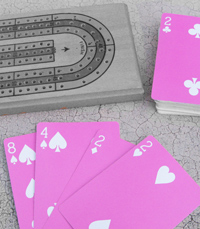
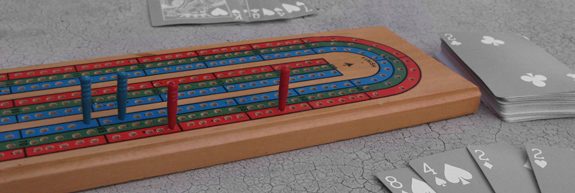
    I was playing cribbage with Husband when I found my hand to be 8, 4, 2, 2 and the cut card was also a 2. I focused hard to see if I could come up with 15. (If any group of cards add to 15, you get two points.)

    My resolve was strong. Then I remembered that for any group of numbers to add up to an odd number, one of them must be odd.

    While shuffling for the next hand, I started thinking about adding evens and odds:

    • Even + Even = Even
    • Odd + Odd = Even
    • Odd + Even = Odd

    This looked familiar. Then I remembered the rules of multiplying positives and negatives:

    • Pos x Pos = Pos
    • Neg x Neg = Pos
    • Neg x Pos = Neg

    I was so excited to notice this. Alas, I’m pretty sure I’ve noticed it before. I love rediscovering patterns as much as discovering them!

    Look for patterns everywhere.

    Always keep your eyes peeled for similarities. When you see them, if your children are old enough, use leading questions to get them to observe the same thing. If they aren’t old enough, keep a journal to share things with them later. Encourage your kids to look for patterns in everything. Use toys and manipulatives to improve this, but also use nature and everyday activities. What patterns or nifty things in math have you noticed recently?

    Related articles
  • How Calculators Inhibit Learning the Distributive Property in Algebra

    How Calculators Inhibit Learning the Distributive Property in Algebra

    Do you wonder if your children should be using a calculator “at their age”? Are you a fan of calculators, but have friends who aren’t? Are your friends “into” calculators while you oppose them?

    I often hear people say that children 50 years ago understood math concepts more quickly. Although our parents weren’t taking classes called algebra in the 7th grade, they were doing algebra in the 7th grade.

    Algebra is arithmetic.

    There are two fundamental and rarely understood facts about algebra:

    1. Algebra is arithmetic with one or more numbers in disguise.
    2. Algebra has exactly the same  rules as arithmetic.

    Which means if you can do arithmetic you already know how to do algebra!

    Our parents or grandparents, 50 or even 30 years ago, weren’t using calculators. They had to apply all the rules of arithmetic to get the job done. Which means that they had to apply all the rules of algebra.

    Teaching them a class called “Algebra” was much easier because of this.

    What are the rules?

    The basic rules that non-calculator users must apply are the distributive property and the order of operations. The distributive property is the thing that calculator use eliminates.

    Children could get practice mentally multiplying things like 3 x 86 and do 3(80+6) = 240+18=268. With this practice, they are ready for 4x(3y+2z) = 12xy+8xz.

    If they never have to multiply 3 x 86 in their head, they never get the experience of the distributive property. Which means teaching them 4x(3y+2z) = 12xy+8xz will cause anxiety and frustration. They see it as “magic” or “something you made up just to confuse me.”

    Give them the tools they need.

    Refuse to let students have the calculator. Let them have the tool of the distributive property for algebra before you teach them “Algebra”. Give them the benefit our parents and grandparents had!

    Related articles
  • Is Zero Positive or Negative?

    Is Zero Positive or Negative?

    When we teach math at home, we start with the counting numbers. Then we move to either the homeschool or classroom setting and build on those with negatives. And zero is sometimes left behind.

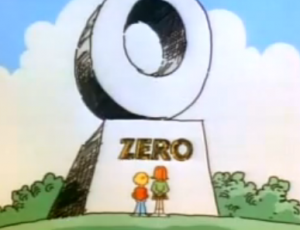
    Zero seems to be an understood concept because it’s so much a part of our lives, as grownups. But zero is a very unusual bug.

    Is Zero Positive?

    We think of the numbers as either positive or negative.

    But actually, all real numbers can be divided into three categories: positive, negative and zero.

    This is one of the reasons zero can be forgotten in all this mix. With so many other numbers to be positive and negative, zero’s truly in a class by himself.

    Notice I wrote “All real numbers can be divided into three categories.” Imaginary and complex numbers can’t be classified this way. You can order imaginary and complex numbers, but you have to do it without labeling them as positive or negative.

    Why can’t we just say zero is positive?

    I guess we could. But you might not want to when you see this…

    In math, sometimes, we do things because if we didn’t, they’d mess everything else up.

    This is one of those situations.

    So let’s say 0 is positive, just for the minute.

    Take the rule, “When multiplying, if the signs are different, the result is negative.” So then (positive) zero times negative 3 is (negative) zero. Like this:

    0 x -3 = +0 x -3 = -0

    But we determined that zero was positive!

    So this messes things up. Therefore, zero needs to be in a class by himself.

    But zero feels positive and negative, sometimes!

    Indeed if a kid doesn’t owe his sister anything, that’s a positive feeling.

    If you owe someone $3, then you can say you have negative 3 dollars. So if you owe them nothing, don’t you have a negative zero dollars?

    This is more of a direction than a positive or negative sign. The “vector” (arrow in a direction) that has length zero can technically be pointing in any direction. It doesn’t matter. And that’s what’s going on when you think of zero as positive or negative. You think of owing (money going in a direction) nothing.

    But remember, that’s only thinking of zero as positive or negative. He really isn’t either.

    He’s just zero.

    Check out the classic Schoolhouse Rock Multiplication Rock video and let me know what you think of all this zero talk.

  • Multiplication Tricks Roundup

    Multiplication Tricks Roundup

    Should kids know their multiplication facts?

    When teaching math, whether in the home or in the classroom, having the multiplication facts memorized speeds things up. If you allow a calculator, you’re still reducing the speed of doing other math calculations or thinking.

    But is there some way to memorize these and make them fun?

    I scrounged the web and found some resources for multiplication tricks.

    Poems as Multiplication Tricks

    Inspired by @Leighbra at Hearth to Heart, I found a list of math poems that can help kiddos (and grownups) remember some of the facts. My favorite: I ate and ate and got sick on the floor. Eight times eight is 64.

    Seven

    This is an impressive list of various ways to multiply by seven. Tricks to Multiply by Seven

    Nine

    This one shows a way to multiply 9s without using your fingers. Which means you don’t have to waste time putting down and picking back up your pencil! Tricks to Multiply by 9

    Using Fingers

    This article  gives three tricks to multiply using your fingers. Not my favorite, only because I hate to put down my pencil. But if you are doing purely mental multiplication, this article’s a great resource! Three finger tricks for multiplying

    Multiplication Tricks for Other Numbers

    Here’s a couple more that give multiplication tricks for many numbers:

    The one I made up

    I created this while in class one day. I have a hard time remembering the difference between 7 x 8 and 9 x 6. So I thought about it and saw that 56 = 7 x 8, which is 5, 6, 7, 8 in order!

    Do you have one? Please share with us!

  • Two Reasons to Memorize Math Facts

    Two Reasons to Memorize Math Facts

    I learned my math facts by “singing” them while looking at flashcards.

    Having these facts ingrained with chanting or singing isn’t a bad idea. It might not “feel right” because we’re so into experiential learning these days. But if a kid can’t immediately access and use things like 8 x 7 = 56, he’s going to be slower than if he can.

    And if he’s slower, he might get frustrated and start to think that he’s not good at math.

    Also, knowing these cheap and dirty math facts helps with confidence. Even if a kid’s struggling with other things in math, knowing that he has this one thing (the “facts”) will help out.

    I fight this battle often. Some people feel that math facts shouldn’t be memorized. But there’s so much value in it.

    How about you? Which side of the fence are you on?

  • How to Teach Division in the Sandbox

    How to Teach Division in the Sandbox

    Need to offer a better way to understand the concept of division and remainders? Try it in the sandbox!

    The Discovery Toys  are proportional, so they allow a really engaging way to see how division and remainders work.

    This video shows how you can help kids put together the numbers 9, 4 and 1 to “see” division at work:

    You can also do this in the bathtub or pool. And the are perfectly weighted and “massed” so they float.

    I think this has something to do with “water displacement,” but I’m not sure. I’m a mathematician, not a physicist. 🙂

  • Using Toys as Curriculum Tools to Teach Arithmetic

    Using Toys as Curriculum Tools to Teach Arithmetic

    Want to give your kiddos a jump start on multiplication and division? What to help the ones struggling with division to grasp it better?

    The Discovery Toys Measure Up Cups can do just that. They are built as a curriculum tool, in the proper ratios, so that the #6 cup holds exactly twice as much as the #3 cup. This allows for engaging and beneficial play that gives kids a grasp on how numbers relate to reality.

    For example, in this video, kids can compare the numbers 3, 6 and 9 to see how they relate:

    You don’t have to say out loud, “three plus 6 is 9” or, “9 divided by 6 is one with three left over.” But these concepts are ingrained into the child’s brain as they see this work.

    What do you think?

  • How to Use Prime Factoring to Win Friends and Influence People

    How to Use Prime Factoring to Win Friends and Influence People

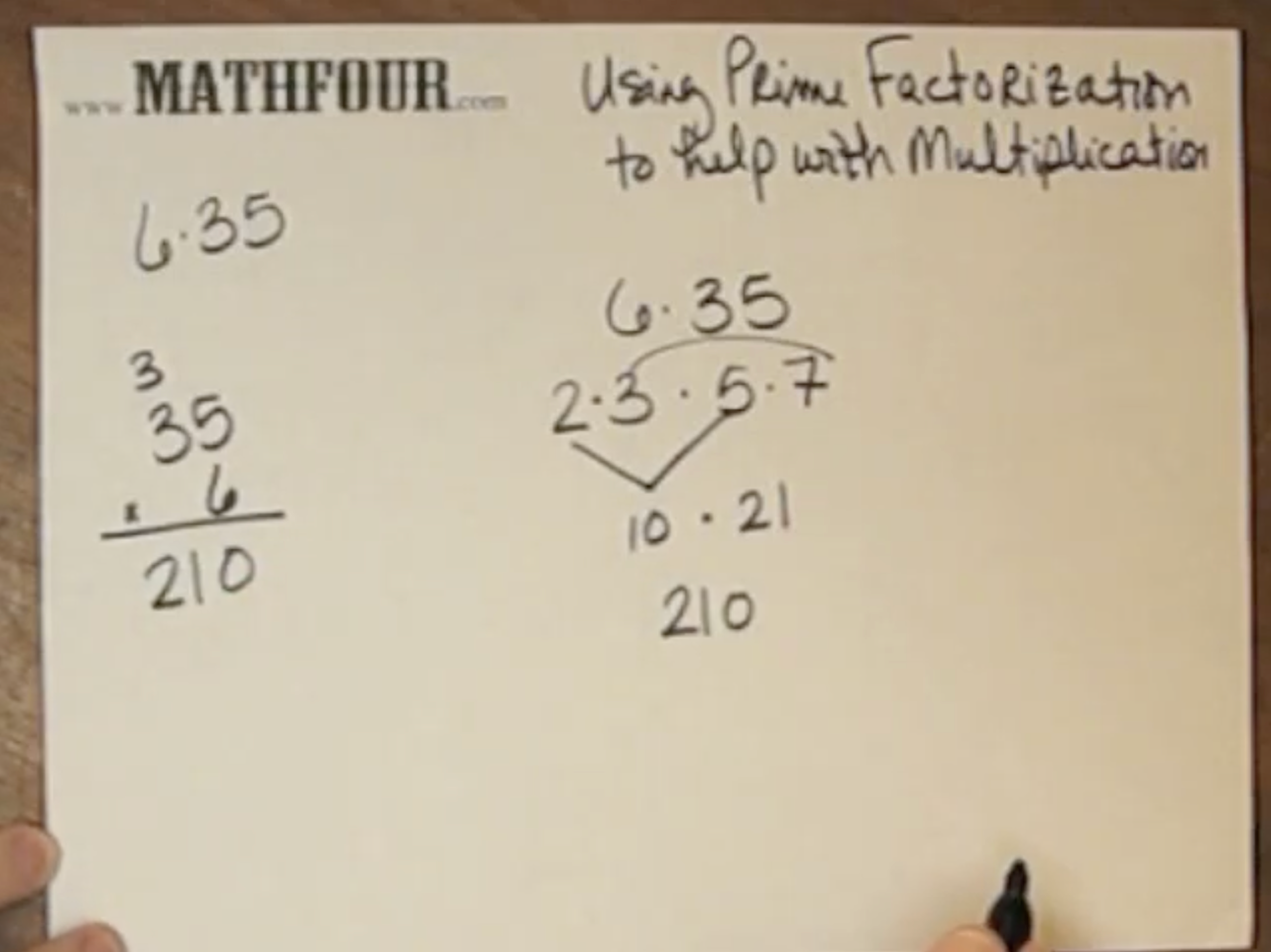
    Alright, you might not win friends with this, but the more you can do arithmetic in your head… well… okay, you can’t influence people with it either. Regardless, it’s handy to know and helps with multiplication.

    Yesterday I posted a couple of videos about factoring numbers into primes. Now it’s time to put those to work.

    How about a rather simple one to get us started:

    Here’s one that’s a little more challenging. The key is that you can combine the bits to something you’re more comfortable doing. I don’t like multiplying nines, so I avoid those.

    Can you use this? Why or why not? Ha ha, just kidding – no essay questions here! – but if you do find a use for this, or if this annoys you, let me know in the comments.

  • How and When You Can Manipulate Square Roots

    How and When You Can Manipulate Square Roots

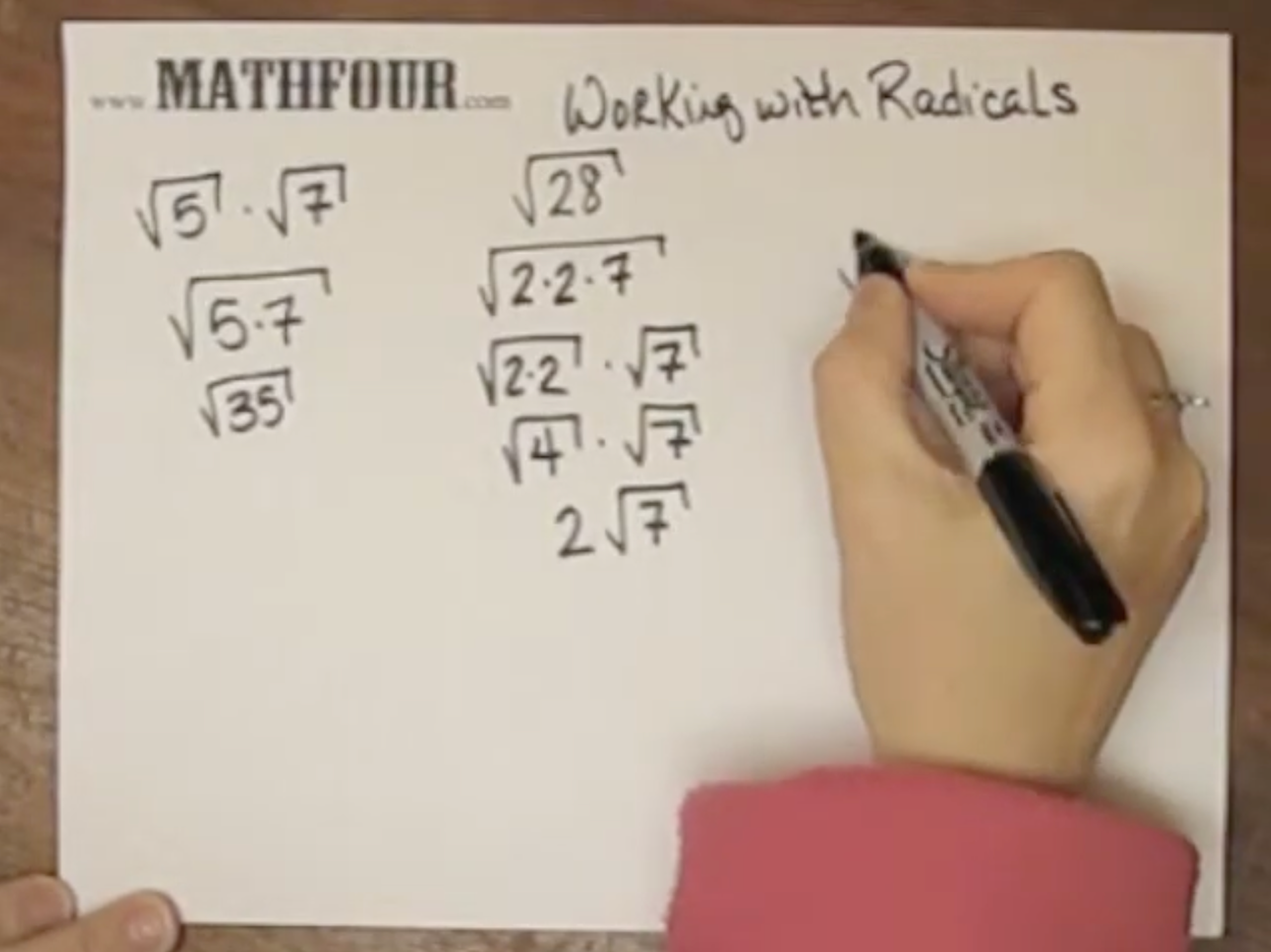
    Square Roots (aka radicals) are part of the multiplication world. They have the same properties, but because they look weird – living in little “houses” – it is hard to grasp what they can do.

    This is how the “houses” (the radicals) can “move”:

    After that, you can work with multiple radicals:

    It is important to note that this little trick works because it’s all multiplication, division and roots. If you have addition or subtraction in there, you’ve got yourself a challenge. Watch this to see how to deal with addition in the mix:

    Thanks to jrobbo at MyMathForum.com for the inspiration for this post.