Last night was taco night and my job was to grate the cheese.
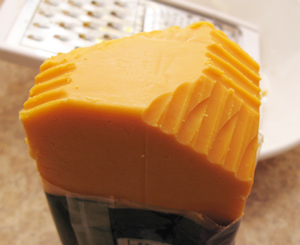
I didn’t get too far in before I noticed some math.
For some reason I always start grating on a corner. Then I rotate the block so I’m grating on another corner. After doing this a few times I noticed the angles I was creating:
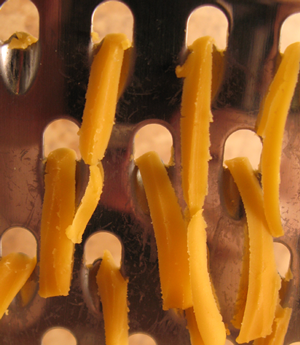
And what exactly are the shapes, anyway? What is the shape of the grating holes of the grater? And what is the resulting shape of the cheese sliver?
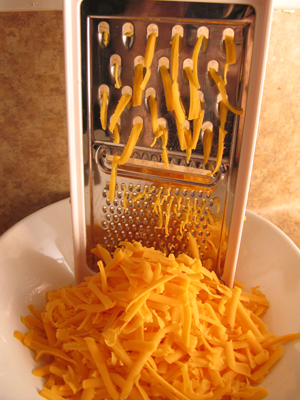
How much cheese is in the pile after you “fluff” it by grating it? What’s the volume of fluffed cheese compared with stuck-together-in-a-block cheese?
More importantly, is there enough for two grownups and a toddler? (When one of the grownups loves cheese!)
Daughter is into pickles. Like way into pickles. If I were to start a blog just for her, it would be called www.PicklesAndPretzels.com. (She’s also into pretzels.)
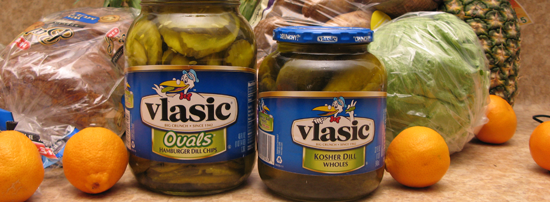
So when Husband grabbed two instead of one jar yesterday, it seemed natural.
Unloading the groceries, I saw the two jars a little more closely.
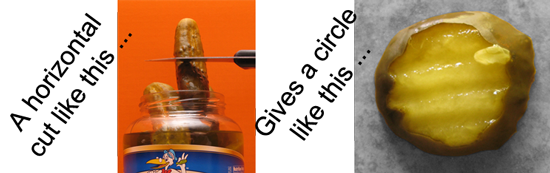
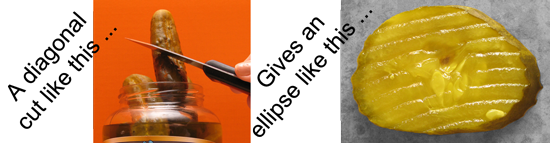
“Holy cow,” thought I. They’ve made ellipses (pickle ovals) out of segmenting cylinders (the whole pickles)! And they’re marketing them!
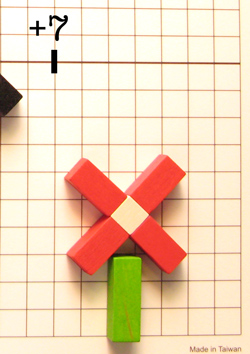
I’ve been playing with the lovely Cuisenaire Rods for a few weeks now. I made the (fortunate) mistake of creating this flower in a past article about coordinate pairs.
The mistake was that I would eventually have to come up with the coordinates for this thing. Fortunate because it gives the MathFourTicians out there something else to teach with the rods!
The center of the flower is the place to start.
Since all the “petals” are attached to the center, that’s probably the best place to begin.
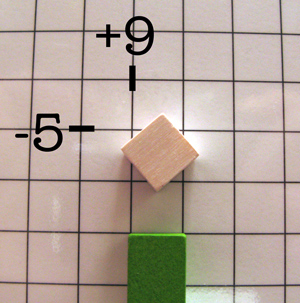
I converted to something I could see.
Since everything is tiny (1 cm), I went to a bigger setup. And some of the coordinates were easy to pick out. So I put those in the big grid, too:
And then I started to do some work…
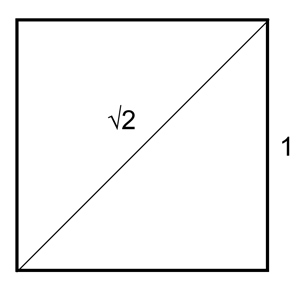
Next I considered what I was really dealing with: a square. And each side was 1 cm.
According to those crazy Pythagoreans, the diagonal measures :
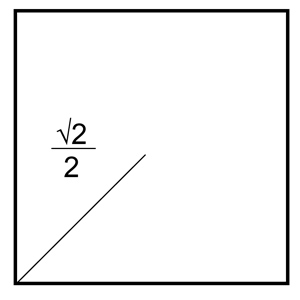
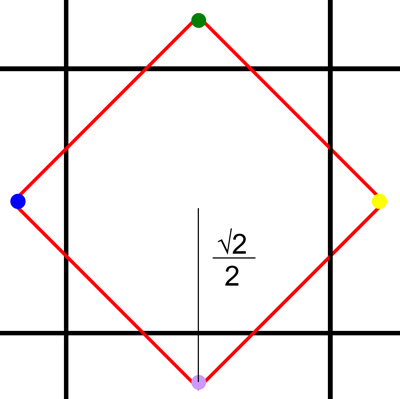
So half the diagonal is :
I went back to the big grid.
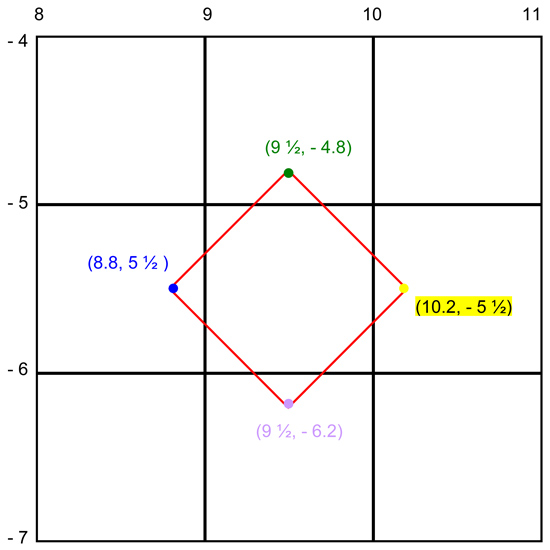
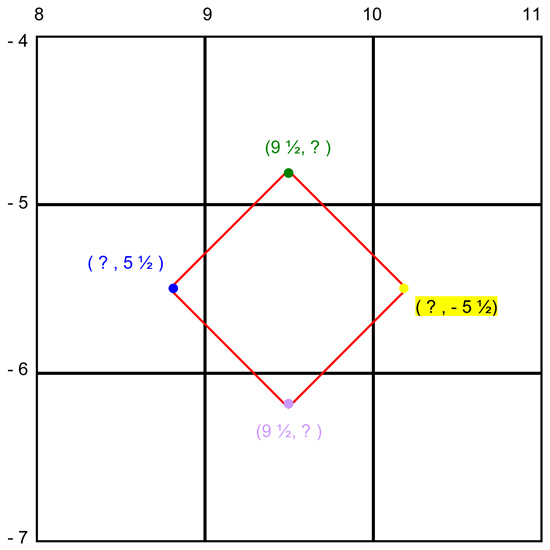
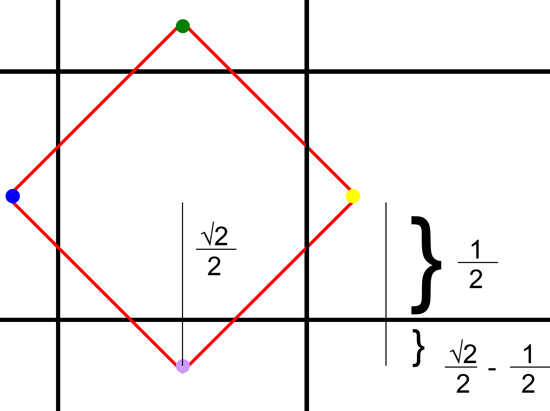
When I put this information on the big grid, it looks like this:
Knowing that each corner pokes out roughly 0.2, I can calculate the coordinates:
From this I can create the ordered quadruples as described here for the petals of the flower. But at this point I’m pretty much needing a break. So I’ll leave that for next time.
Whatcha think? Fun? Share your thoughts in the comments and on Twitter: