Tag: review

  • What's Your Math Problem? Book Study

    What's Your Math Problem? Book Study

    Donna Boucher over at Math Coach’s Corner has started an online book study with the book What’s Your Math Problem? Getting to the Heart of Teaching Problem-Solving by Linda Gojak. I’ve jumped in late, but I’m in with a bang!
    The book is a how-to guide on teaching children math problem solving tactics. This helps them develop their own problem solving styles.

    It’s written for the classroom teacher but I’ll be giving tips on how to use the tips in your homeschooling or afterschooling journey.

    Here’s the outline of the book:

    • Chapter 1, The 5 Ws and an H of Problem Solving
    • Chapter 2, Planning for Problem Solving in the Classroom
    • Chapter 3, Getting Started Strategies
    • Chapter 4, Getting Organized Strategies
    • Chapter 5, Visualizing Strategies
    • Chapter 6, Advanced Thinking Strategies
    • Chapter 7, Assessing Problem Solving
    • Chapter 8, Questions from the Field

    Here’s what it looks like in the order that I’ll be publishing it:

    • Intro & Chapter 3 (this one — remember I’m starting late)
    • Chapter 1 (catching up)
    • Chapter 4 (I don’t want to fall behind again)
    • Chapter 2 (almost there…)
    • Chapter 5 (sweet — now I’m on schedule)
    • Chapter 6
    • Chapter 7
    • Chapter 8

    Grab your copy of What’s Your Math Problem? and jump in. Here goes Chapter 3…

    Getting started on a problem can be challenging.

    I love how Linda Gojak calls juicy, meaty problems “rich problems.” A good, fun thinkable is indeed a math word problem rich with problem solving challenges.

    But getting started on a rich problem can leave you feeling rather poor. So Chapter 3 gives, and is called, “Getting Started Strategies.”

    What’s that problem about anyway?

    The first question you (or your child) should ask when given a problem is, “What’s it all about, anyway?” This is the strategy of “Restate the Problem in Your Own Words.”

    Ask

    1. What’s happening — what does it look like?
    2. What bits of this problem are useless to me?
    3. If a normal person were to ask the question, how would it be written?
    4. Now what the heck does it really say?

    Restating the question in your own words means understanding what’s being asked and what’s happening.

    Is this a trick question?

    Sometimes textbooks (and even life) give you problems without giving you all the required information. This is grownup-talk for what kids call a trick question.

    If there’s missing information, call that bluff! What info do you need to calculate the final answer?

    • Is that information contained in the problem?
    • Can you find that information online or in a library?
    • Can you figure out that information using other stuff in the problem?
    • Is it just a flat-out trick question — there can’t be an answer because there’s no way to get the information needed?

    Calculate the information, if you can.

    Now it’s time to do a little pre-work. Gojak calls it “identifying a subgoal.”

    If you’re missing some numbers in the problem but you can get these from others, then start calculating.

    I walked 30 feet and then walked another 24 inches. How many feet did I walk?

    The subgoal here — figure out how many feet I walked the second time.

    Figure out how to show your work — or not?
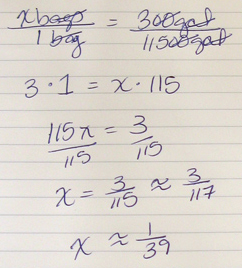
    One of the strategies in chapter 3 is “Select Appropriate Notation” — which means determine how you’ll show your work.

    But first ask the question, “Do you want to show your work?”

    Here’s the big place where classroom schoolers and homeschoolers will diverge. It isn’t really necessary to show your work. Ever. And in homeschool, children don’t have to.

    If you want to show your work that’s great. If you want to share your work, you have to show your work. If you want to be a famous mathematician or even a run-of-the-mill engineer, you have to show your work.

    It doesn’t hurt to learn to show your work. But it’s not required to be a great problem solver.

    In fact, if your child struggles with notation, and you push this too hard, their developing problem-solving strategies could be stunted.

    But should you show your work for other reasons?

    Gojak writes:

    “…you use notation to help you reach a solution.”

    This is not necessarily true. Some people do. I don’t. The problem-solving strategy that works for me is doodling pictures and trial and error, strategies covered later in the book.

    I rarely solve a problem using x and y — or even crude representations of x and y like question marks or blanks.

    If you feel the need to verify that your child is thinking properly, ask them to explain it out loud. Or give them another rich problem. Don’t force them to show their work because you want to see it.

    Read more about it…

    Don’t forget to check out Math Coach’s Corner for some other thoughts on Chapter 3 of What’s Your Math Problem? Make sure to scroll to the bottom, because others are linking up their thoughts and opinions!

    Share your thoughts in the comments or on twitter/x.

    You might also like:
  • K12 Math Must-Have Games

    K12 Math Must-Have Games

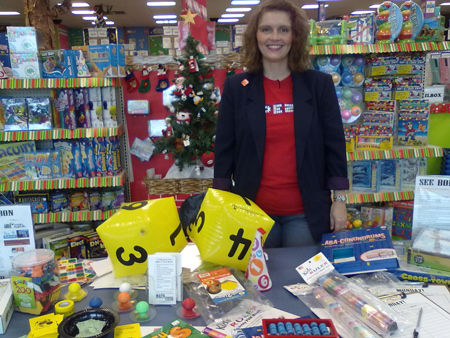
    Do you have any Pre-K and/or K12 kids in your family? I spent the day at Teacher Heaven on the Southwest Freeway in Houston, Texas yesterday and found some great math games!

    I was there for the day to demonstrate math games and manipulatives and generally help parents and teachers of K12 kiddos with math goodies.

    Meagan, Shantrelle and the crew had chosen a couple of math games to start me off. I also went and browsed the rest of the math section for others. By the end of the day, my table was jam-packed with math games!

    I fell for the loss leader!

    The big push at Teacher Heaven was the “fill-the-tub” sale – and I fell for it before I left. Hook, line and sinker!

    I resisted too many goodies for myself, but made sure to do a little Christmas shopping. Here’re a few of my excellent finds. Luckily my family members a) don’t read this site much and b) don’t know that these things were originally shrink wrapped!

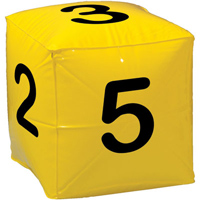
    The Pre-K find of the day was inflatable number cubes!

    I nabbed these number cubes early in the day to have something to get the little ones engaged as they walked in the door. They were so cool I couldn’t resist taking them home to Daughter.

    They’ll be great for helping her identify the numeral and saying the word. Plus, I’ll be able to create a bunch of math games with it – like doing arithmetic with the numbers when she gets older, etc.

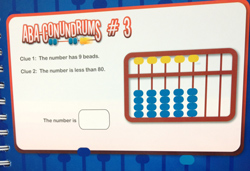
    One K12 treasure was the Aba-Conundrums by Fat Brain Toys.

    Aba-Conundrums comes with an abacus and a fun puzzle book. Using logic, you practice creating numbers and working with the tool.

    I can’t decide if I’ll give it to one family member, keep it for myself or give it to Ma as a “house” game.

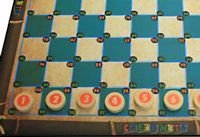
    My other K12 find was the Check Math Game.

    Also by Fat Brain Toys, Check Math is totally for my niece. I’ll likely open it and play it with Husband first, though!

    You set the number pieces up and you capture your opponents pieces like checkers. The movement of pieces is a little different, though: a number piece can move to any square that’s a multiple of it. For example, the 2 can move to a 6 or 14. The 3 can move also to the 6 but not to the 14.

    Time for Christmas shopping!

    Pick up one of these math games at your local teacher supply store. And if you’re in Houston, head over to Teacher Heaven!

    Related articles
  • Frustrations with IXL Math – A Review

    Frustrations with IXL Math – A Review

    See update below.

    Homeschooler @Ser3nd1pity requested my thoughts on the math program from IXL via twitter a few days ago.

    So I checked it out.

    When looking at the IXL sample page, I started having some concerns. Here are some screenshots that I’m running into, as well as my thoughts:

    Kindergarten Skills

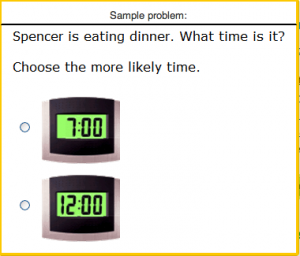
    Some people say “dinner” for “lunch.” They reserve the word “supper” for the evening meal. Instead of using terms that might be cultural, perhaps they could have used breakfast.

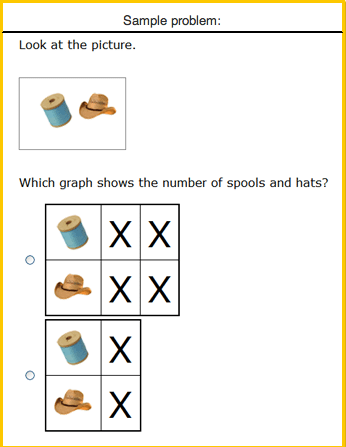
    I was so confused by this one. I’ve never seen a graph made of two objects. Nor have I seen graphs made with giant Xs. I think a graph with lines or bars instead of Xs would be clearer. As well as having a few of the objects, not just one of each.

    These suitcases appear to be the same but zoomed in. A reference object would certainly help this.

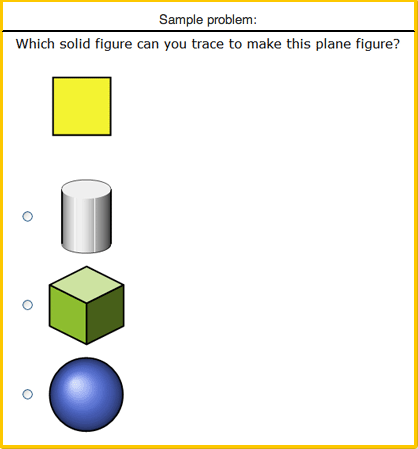
    I didn’t know what plane geometry was until college. I’m pretty sure that five-year-olds and their parents will figure out what the answer is, but the question stem is written at a really high level.

    Grade 2 Skills

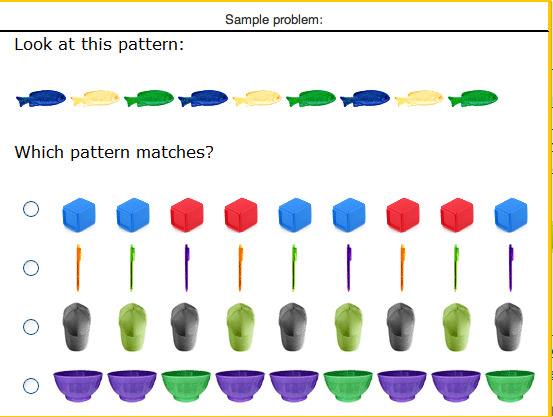
    The right answer (the pens) are very very hard to see here. And the various colors and objects are confusing. Better would be the same objects, or bigger or with more space between the lines.

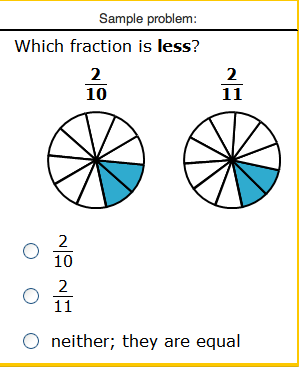
    These pies really look the same to me. If I look and count really, or look at the fractions, I can see they’re different. This might be more effective without the pictures.  For a seven year old (and for me), if you had 2/10 of that pie and he (or I) had 2/11 of that pie and it looked like these pictures, they could easily be perceived as the same.

    Stopping Now

    Of course I haven’t really gotten into the curriculum. These are merely samples. I don’t know how they teach this in the IXL Math Practice program. I worry, though, that these examples might be representative of the way it is taught.

    I welcome a view into the curriculum, if they’re interested in more thoughts on their offering.


    Update March 29, 2012: IXL has communicated to me that they’ve been making changes – including some based on this article. They’ve also hired me to take a deeper look at their product and give them feedback. I look forward to seeing what they’ve got.

    I’ll post updates, so stay tuned!


  • Math Game Review: Sokikom

    Math Game Review: Sokikom

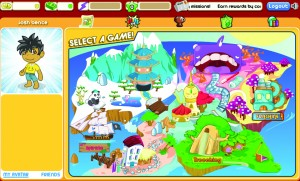
    I’ve recently been playing a new math game called Sokikom (so-kee-kom). It’s an online social math game – yes “social” – for 1st through 6th graders.

    So far I love it. The only bummer is that Daughter is only 21 months old, so a mouse to her either squeaks or is edible. But I did have some older kids in my family play – and they’ve all enjoyed it!

    It currently has three games, Frachine, Treeching and Opirate, and various other perks and treats to help children with math. It’s officially launching next week and the folks at headquarters tell me there’s more to come – even after launch.

    Here’s a little info to whet your whistle for it:

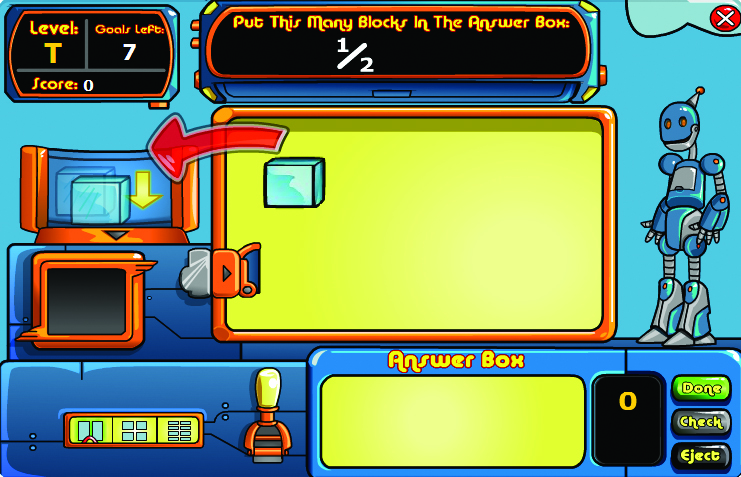
    Frachine reinforces fractions.

    The fun part of this fraction game is you get to cut the pieces up while you play. So it isn’t just showing parts of a whole, but the child actively makes the parts of the whole.

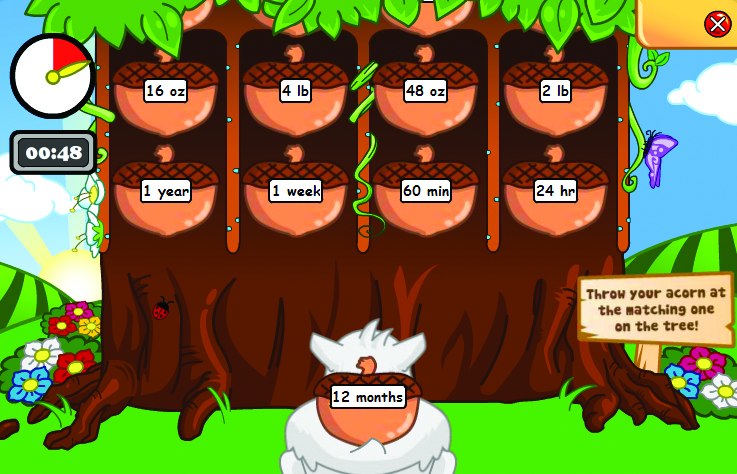
    Treeching supports money, measurements, time, patterns and early algebra.

    Sokikom is full of surprises. Sometimes the answer isn’t in the form you’re expecting. At first glance, this challenge puzzle seems all about mouse control. But notice there isn’t a matching “12 months” on the tree. Instead you have to convert. This is a great opportunity for teaching units!

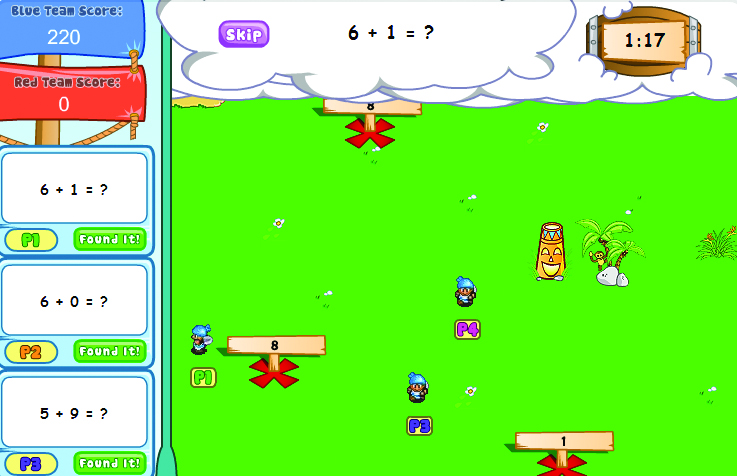
    Opirate reinforces operations and early algebra.

    This was my least favorite game of Sokikom – but only because my sister creamed me in it. (We used the online social part from our respective houses. Felt like being a kid again!)

    Opirate is a bit of a thinking-through game. You have to do the problem (in the cloud at the top of the screen), then find the solution on the map, then get yourself to the solution. The “X marks the spot” numbers keep popping up – so every new problem has the old X’s that you had before (if you can remember where) as well as some new ones.

    The Social Aspect

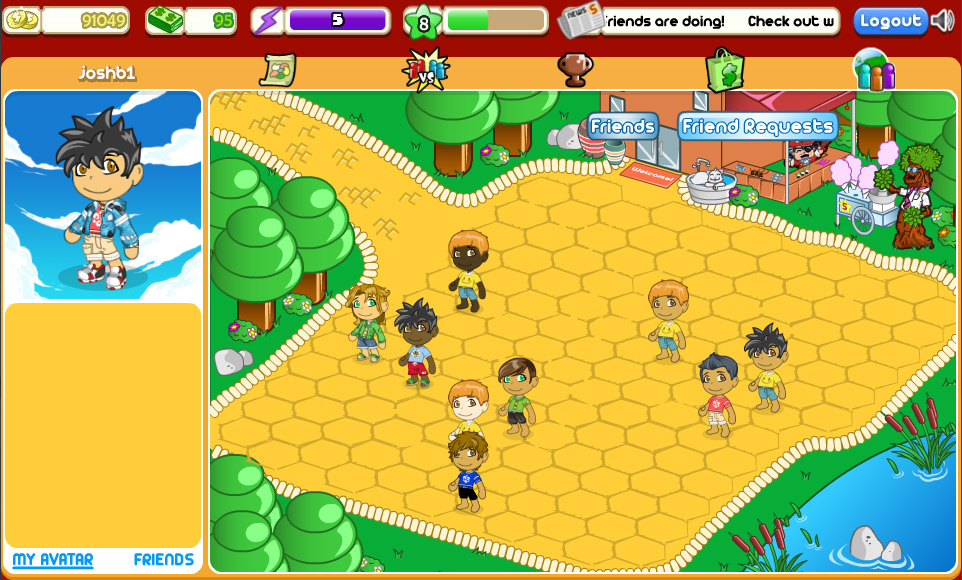
    Your children can “friend” other kids with whom to play. I’m not a Farmville or World of Warcraft person, but I understand the appeal. Playing 20 minutes a night with an online friend keeps kids connected and at home, safe.

    More Goodies for the Kids

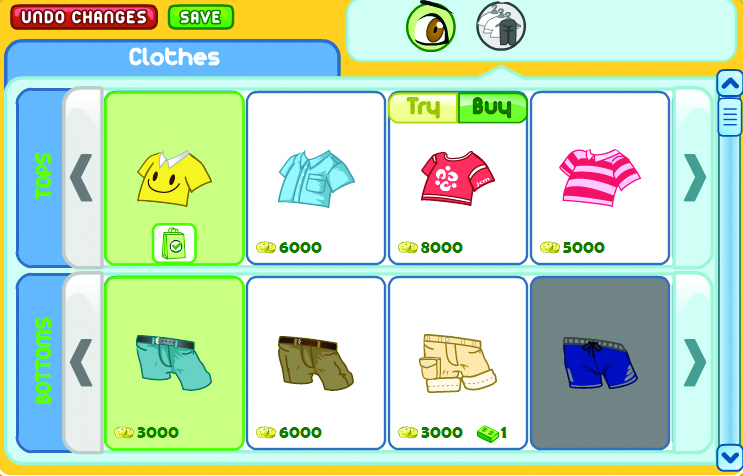
    In Sokikom kids earn energy (which they need to play a game) and Soki-money. As they accomplish levels, they get awarded Soki-stars. The Soki-stars unlock clothing and accessories items they can “buy” with Soki-bucks to personalize their avatar – a popular element of any social game.

    For parents and teachers

    Parents typically read to children before bed. Sokikom is a way for parents to encourage a little bedtime math: do some Sokikom math for 10 minutes and read for 10 minutes.

    And since many households have multiple computers, you can play online with your child – even sitting next to him or her. What a great bedtime routine!

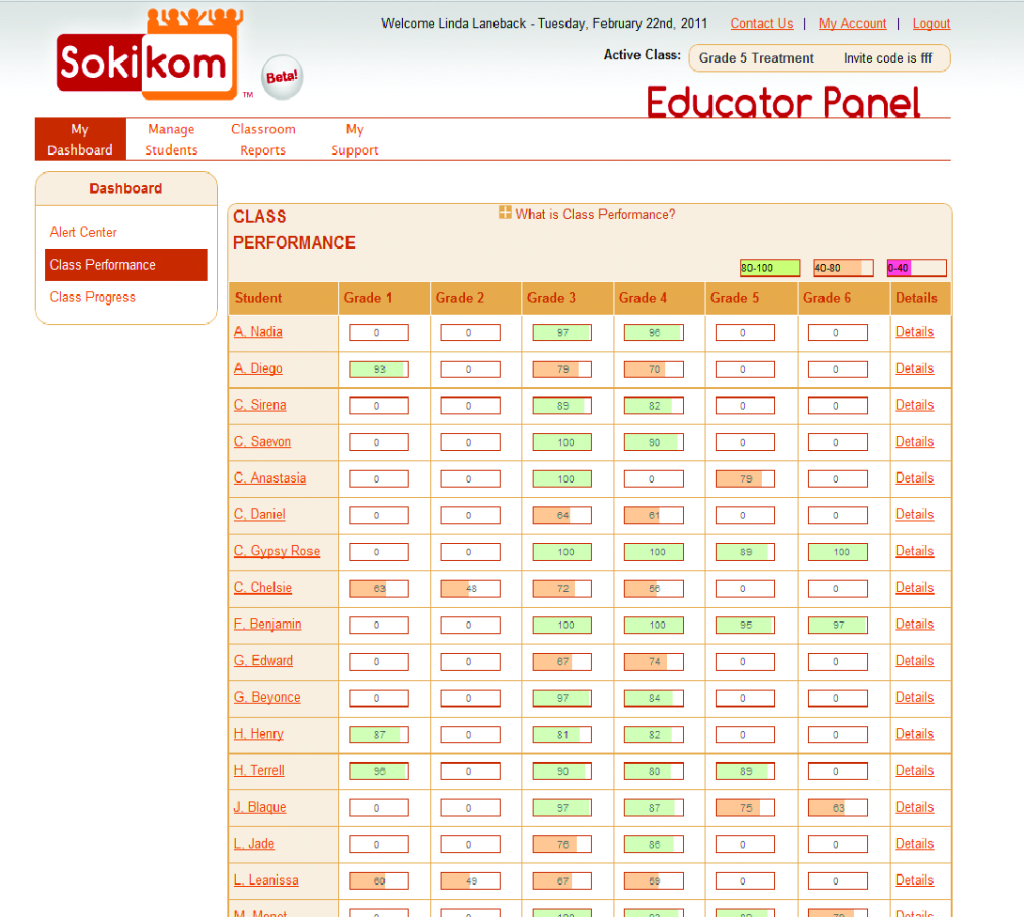
    Sokikom also has a robust infrastructure to track and manage the progress of each child:

    Are you ready for it?

    Sokikom has won numerous awards and is funded by the US Department of Education. From their literature:

    Sokikom is focused on five core tenets: provide social learning where kids help kids learn math; adapt to individual students’ needs and learning styles; encourage positive and safe competitive game-play, which leads to measurable improvements; and connect school and home to allow for continuous web-based learning.

    I’ve seen these in action with this game. I’m a hands-on kind of mom and teacher, and I’m very much into attaching math to anything we can. If your kids lean toward video games, Sokikom‘s a great one to use!

    Related articles