Tag: arithmetic

  • How Calculators Inhibit Learning the Distributive Property in Algebra

    How Calculators Inhibit Learning the Distributive Property in Algebra

    Do you wonder if your children should be using a calculator “at their age”? Are you a fan of calculators, but have friends who aren’t? Are your friends “into” calculators while you oppose them?

    I often hear people say that children 50 years ago understood math concepts more quickly. Although our parents weren’t taking classes called algebra in the 7th grade, they were doing algebra in the 7th grade.

    Algebra is arithmetic.

    There are two fundamental and rarely understood facts about algebra:

    1. Algebra is arithmetic with one or more numbers in disguise.
    2. Algebra has exactly the same  rules as arithmetic.

    Which means if you can do arithmetic you already know how to do algebra!

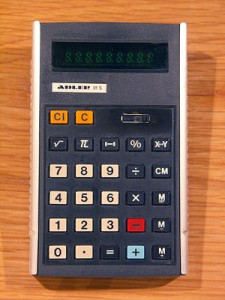
    Our parents or grandparents, 50 or even 30 years ago, weren’t using calculators. They had to apply all the rules of arithmetic to get the job done. Which means that they had to apply all the rules of algebra.

    Teaching them a class called “Algebra” was much easier because of this.

    What are the rules?

    The basic rules that non-calculator users must apply are the distributive property and the order of operations. The distributive property is the thing that calculator use eliminates.

    Children could get practice mentally multiplying things like 3 x 86 and do 3(80+6) = 240+18=268. With this practice, they are ready for 4x(3y+2z) = 12xy+8xz.

    If they never have to multiply 3 x 86 in their head, they never get the experience of the distributive property. Which means teaching them 4x(3y+2z) = 12xy+8xz will cause anxiety and frustration. They see it as “magic” or “something you made up just to confuse me.”

    Give them the tools they need.

    Refuse to let students have the calculator. Let them have the tool of the distributive property for algebra before you teach them “Algebra”. Give them the benefit our parents and grandparents had!

    Related articles
  • How to Use Flashcards when Teaching Math

    How to Use Flashcards when Teaching Math

    Siggi over at Turkeydoodles wrote a post about her preference of calculators over flashcards. It’s her preference, but her arguments seem to be founded on the misuse of of flashcards. Furthermore, it seems she’s not seen the detrimental effects of early calculator use, yet.

    When you should give a kid a calculator is a topic for another article. In the meantime, here are some tips on good flash card usage.

    Flashcards are educational toys.

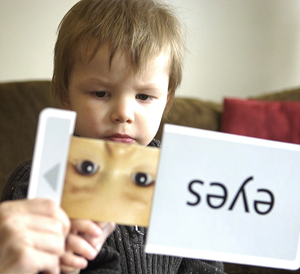
    Flashcards shouldn’t be used as testing devices. They’re educational toys. They’re exploratory devices. Let them “peek” as much as they want.

    As a first introduction, use them to build houses of cards. They should be fun and comfortable.

    They are limited in scope.

    The 6 x 8 = 48 card will never be able to give the cosine of 60 degrees. This makes the flashcards so beautiful. Once you understand what happens when you create a calculator addict, and see how that works as the kid enters college, you’ll know how important this limitation is.

    Encourage variation to limit boredom.

    I distinctly remember using flashcards in my dining room, sitting next to the sliding glass door. I was reading them. But because they would get boring, I would chant them. It became sing-songy and fun. I could go through them quickly this way.

    And I looked forward to the ones that rhymed.

    Let the flashcards be rejected.

    If a kid really hates them, let it go. There are other ways to get that information across. Schoolhouse Rock’s Multiplication Rock is a fabulous tool for this.

    And you can sing or chant multiplication facts yourself. My mother learned the most common prepositions by saying them as she jumped rope. You can vary some skip counting with jumping rope to learn multiplication facts:

    • 3 x 1 = 3
    • 3 x 2 = 6
    • 3 x 3 = 9
    • and so on…

    Allow the flashcards to be the context in and of itself.

    It is not necessary that math be learned in context. So many people keep pushing this. Sometimes it’s just fun to know random stuff – including some quick and nifty facts.

    Don’t push math for math’s sake, but offer it. There are kids, lots of them, who just like to do puzzles. Plain math – arithmetic and facts – is a great puzzler.

    What do you think? Is this a better use of flashcards than the ones you’ve seen? Share your thoughts in the comments.