Tag: subtraction

  • The Order of Operations Explained: Intro and Mnemonics

    The Order of Operations Explained: Intro and Mnemonics

    The Order of Operations (OoO for short) is used everywhere in mathematics because it encompasses many of the foundational rules that we’ve agreed to follow.

    Alas, students have been given the cheap and dirty version of it for years. “Here, memorize this thing about your Dear Aunt Sally!” What the heck?!

    There are subtleties in the Order of Operations that every person over the age of seven should know.

    The series begins today.

    The order of operations is a set of rules – like the drivers’ handbook for math. If everyone follows the rules, we’ll all be safe. But if someone makes a bad turn, we could be looking at a crash.

    But the Order of Operations is only a set of rules for arithmetic! It isn’t even the best practice when it comes to expressions involving a variable like x. I’ll cover what I mean in this weekly series.

    Here are the proposed articles:

    1. Intro and mnemonics
    2. Parenthesis
    3. Exponents
    4. Exponents, Multiplication and Addition
    5. Multiplication and Division
    6. Addition, Subtraction and Conclusions
    7. Exponents of Negative Numbers
    8. Another Reason to Ban PEMDAS (aka parenthesis aren’t an operation)

    Mnemonics for PEMDAS

    Well, there’s one: PEMDAS (pronounced just like it looks). That’s what the cool kids in high school always said. It was the same kids who said “soh-cah-toa” – which I thought sounded really goofy.

    And then there’s “Please Excuse My Dear Aunt Sally.” And of course “Piranhas Eat Mostly Decayed Antelope Skin.”

    What’s your way to remember it?

  • Teaching Subtraction Using a Balance

    Teaching Subtraction Using a Balance

    I love finding nifty ways to use tools for teaching math. Especially tools that aren’t supposed to teach math. Or at least the math I’m trying to get it to teach.

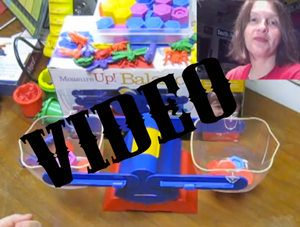
    I have this very cool balance that I got from Discovery Toys that would normally be a science toy. But, alas, I’m a mathematician, Jim, not a doctor. So I’ve taken the fancy science toy and turned it into a way to teach subtraction.

    You can, of course, use it to teach addition and later I’ll do a post on using it to teach multiplication and division.

    If you have children who struggle with math concepts, teaching them with hands on bits (manipulatives) sometimes helps. Here’s how to teach subtraction using a balance:

    This nifty trick can be done with any balance as long as you have weights appropriately sized. Sometimes that’s not so easy to find. Order a colorful balance that’s similar to the Discovery Toys one in video here.

    Did it work? How did your children receive this method of learning arithmetic? Please share your experience with it in the comments!

  • Two Reasons to Memorize Math Facts

    Two Reasons to Memorize Math Facts

    I learned my math facts by “singing” them while looking at flashcards.

    Having these facts ingrained with chanting or singing isn’t a bad idea. It might not “feel right” because we’re so into experiential learning these days. But if a kid can’t immediately access and use things like 8 x 7 = 56, he’s going to be slower than if he can.

    And if he’s slower, he might get frustrated and start to think that he’s not good at math.

    Also, knowing these cheap and dirty math facts helps with confidence. Even if a kid’s struggling with other things in math, knowing that he has this one thing (the “facts”) will help out.

    I fight this battle often. Some people feel that math facts shouldn’t be memorized. But there’s so much value in it.

    How about you? Which side of the fence are you on?

  • How to Subtract Using Reverse Addition

    How to Subtract Using Reverse Addition

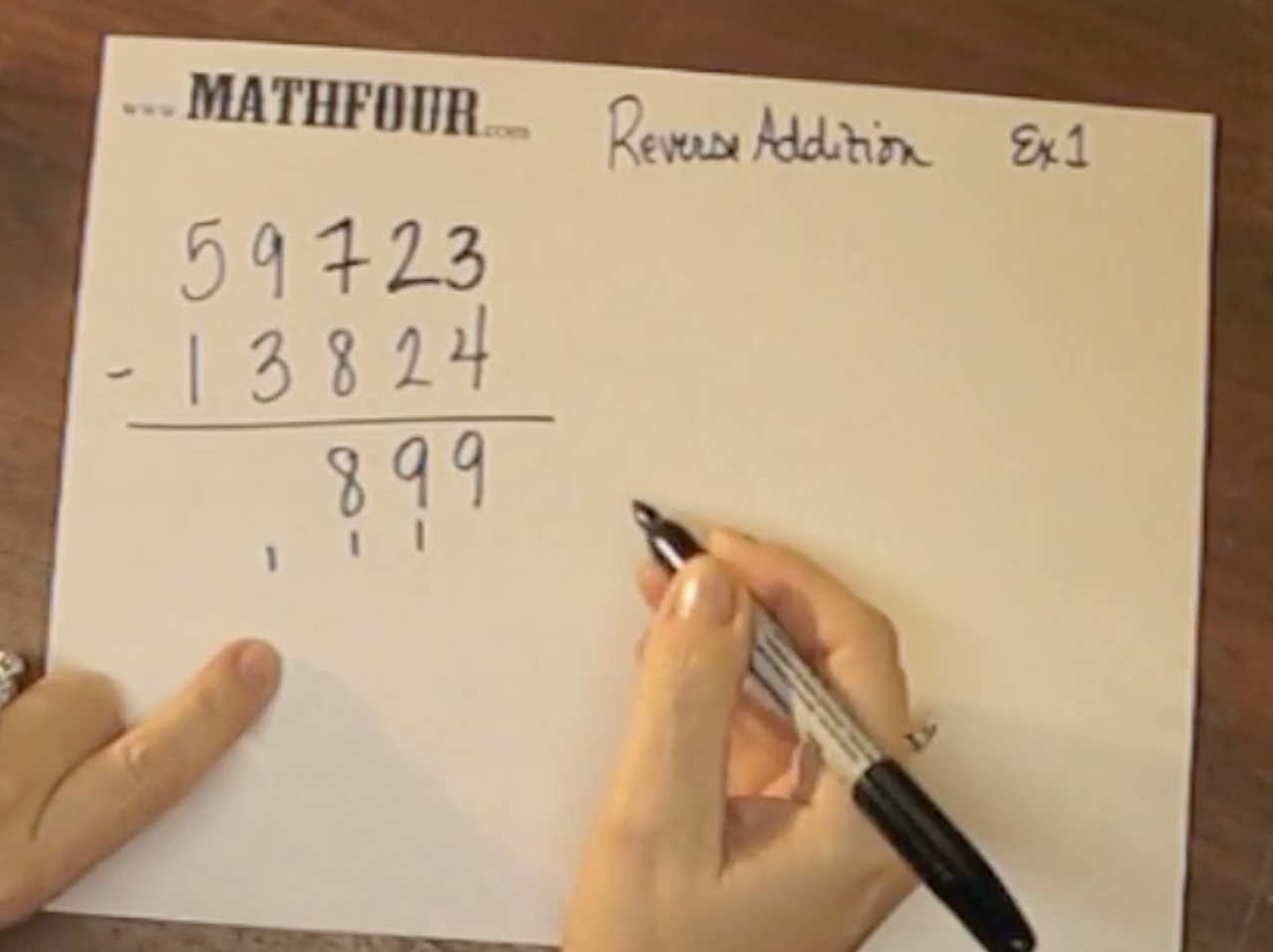
    This was requested by Jake’s Mom. Since she was taught to borrow, she was dumfounded at what Jake brought home. Happily, Jake is young enough and unscathed enough to not balk at a “different” method than what his mom was taught. He got it right away.

    But Jake’s mom, on the other hand, is struggling.

    If your kiddo is being taught this, here’s a way to look at it that might help you understand what’s going on.

    First, a brief review on the relationship of subtraction to addition:

    Here’s what “reverse addition” looks like in relation to our old friend “borrowing,” using the same example:

    And here’s an example:

    Another example (along with a special tip for you):

    And a final example, just to help you get the hang of it.

    Still have questions? Post them in the comments.

    Thanks, Jake’s Mom, for the question!