Tag: games

  • Interview with Math Game Sokikom’s Founder

    Interview with Math Game Sokikom’s Founder

    Sokikom (so-kee-kom) is an award-winning education technology company that develops math social learning games. Their recent offering, launching this week at the ISTE Conference, is an online social math game by the same name. It’s designed to motivate elementary school students in grades 1-6. I did a review of the game here.

    Snehal Patel, founder of Sokikom

    MathFour.com was privileged to interview the creator and founder of Sokikom, Snehal Patel.

    MathFour: Thanks for agreeing to share with our readers, Snehal! Let’s start at the beginning. What is your background?

    Snehal: I moved to the U.S. when I was very young. Through elementary school, my family moved to five different schools in various states across the country, which gave me first-hand experience of the challenges faced in elementary math. I was a math tutor in high school and college, and then went on to earn a degree in computer science from Arizona State University. From there, I became a senior software engineer at Motorola, where I also coached/tutored other engineers. I left that job to start a math tutoring learning center. I became a certified math tutor and also received certification to teach as a substitute. Through that experience, I provided one-on-one tutoring to over 500 students ranging in age from 5 to 72. I’m very passionate about improving learning – specifically in math.

    MathFour: What prompted you to create an online social game using math?

    Snehal: The idea for Sokikom came to me when I was a math tutor and become aware of how many students weren’t excited about and engaged in learning math. As a result, these kids were missing out on building the foundation in math skills that they were going to need to succeed in high school, college and beyond. I saw, however, that math games – especially those that were social – got these same kids excited about and engaged in learning math. This made me think: how many other students in the U.S. face this same problem, and how can we use online technology to address it? That was the genesis of Sokikom – a highly engaging online math game with community and team-play elements.

    MathFour: Have you created other math based games?

    Snehal: Yes, when I was a math tutor, I created various paper-based and card games that I used with my students.

    MathFour: Have you created other online social games?

    Snehal: No. Sokikom is my first online math social learning game.

    MathFour: Do you have children? Did they play a part in the conceptualization or development of Sokikom?

    Snehal: My wife and I don’t have children, but I have a younger sister I helped raise and tutored in math throughout her K-12 schooling. This experience absolutely helped me as I considered how to make Sokikom fun and educational. Another big part in the conceptualization of Sokikom came with my experience tutoring students in math.

    MathFour: The American Academy of Pediatrics recommends limiting exposure to screen media. How much time do you recommend children play on Sokikom?

    Snehal: Sokikom is designed to provide efficient learning within short periods of time. We recommend that children spend between 20 to 40 minutes playing Sokikom each day – a small block of time with a tremendous learning opportunity.

    MathFour: In the multiplayer mode in Sokikom, you can’t actually “see” your opponent – only his scores. Do you plan on adding this feature at some point?

    Snehal: Great question. Two of our multiplayer games don’t allow children to see their opponent teams – just their scores. However, Opirate multiplayer does allow children to see their teammates, but not opponents. In terms of future development, we are planning on adding “power ups,” which will allow interesting interactions between teammates and opponents.

    MathFour: What’s next for Sokikom? What are your goals for the company and the game?

    Snehal: We plan to continue improving Sokikom’s math social learning games! We are continuing with efficacy and usability research and love to hear feedback from parents, teachers and students on ways to improve Sokikom. We will be launching new games and cool virtual features such as “power ups” soon.

    MathFour: Do you have any advice for parents and teachers?

    Snehal: I believe that tools such as Sokikom can greatly increase the motivation for children to learn math, which leads to higher math achievement. In the case of Sokikom, I would advise parents and teachers to make use of the free reporting features available in the control panel. Parents and educators can keep track of children’s progress and usage, and receive alerts when students require extra help.

    Thanks so much, Snehal! Find him and the Sokikom crew on Twitter @Sokikom and check out the game at Sokikom.com.

    Related articles
  • Math Game Review: Sokikom

    Math Game Review: Sokikom

    I’ve recently been playing a new math game called Sokikom (so-kee-kom). It’s an online social math game – yes “social” – for 1st through 6th graders.

    So far I love it. The only bummer is that Daughter is only 21 months old, so a mouse to her either squeaks or is edible. But I did have some older kids in my family play – and they’ve all enjoyed it!

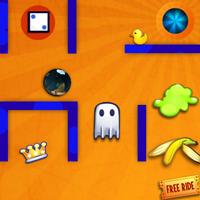
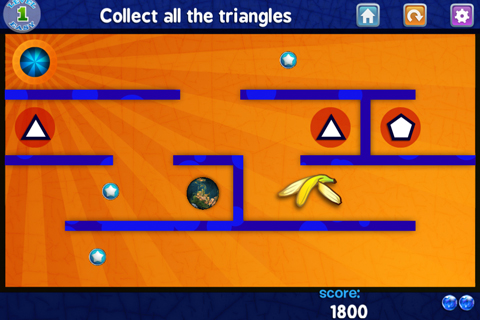
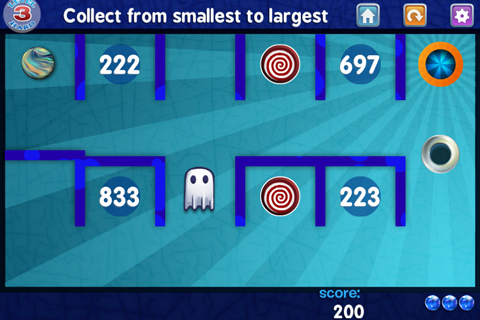
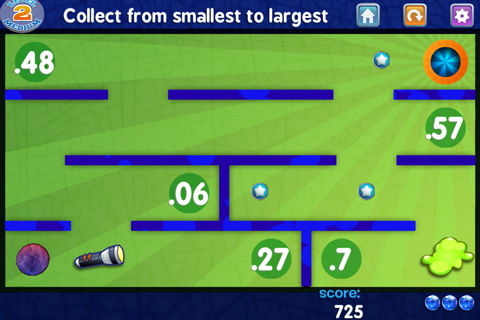
    It currently has three games, Frachine, Treeching and Opirate, and various other perks and treats to help children with math. It’s officially launching next week and the folks at headquarters tell me there’s more to come – even after launch.

    Here’s a little info to whet your whistle for it:

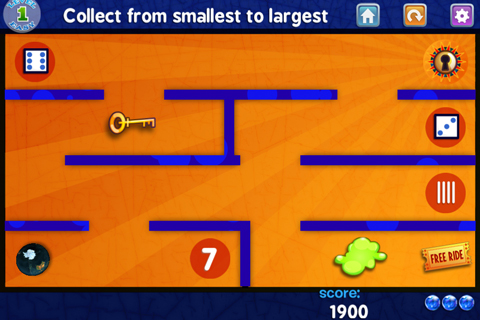
    Frachine reinforces fractions.

    The fun part of this fraction game is you get to cut the pieces up while you play. So it isn’t just showing parts of a whole, but the child actively makes the parts of the whole.

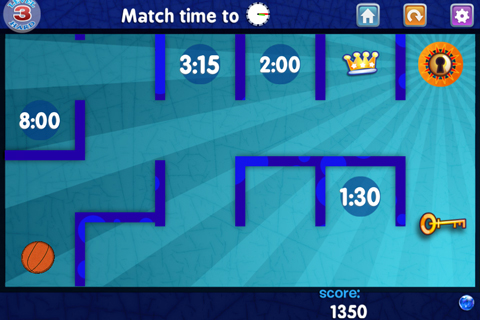
    Treeching supports money, measurements, time, patterns and early algebra.

    Sokikom is full of surprises. Sometimes the answer isn’t in the form you’re expecting. At first glance, this challenge puzzle seems all about mouse control. But notice there isn’t a matching “12 months” on the tree. Instead you have to convert. This is a great opportunity for teaching units!

    Opirate reinforces operations and early algebra.

    This was my least favorite game of Sokikom – but only because my sister creamed me in it. (We used the online social part from our respective houses. Felt like being a kid again!)

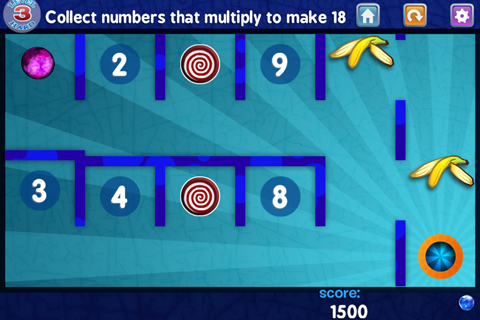
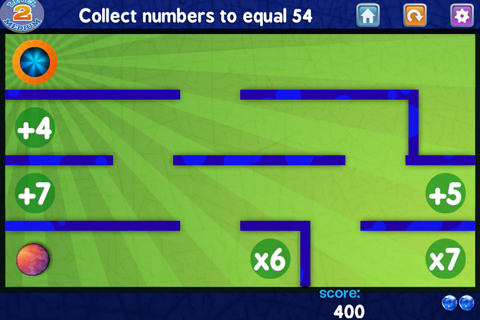
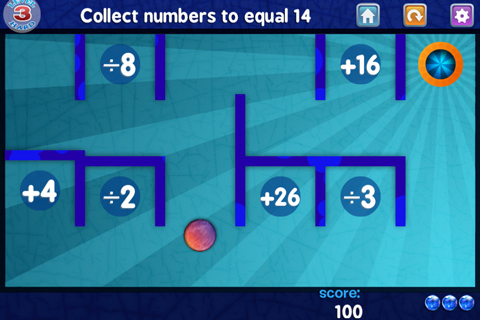
    Opirate is a bit of a thinking-through game. You have to do the problem (in the cloud at the top of the screen), then find the solution on the map, then get yourself to the solution. The “X marks the spot” numbers keep popping up – so every new problem has the old X’s that you had before (if you can remember where) as well as some new ones.

    The Social Aspect

    Your children can “friend” other kids with whom to play. I’m not a Farmville or World of Warcraft person, but I understand the appeal. Playing 20 minutes a night with an online friend keeps kids connected and at home, safe.

    More Goodies for the Kids

    In Sokikom kids earn energy (which they need to play a game) and Soki-money. As they accomplish levels, they get awarded Soki-stars. The Soki-stars unlock clothing and accessories items they can “buy” with Soki-bucks to personalize their avatar – a popular element of any social game.

    For parents and teachers

    Parents typically read to children before bed. Sokikom is a way for parents to encourage a little bedtime math: do some Sokikom math for 10 minutes and read for 10 minutes.

    And since many households have multiple computers, you can play online with your child – even sitting next to him or her. What a great bedtime routine!

    Sokikom also has a robust infrastructure to track and manage the progress of each child:

    Are you ready for it?

    Sokikom has won numerous awards and is funded by the US Department of Education. From their literature:

    Sokikom is focused on five core tenets: provide social learning where kids help kids learn math; adapt to individual students’ needs and learning styles; encourage positive and safe competitive game-play, which leads to measurable improvements; and connect school and home to allow for continuous web-based learning.

    I’ve seen these in action with this game. I’m a hands-on kind of mom and teacher, and I’m very much into attaching math to anything we can. If your kids lean toward video games, Sokikom‘s a great one to use!

    Related articles
  • 3 Places to See the Coordinate Plane in Action

    3 Places to See the Coordinate Plane in Action

    I was browsing through the book Family Math and found a nifty game called Hurkle. It goes a little something like this:

    1. Someone picks a place on the coordinate plane (in secret) for Hurkle to live.
    2. Others guess Hurkle’s home by giving coordinates and pointing out those coordinates.
    3. When they are wrong, they are given a hint of which way to go (from their guess) to find Hurkle.

    The coordinate “space” is around too.

    This made me think of the conversation I had with a neighbor the other day while walking our children to the park. When Scotty beams someone in Star Trek, he needs coordinates. But those coordinates must be measured from some origin (0,0,0) in the universe to make any sense. So where’s the origin?

    A student of mine long ago found that the origin was Earth. My neighbor argued it should be Vulcan – apparently they started the United Federation of Planets.

    And we can find coordinates at work in board games.

    With thoughts of these two in my mind, I wonder what ever happened to the game of Battleship. It’s a great game of coordinates along with logic. Once you hit a ship, you have to go in each direction to determine how big the ship is and in what direction.

    I’m excited about looking around my world today for more coordinate systems. Where do you see them in your world? And how do you apply them in your teaching? Leave your thoughts and ideas in the comments.