
Tag: combinations

  • Permutations in Braiding Hair

    Permutations in Braiding Hair

    As a mom of a girl child, I’m supposed know all about braiding hair. But I don’t. <cue dramatic bad mom music>

    I know how to braid three basic strands of hair… mostly. But when I try the French braiding thing, K8’s hair looks like a feral goose nested in it overnight.

    “There must be some way of knowing how much extra hair to pull in — and when!” I thought.

    When trying to figure it out (mathematically, of course), I noticed that the strands of the braid weave to give all possible permutations of three things!

    Check it out:

    So we have all of these:
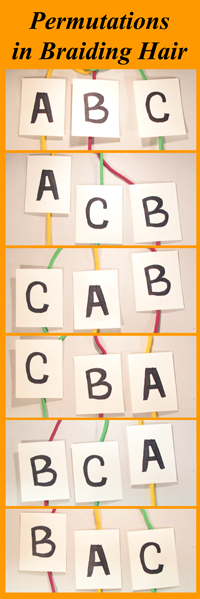
    Are there more?

    This makes me wonder what happens with four strands. Of course that kind of thinking will send any incompetent braiding mom into fits!

    What do you think? Share your thoughts in the comments or on twitter/x.

    You might also like:
  • How to Calculate Permutations and Combinations

    How to Calculate Permutations and Combinations

    Yesterday’s post showed how to tell the difference between permutations and combinations. The day before, I posted about n! and what the heck to do with it. Now you’re ready to do some calculations.

    Here’re the two formulas and how they compare:

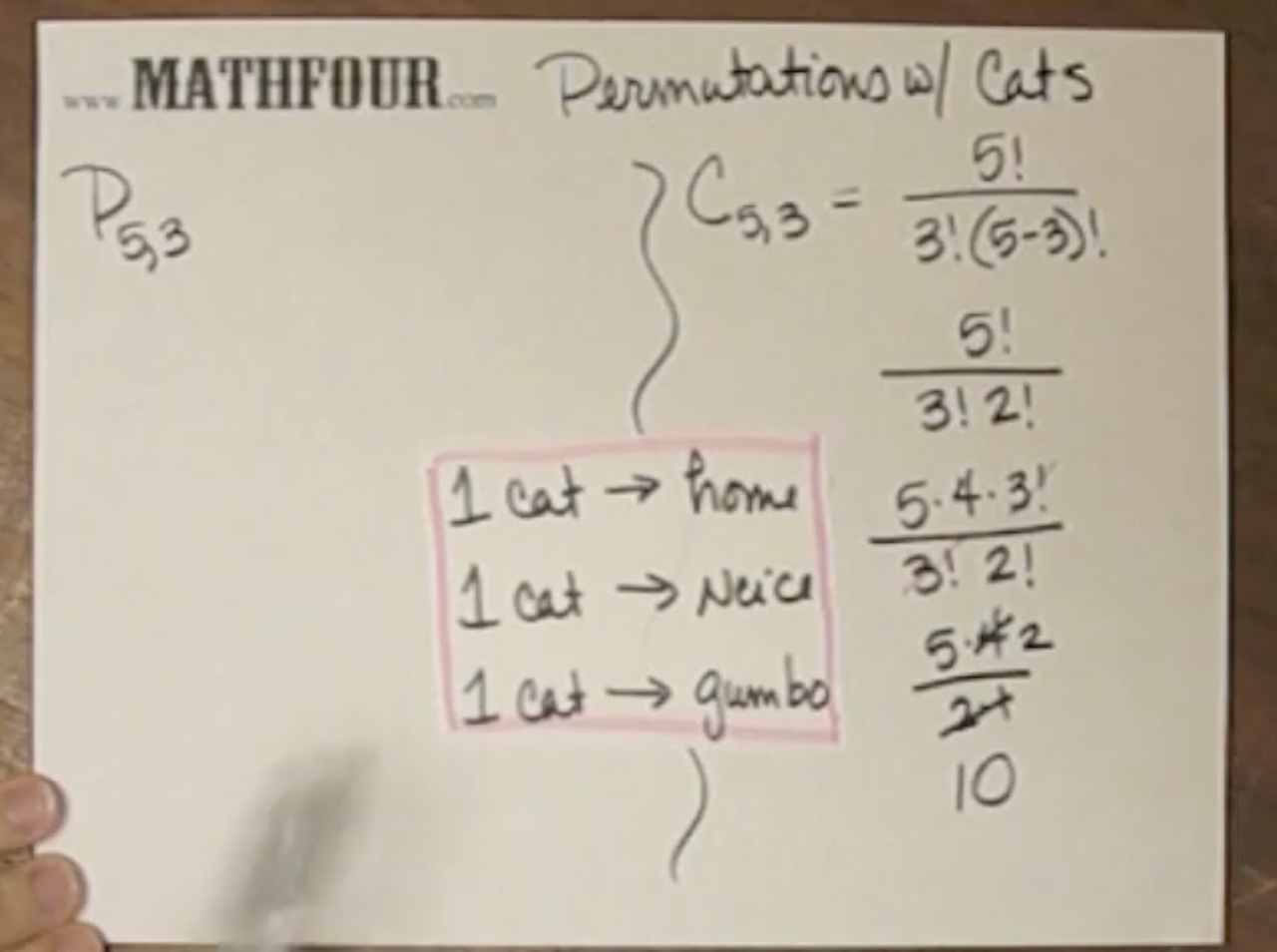
    And here are the numbers worked out from the video above:

    Here’s an application of it using the cat example from the first video of yesterday’s post:

    Post your questions and thoughts in the comments section.

  • Permutations and Combinations – How to Tell the Difference

    Permutations and Combinations – How to Tell the Difference

    Have you ever taught permutations and combinations?

    Do you use the words, “In permutations, order matters”?

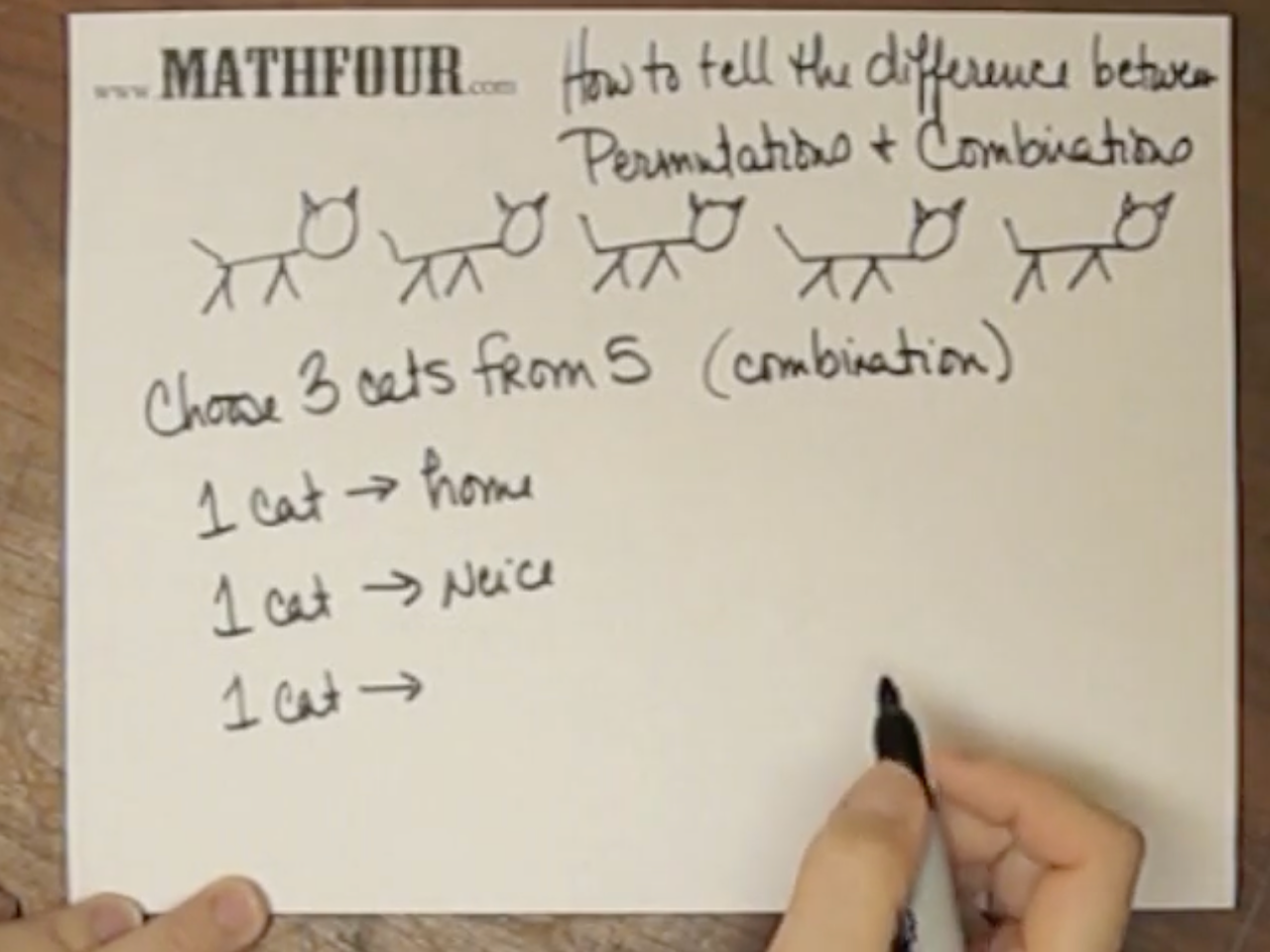
    There are lots of permutation problems where there’s no ordering whatsoever. But they are still permutations. So telling the difference between a combination and permutation can be difficult if you use the ol’ “order matters” rule. Like this:

    Notice there was no “order” in the permutation – each cat is having something different done with it. (And woe for the cat who’s being eaten.)

    The real differentiating factor between permutations and combinations is this:

    If the things being chosen are going to do (or have done to them) the same thing, it’s a combination.

    and

    If the things being chosen will do (or have done to them) different things, it’s permutation.

    Here’s another example, along with a tip to choosing which to use:

    Will this help your students? And check out the next post on how to do the calculations for these.