Tag: prime factorization

  • Prime Numbers Are Fun to Learn!

    Prime Numbers Are Fun to Learn!

    You Can Count on Monsters

    I’ve been dying to check out the book You Can Count on Monsters for a while. My sweet niece, without knowing how much I wanted it, gave it to me for Christmas!

    It’s a book about numbers.

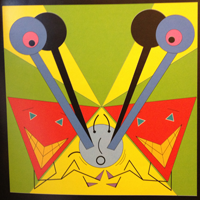
    You Can Count on Monsters is a book that illustrates the numbers 1-100 in a very special way. Each of the prime numbers has an original “monster” that has a link to it. For instance, 2 has two eyes, 7 has a body with seven sides, and the edges of 19’s eyes – they total nineteen.

    Each of the composite numbers is a blend of mosters from the prime numbers of its factorization.

    So 14 is the 2-monster hanging around in the mouth of the 7-monster. The other composite numbers range from cute to crazy-hard-to-recognize (like the 72-monster).

    Enjoy You Can Count on Monsters in order.

    For each number, you can examine the monster and see how it was created – what aspects of the monster correspond to the number.

    Starting at the beginning seems to be the best bet. Jumping into the middle got me lost. When I began at 1 and then allowed the composite numbers to “grow” on each other, things made much more sense. And as the prime numbers get larger, it’s harder to tell what piece of the image to count.
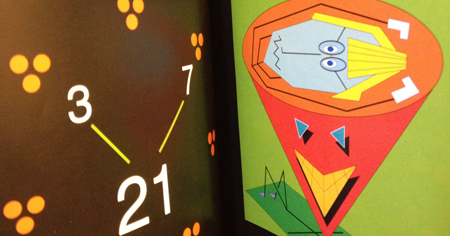
    Walking through it with a child will be very interesting too. Daughter is two, so she’s pretty much not interested in numbers higher than five. Although I can start using the terminology “composite numbers” and “prime numbers.”

    You can use it as a template.

    Making your own monsters is a fun, crafty way to explain prime numbers and composite numbers. Children would notice quickly that there aren’t many ways to represent 2 – drawing two sided figures is a bit of a challenge.

    The obvious 2 monster has two circles, while the 3 monster has either three circles or is a triangle. But the bigger the prime numbers get, the more creative (and different from the book) you can get.

    And how you put them together – well, that’s where the real fun is. There are so many different ways to create the composite numbers!

    There is a drawback.

    I was showing You Can Count on Monsters to my Ma. When I showed her the 6-monster she said, “That’s not counting.”

    Indeed the images represent factorizations, not summations. Which means the image that involves 2 and 3 “officially” represents 6 but there are only 5 things “going on” in the picture.

    She’s got a point.

    What can you do?

    Have you seen the book? Are your kids open to drawing number critters? And do you, or your kids, see it like Ma does?

    Share your thoughts and experiences with You Can Count on Monsters in the comments!

    Related articles
  • How to Use Prime Factors to Cancel Fractions

    How to Use Prime Factors to Cancel Fractions

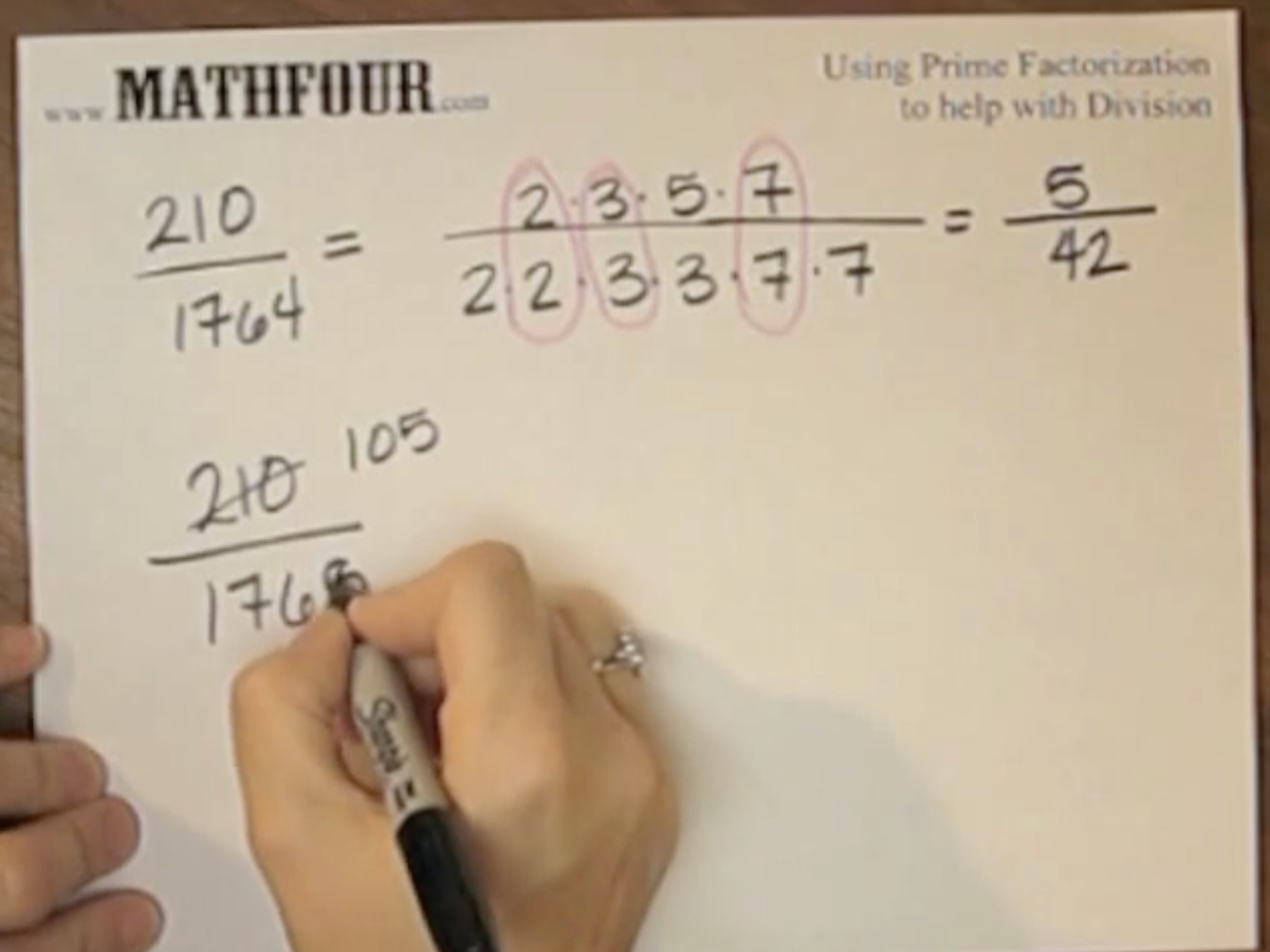
    I previously posted about prime factors and about using them in multiplication. Now we’ve got fractions to handle.

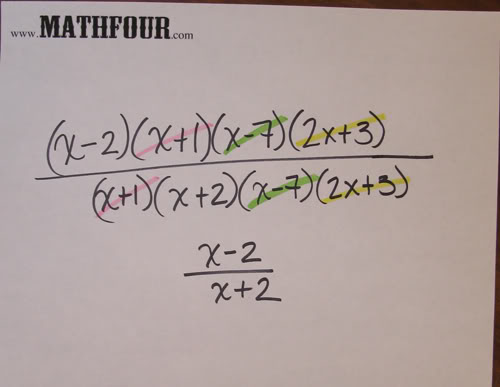
    Before we get in too deep, first let me note the main reason why we do this with arithmetic. In algebra, students will be asked to take a rational expression, factor it and reduce it like this:

    If they are familiar with how factoring works with numbers, this will be normal to them.

    I also find that reducing factors in this neat and clean way helps a lot. In this video I showed the first few steps of reducing the fraction a sloppier way after I did it the “neat” way:

    Here’s one that’s a little more complex:

    Will be helpful to show your kids? Is there something I’m missing? Share with us in the comments.

  • How to Use Prime Factoring to Win Friends and Influence People

    How to Use Prime Factoring to Win Friends and Influence People

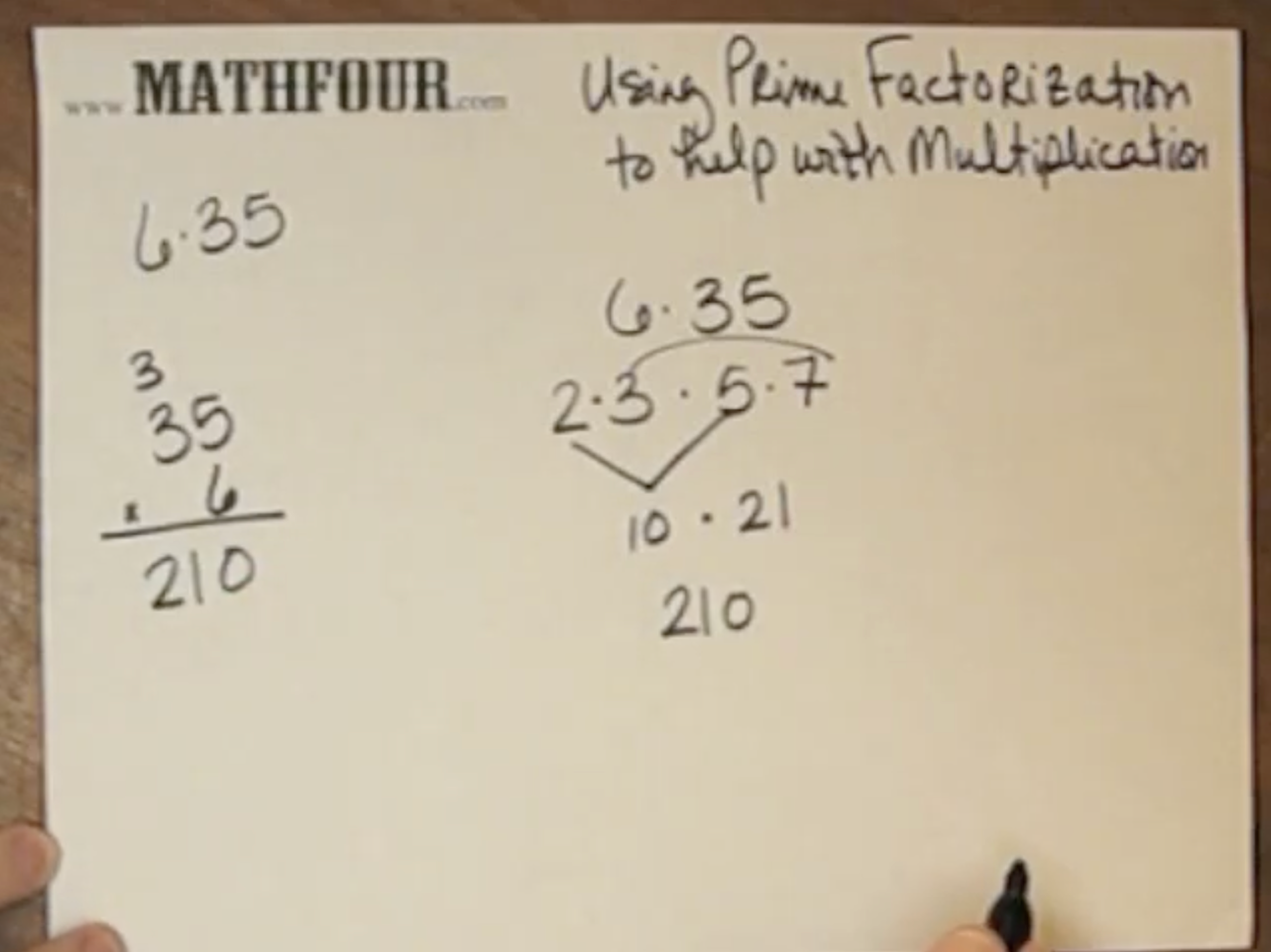
    Alright, you might not win friends with this, but the more you can do arithmetic in your head… well… okay, you can’t influence people with it either. Regardless, it’s handy to know and helps with multiplication.

    Yesterday I posted a couple of videos about factoring numbers into primes. Now it’s time to put those to work.

    How about a rather simple one to get us started:

    Here’s one that’s a little more challenging. The key is that you can combine the bits to something you’re more comfortable doing. I don’t like multiplying nines, so I avoid those.

    Can you use this? Why or why not? Ha ha, just kidding – no essay questions here! – but if you do find a use for this, or if this annoys you, let me know in the comments.

  • 2 Ways to Factor Numbers into Primes

    2 Ways to Factor Numbers into Primes

    Factoring is traditionally considered an “f-word” for students of math. But it sometimes has its good sides (which I’ll show over the next couple of days).

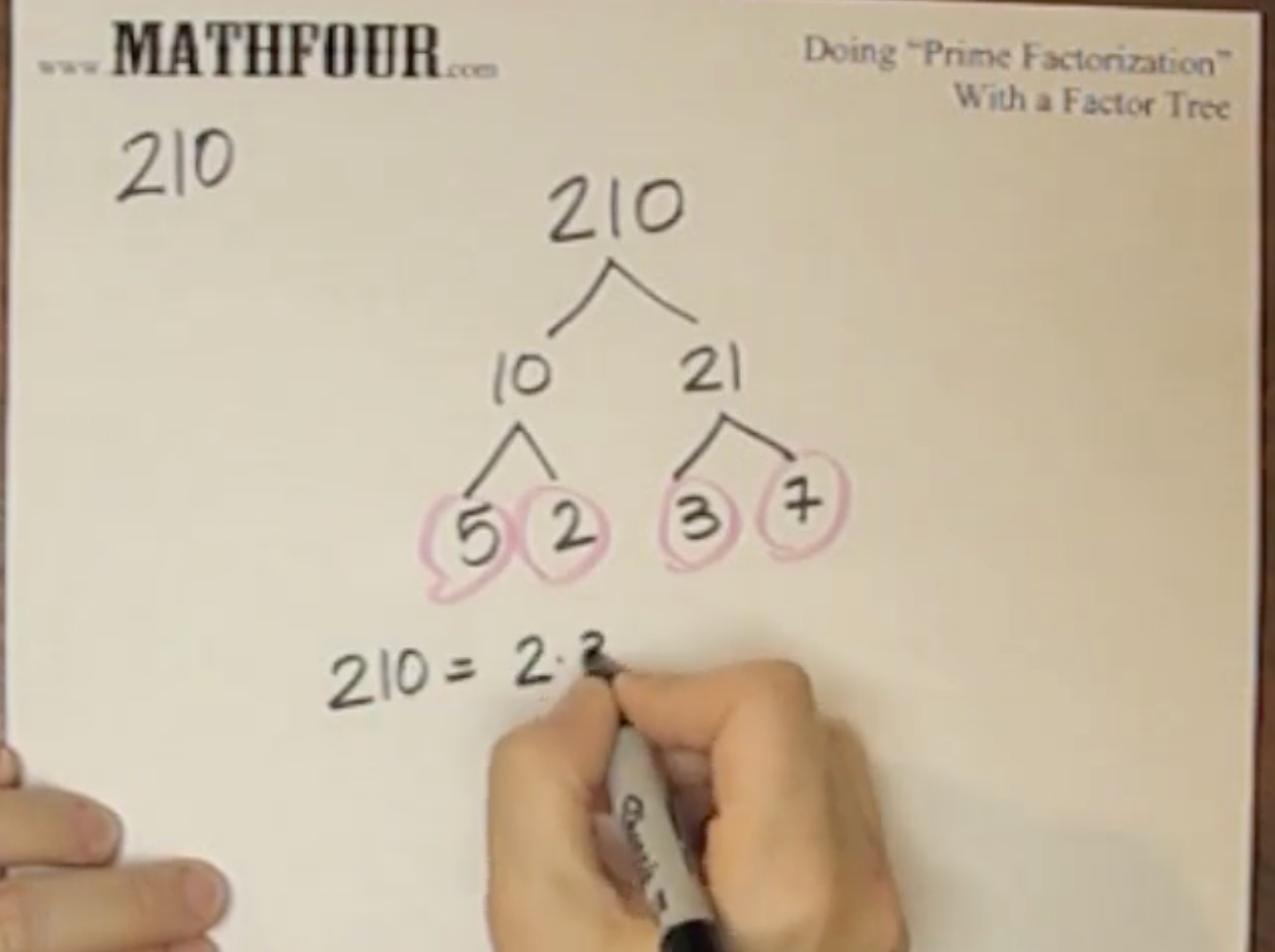
    In the meantime, I’ll show the two ways (that I know) to factor numbers.

    This method’s called a factor tree:

    You don’t have to put the primes in order for it to be “right.” But it helps for later things.

    Here’s another tree:

    Here’s another way to factor using an upside division bar-type thing:

    Remember, we don’t factor for the sake of factoring. This is only a tool to use when we do other stuff. You’ll see some of this in tomorrow’s post. Here’s one last example:

    The way you factor is personal preference. Pick the one you like, or flip-flop. There’re no rules!

    Share your preference (or a different way) in the comments!