Author: Bon Crowder

  • How to Use Flashcards when Teaching Math

    How to Use Flashcards when Teaching Math

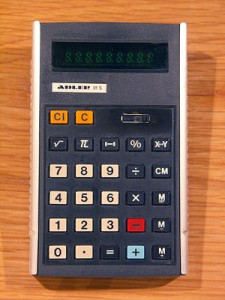
    Siggi over at Turkeydoodles wrote a post about her preference of calculators over flashcards. It’s her preference, but her arguments seem to be founded on the misuse of of flashcards. Furthermore, it seems she’s not seen the detrimental effects of early calculator use, yet.

    When you should give a kid a calculator is a topic for another article. In the meantime, here are some tips on good flash card usage.

    Flashcards are educational toys.

    Flashcards shouldn’t be used as testing devices. They’re educational toys. They’re exploratory devices. Let them “peek” as much as they want.

    As a first introduction, use them to build houses of cards. They should be fun and comfortable.

    They are limited in scope.

    The 6 x 8 = 48 card will never be able to give the cosine of 60 degrees. This makes the flashcards so beautiful. Once you understand what happens when you create a calculator addict, and see how that works as the kid enters college, you’ll know how important this limitation is.

    Encourage variation to limit boredom.

    I distinctly remember using flashcards in my dining room, sitting next to the sliding glass door. I was reading them. But because they would get boring, I would chant them. It became sing-songy and fun. I could go through them quickly this way.

    And I looked forward to the ones that rhymed.

    Let the flashcards be rejected.

    If a kid really hates them, let it go. There are other ways to get that information across. Schoolhouse Rock’s Multiplication Rock is a fabulous tool for this.

    And you can sing or chant multiplication facts yourself. My mother learned the most common prepositions by saying them as she jumped rope. You can vary some skip counting with jumping rope to learn multiplication facts:

    • 3 x 1 = 3
    • 3 x 2 = 6
    • 3 x 3 = 9
    • and so on…

    Allow the flashcards to be the context in and of itself.

    It is not necessary that math be learned in context. So many people keep pushing this. Sometimes it’s just fun to know random stuff – including some quick and nifty facts.

    Don’t push math for math’s sake, but offer it. There are kids, lots of them, who just like to do puzzles. Plain math – arithmetic and facts – is a great puzzler.

    What do you think? Is this a better use of flashcards than the ones you’ve seen? Share your thoughts in the comments.

  • 6 Techniques to Brain Training from a Pro Brain Trainer

    6 Techniques to Brain Training from a Pro Brain Trainer

    This is a guest post by Dr. Vicki Parker of The Brain Trainer.

    If your child has always done well in math but has recently had difficulty in one area of math, such as geometry, then tutoring on specific information may be helpful.

    However, if your child has struggled with math year after year, it may be time to look at underlying cognitive skills, the building blocks of thinking. The specific skills that drive math include

    • Attention
    • Memory
    • Visual processing
    • Logic and reasoning
    • Processing speed
    • Number fluency

    If there are weaknesses in any of these areas, there will be learning struggles.

    Attention is the ability to stay focused over time.

    Attention is important for math because you have to be able to focus and attend over time to information, especially as problems get more complex. You can tell if your child has trouble paying attention if he understands the concept of the problem but adds instead of multiplies, or subtracts instead of adds.

    A simple deck of playing cards can be magic for reinforcing cognitive skills. To build attentional skills, have your child raise his/her hand or hit a bell whenever s/he sees the targeted number or suite of card as you flip through a deck of playing or Uno ™ cards.

    To further challenge your child, s/he must say the targeted card or quickly add, subtract or multiply a number to the card. To build sustained attention, add another deck of cards.

    Memory is the ability to store and retrieve information.

    Memory is important to recall number facts and sequence. What’s your child’s ability to hold on to the first steps of a problem or the initial calculation?

    If she cannot hold this information long enough to move on to the next step of the problem, progression will be difficult. She may need to retrieve previously learned information from long-term memory to execute the problems at hand.

    Try showing your child a numbered card, then turning it over, hiding the number, then have your child say the card number. Present another card in the same way.

    Next, have your child remember the two numbers and then add the numbers. Repeat this process with two new cards at a time.

    As s/he gets better, have him/her work on serially adding in this sequence:

    1. See 1st number & hide
    2. See 2nd number & hide
    3. Add the two numbers

    The child will recall last number shown (not the sum), you will show & hide another card and the child will add this new number to the previous number recalled.

    Continue, but remember: don’t add the sum number, only the numbers presented visually.

    Visual processing is the ability to see and manipulate visual stimuli.

    Visual processing is helpful to see shape, size, and relationships. We use it to see groups, understand angles, and other activities in math.

    Quick matching of similar shapes or numbers is helpful here. You can make small tweaks to this activity by sorting by size with various sizes presented and the same for the orientation of the shape – a triangle upside down or at an angle matching a triangle presented in the vertical position.

    Logic and reasoning allows us to see patterns and trends.

    It allows us to order events. You need logic and reasoning to understand bigger concepts. When we decide what’s needed and how to set up a story problem we’re using logic and reasoning.

    Practice copying patterns with young children using such items as beads or blocks. You can even have fun and have them create a pattern for a crown, flower pot border or placemat for dinner.

    For older children, start a pattern and see if they can finish the pattern. This can be easily done with building blocks and Leggo’s ™.

    Processing speed is how efficiently and quickly we can process information.

    Processing speed is very important to be able to do the basics quickly and move to second or third steps.

    To work on processing speed, try timing your child working his/her way through various paper and pencil mazes. Your child will love the competition when you make it a race between multiple participants!

    Number fluency is recognition of written numbers.

    Number fluency is a coding process normally developed by age three or four. If we are delayed with recognition of numbers, it slows us down with calculation.

    You need two decks of cards for this fun task. Deal out one deck of cards, an equal amount of cards for each player. Use the second deck to flip the target cards over.

    The players must match the number on the card, being pulled from the second deck. The first person to get rid of all their cards by matching the numbers is the winner.

    To push number fluency that is more than visual recognition, have the participants say the number before they place their card on the target card and then the game moves on.

    Conclusion

    Knowing your child’s unique cognitive profile will help you understand their performance and take you one step closer to solving their math challenges.

    The good news is weak cognitive skills can improve if targeted and trained. Brain training is a type of mental exercise, carefully designed to stimulate the brain and make lasting changes in cognitive abilities.

    The idea is to improve one’s ability to learn, rather than focusing on one concept of math. It is analogous to learning how to play an instrument (which is a process) and not just a specific song (which is knowledge or data – one concept).

    Vicki Parker, Ph.D. is the founder and director of The Brain Trainer and writes for their blog.

  • How to Get People to Stop Saying ‘I Hate Math’

    How to Get People to Stop Saying ‘I Hate Math’

    Imagine this…

    You’re at a a party. Someone asks you what you do. You say, “I’m an undertaker’s assistant. And what do you do?”

    They say they teach English.

    You say, “Oh wow. I have always HATED English. I can’t even read the street signs!”

    The guy a few feet away overhears this and joins in the conversation: “I know, right! I tried to read and write stuff in high school, but it just never worked for me. I finally decided that English wasn’t my thing.”

    You respond with: “Yeah, when I go to a restaurant I ask the waiter to explain everything. So many letters! I don’t understand how you teach such a dreadful subject. I’m so sorry for you.”

    Have you ever done that? Seen it? No doubt you’ve seen with with math.

    Why can you say, “I hate math” but not “I can’t read”?

    Why is it acceptable, even cool, to be “bad at math” but those who can’t read or write stay in the proverbial closet?

    It’s time to come out, y’all. If we can’t get people to stop saying “I hate math” then let’s water it down by saying “I hate <anything else>.”

    The next time you’re at a party and someone tells you what they do, respond with, “Wow, I’m so sorry for you. I’ve always hated <field/career>. You must be miserable!”

    The more we all do this, the more people will stop giving credence to the words “I hate…” Soon the phrase “I hate math” will be extinguished.

    What do you think? Can you do it? Will it work? Share your thoughts in the comments.

  • You Get Only One Chance When Teaching Math

    Actually, you get only one chance when teaching anything.

    I was in an internal adult training class for corporate websites. In the middle of a discussion one student said, “How about if we each take something about Sharepoint that interests us, research it and report back to the group?”

    Great idea, right?

    The instructor put her face in her hands, breathed deeply, ran her fingers back through her hair and said, “Well, I want to make sure you get the things you need, so hold off on that.”

    CRUSH.

    End of learning.

    Game over.

    What are your thoughts on this? Share them in the comments below.

  • LCM and GCF – And Something Really Cool

    LCM and GCF – And Something Really Cool

    In a previous post, we learned that you don’t have to use a LCM (least common multiple) to find a common denominator to add fractions. In another post, we learned that you can use primes instead of the GCF (greatest common factor) to reduce fractions.

    And now I’m going to demonstrate that finding the LCM and GCF of two numbers is still pretty cool.

    Apologies for the glare on the video. I tried a different method and clearly it is inferior to the other method.

  • Adding Fractions: Why Avoiding Common Denominators Works

    Adding Fractions: Why Avoiding Common Denominators Works

    I wrote this post showing that adding fractions can be done using the algebraic definition of addition of rationals:

    ab+cd=ad+bcbd\frac{a}{b}+\frac{c}{d} = \frac{ad+bc}{bd}

    MathHeadInc (via twitter) has requested a video showing why this works.

    I aim to please.

    Here is the video showing why adding fractions using a common denominator is the same as the definition of addition of rationals:

    What do you think? Will this help convince your kids that “the trick” is okay to use? Share your experiences in the comments.

  • How to Use a Student’s Experiences to Teach Math – The Story of a Former Drug Dealer

    How to Use a Student’s Experiences to Teach Math – The Story of a Former Drug Dealer

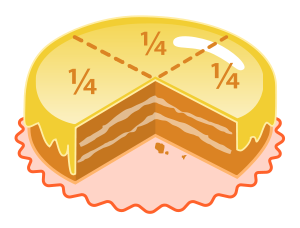
    A quarter pound of drugs is 1/4 of a pound!

    Do you have an especially difficult student? Does one kid stand out as just not getting it?

    The answer lies not in your approach, but in their perception of their own capabilities.

    My Former Drug Dealer Student

    I was teaching Oilfield Math at a large oilfield services company to a group of new hires. One guy had particular difficulty.

    Because I set myself up as approachable, he came to me to explain his plight. He was an ex-con and had spent 10 years in prison for drug dealing.

    As soon as I heard this, I knew my way in. I watch much more drug-related TV that I should, so I knew that fractions were involved in drug dealing.

    I asked him to explain some of the prices and measurements. Since he would have to work against time calculating cost, weights and prices, he was exceptionally good at fractions.

    When I pointed out how good he was in math he was upset. “I’ve left part of my life behind me” he told me. “Yes,” I said, “but it shows that you could be just as good at legal fractions.” This Oilfield Math’s got nothing on drugs-on-the-street math.

    His life turned around that day.

    If you have a struggling student, find out where they already do math. Show them that they have the talent already. Let them see their abilities.

  • Teaching Math without Rules: Addition of Positive and Negative Numbers

    Teaching Math without Rules: Addition of Positive and Negative Numbers

    I’ve discovered many ways of teaching math through the years and the most interesting one was the addition of numbers with opposite signs. I learned this from a teacher who said that he never understood the rules – so he made up his own method.

    He “breaks” the bigger number into two pieces so it can be cancelled. Here it is:

    What do you think? Can you teach it this way? Share your thoughts in the comments.

  • Why It’s Okay to Teach Algorithms

    We had a lively discussion at last week’s homeschool math chat about teaching algorithms versus allowing a discovery learning process.

    What I can’t help but think about when I reread this discussion is how this compares to teaching a child manners.

    Teach kids manners early. Very early.

    I know someone who elected to wait until their child understood the concept of appreciation before teaching them how to say thank you. The child is now eight years old and doesn’t say thank you unless prompted.

    Daughter, at 18 months old, is being taught please, thank you, ma’am and sir. She has no concept of being polite. Her frontal lobe is about as advanced as the local neighborhood chimpanzee’s. Her favorite phrase these days is, “No. Mine.” I correct this with, “No ma’am.”

    At some point it will become habit. Or at least the ritual of, “No,” from her and my “No ma’am” response will become habit.

    And at some point shall make the connection that using these polite words will gain her something. She’ll be looked upon favorably, considered one of the “good kids,” or smiled at a little more.

    And then she’ll connect it. She’ll see that the concept of politeness is directly tied to the “algorithm” of saying polite words.

    Teach kids algorithms early. Very early.

    I love the idea of teaching concepts before algorithms in math. But sometimes algorithms have to come first so that the rhythm and habit are in place when the brain is ready to understand the concept.

    Each child’s brain is different. One of the beauties of homeschooling and private tutoring is that you can focus on a child and know when they’re ready for algorithms and ready for concepts. As a classroom teacher, it’s a little bit more difficult, but still can be done.

    In the classroom you can teach algorithms at the same time as concepts. If you cycle them back and forth, you can catch each student as they are prepared to accept the learning.

  • Why Focusing on Grades is Okay

    Why Focusing on Grades is Okay

    David over at Real Teaching Means Real Learning posted last month about the focus of learning over grades. In principal, I agree that learning should be first in the minds of children and grownups. In principal.

    But this is reality. And I have two issues with David’s opinion.

    The conversation points for each focus is different.

    He compares questions like “What is your grade?” with “What did you learn?” If a child takes a test, the question, “What did you learn?” is goofy. You can learn while taking a test, but the intent of the test is to prove what you have already learned.

    Grades are specific measurements, learning is a general unmeasurable concept (not mathematically). You would do just as well switching the question, “How far is it to your house?” with “Do you like your commute home?”

    The logistical questions about homework and report cards are a trained response for parents. Parents need hear this only once, 20 minutes before the bus ’rounds the corner: “OH NO! I FORGOT TO DO MY MATH HOMEWORK!” Yeah, try telling a mom to switch “What’s your homework?” with “Did you have fun today?”

    Sometimes grades are all a kid’s got.

    Occasionally there’s no energy around learning a subject. A good student will turn to the competition of the grade to get the job done. Either way, the kid gains some knowledge.

    I did this with history. It’s not my bag. I did have a great history prof in college who made things come alive. But I still just wanted to get through. Focusing on the grades got me there. And I learned lots.

    If a student doesn’t love math, that’s cool. They can focus on the algorithms to get the job done and measure that with the grades. If it keeps their confidence up, maybe they’ll run into something someday that gets them excited about math. And maybe they won’t.

    And that’s okay.

    Parents should use both types of conversation points.

    David’s intention is pure, though. We should focus more on the learning. But to think that we’ll stop with the grades altogether is crazy. It’s against human nature. We always want to know how we measure up. Kids want to know. And parents want to know. So it’s okay to focus on grades.

    As long as where it matters, we focus on learning.