Category: Math Around Us

  • How to Quit Saying “I Hate Math”

    How to Quit Saying “I Hate Math”

    Is changing how you feel about math like changing who you are?

    My Little Brother is a licensed professional counselor. He often tells me that you can change your attitude by changing your behavior.

    Apparently the behavior-attitude door swings both ways. If you don’t want to do something because you feel frustrated, do it anyway and that will clear up the frustration.

    So that’s how you can get your attitude and your child’s attitude aligned with positive feelings of math.

    Stop saying angry math things.

    I’ve pointed out that the real place kids learn math is at home. And I’ve discussed why grown-ups should quit talking about hating math. But until now, I’ve never said how to do this.

    Because it’s easier said than done right? When you’re frustrated, or your children are frustrated, you’ve gotta say something. So you can’t “just stop.”

    HOW do you quit saying “I hate math” (when you really do hate math)?

    First, make a list of all the math things you do (download the handy helper here). Here’s a starter list for both you and your children:

    • I know how long it takes to get dressed and so I can calculate when I have to wake up in the morning.
    • I can figure out if our car is getting good gas mileage.
    • I can figure out if I have enough money saved to by a nice toy.
    • I know what I have in savings and if that’s enough to buy the fancy shoes I want.
    • I know how many minutes it takes me to walk to my friend’s house.
    • I know that riding my bike to my friend’s house is faster than walking.
    • I know that in the past I couldn’t reach the middle of the dinner table, and now I can – because my arms are longer.
    • I can figure out how much I’ve grown in the past year by looking at my growth chart.

    Copy your list and put it on the refrigerator, in the bathrooms, on the front door and next to your bed. When you find your child or yourself wanting to say, “I hate math,” instead say, “I can do math because __” and fill in the blank with something from the list. If you need to, continue like this:

    This particular math problem I’m working on is more challenging than what I already know, but it isn’t hard. I just have to figure it out. And since I’m smart enough to do all that other math, I can figure this out!

    The behavior of changing what you say will have a positive affect on how you and your children feel about math!

    Try it. Let me know how it goes!
    This article was previously part of a We Are That Family “Works for Me Wednesday” post.
    Related articles
  • How Adding Evens and Odds is like Multiplying Positives and Negatives

    How Adding Evens and Odds is like Multiplying Positives and Negatives

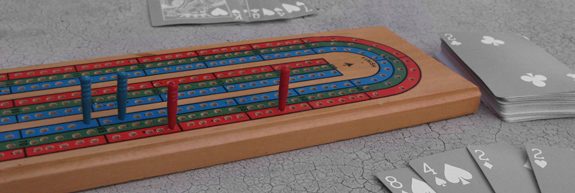
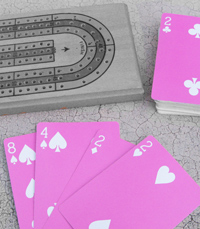
    I was playing cribbage with Husband when I found my hand to be 8, 4, 2, 2 and the cut card was also a 2. I focused hard to see if I could come up with 15. (If any group of cards add to 15, you get two points.)

    My resolve was strong. Then I remembered that for any group of numbers to add up to an odd number, one of them must be odd.

    While shuffling for the next hand, I started thinking about adding evens and odds:

    • Even + Even = Even
    • Odd + Odd = Even
    • Odd + Even = Odd

    This looked familiar. Then I remembered the rules of multiplying positives and negatives:

    • Pos x Pos = Pos
    • Neg x Neg = Pos
    • Neg x Pos = Neg

    I was so excited to notice this. Alas, I’m pretty sure I’ve noticed it before. I love rediscovering patterns as much as discovering them!

    Look for patterns everywhere.

    Always keep your eyes peeled for similarities. When you see them, if your children are old enough, use leading questions to get them to observe the same thing. If they aren’t old enough, keep a journal to share things with them later. Encourage your kids to look for patterns in everything. Use toys and manipulatives to improve this, but also use nature and everyday activities. What patterns or nifty things in math have you noticed recently?

    Related articles
  • Birthday Math: How to Celebrate with Math

    Birthday Math: How to Celebrate with Math

    Do you try to integrate math in everything? Would you like to? How about integrating it into birthdays?

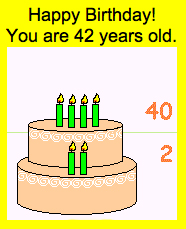
    It’s Husband’s birthday today. He’s 42. But instead of just saying, “Husband’s 42,” I can say he’s 13.37pi years old. (At that site you can also find an “exact” pi birthdays in case you want to celebrate at some other time.)

    He’s also 15,340 days oldThis site calculates months, hours and seconds too.

    He’s 2×3×72 \times 3 \times 7 years old. His age is also the second sphenic number. What’s that? I’m not sure – but if you click on your child’s age on this Wikipedia page, you’ll get some fun sounding words for their number that they can use all day! Here are some for your kids:

    He can go here to find out that he was born in MCMLXIX. This nifty birthday math trick will result in the number 4.22 (April 22 – his birthday!). Or this one which will result in 42269 (also his birthday).

    For some fun birthday math, he (and you) can check out The Birthday Problem – also known as the birthday paradox.

    How will you celebrate a family member’s next birthday? Will you use birthday math? Share your thoughts in the comments.

  • The Real Place Kids Learn Math

    The Real Place Kids Learn Math

    Where did you learn math?

    I’ll bet the first answer you have is, “in school.”

    In my recent research of different types of math teaching, including dancing, literature and gaming, it’s occurred to me that I didn’t learn math in school. I learned arithmetic, I learned algorithms, but math?

    I learned math at home.

    My dad is an engineer, and by nature not a teacher. But we did puzzles. Cryptograms from GAMES magazine, computer-based role-playing games and TV-based video games. He wasn’t one for shoot-em-up or beat-em-up games (although swords were essential). Everything we did had logical thinking.

    My mother was an English major. She encouraged memorization of both prepositions and multiplication facts. And she played word games with me.

    Puns have a special kind of logic to them. As she was punning around with me, I was learning a unique set of skills.

    Of both of them, I was allowed to ask questions. Any questions. And I did. And they answered them.

    Everyone learns math at home.

    As a parent, your daily actions impact your child mathematically. It’s not your skills with pencil and paper that help you teach math, but who you are.

    You connect with your children and understand them because of your similarities to them. Remember how you learned math. Not how you learned arithmetic and algorithms, but math. The art of math.

    That’s your key to helping your kid learn math.

    How did you learn math? Can you use this to help your children? Teachers – how can you help parents tap into this side? Share your thoughts in the comments.

  • How to Get People to Stop Saying ‘I Hate Math’

    How to Get People to Stop Saying ‘I Hate Math’

    Imagine this…

    You’re at a a party. Someone asks you what you do. You say, “I’m an undertaker’s assistant. And what do you do?”

    They say they teach English.

    You say, “Oh wow. I have always HATED English. I can’t even read the street signs!”

    The guy a few feet away overhears this and joins in the conversation: “I know, right! I tried to read and write stuff in high school, but it just never worked for me. I finally decided that English wasn’t my thing.”

    You respond with: “Yeah, when I go to a restaurant I ask the waiter to explain everything. So many letters! I don’t understand how you teach such a dreadful subject. I’m so sorry for you.”

    Have you ever done that? Seen it? No doubt you’ve seen with with math.

    Why can you say, “I hate math” but not “I can’t read”?

    Why is it acceptable, even cool, to be “bad at math” but those who can’t read or write stay in the proverbial closet?

    It’s time to come out, y’all. If we can’t get people to stop saying “I hate math” then let’s water it down by saying “I hate <anything else>.”

    The next time you’re at a party and someone tells you what they do, respond with, “Wow, I’m so sorry for you. I’ve always hated <field/career>. You must be miserable!”

    The more we all do this, the more people will stop giving credence to the words “I hate…” Soon the phrase “I hate math” will be extinguished.

    What do you think? Can you do it? Will it work? Share your thoughts in the comments.

  • Confessions of a Calculator Addict

    Confessions of a Calculator Addict

    I remember being allowed in Jr. High to use the calculator to “check my work.” Soon after I learned that the books in High School had the answers in the back! It was like condoned cheating!

    How could I go wrong with the magic box and the answers given to me straight from the publisher?

    And then I became addicted.

    Sometime after Geometry I lost my multiplication facts. I wasn’t just checking my work on the calculator.

    Subconsciously I figured there was no reason to trust my potentially faulty memory of math facts if I had the absolute sure thing right there next to me.

    For years I stopped doing arithmetic.

    And my dad chastised me. Every time some quick calculation came up in the kitchen, garage or grocery store, I would stare at him blankly. Then I would reach for my calculator.

    The way he looked at me, you’d think I had reached for a bong, ripped off my bra, sang Kumbaya and spat on the pope.

    I ignored him.

    For years.

    Until one day I realized that I had absolutely no memory of 8×78 \times 7. Yep – 8×78 \times 7 was what did it. I started watching myself. I always did simple arithmetic (even addition of single digits) on the calculator!

    Then I watched other people. I saw the clerks in the grocery store reach for the magic box to figure out 10% off something. I saw an older man at McDonald’s send the girl into a tizzy because he modified his cash payment after the girl had already typed it in.

    “There’s a problem here,” I thought. Maybe Paps was right.

    I put down the magic box. Cold turkey.

    I started using prime factors to help me remember my old multiplication facts. I re-engineered subtraction so I could actually do it. I read Dead Reckoning: Calculating Without Instruments. And then I refused to allow students to use the “devil box.”

    I put it on my syllabi that calculators were strictly prohibited (unless expressly invited by me – in the case of probability and statistics). I growled at anyone who reached for one.

    And I taught them arithmetic.

    And we were all better off.

    Are you a calculator addict? Share your story in the comments.

  • How to Free Your Students from Math Anger

    How to Free Your Students from Math Anger

    Do your students say they just wanna chuck it all with regard to math?

    Are they sick of being a prisoner to the anxiety?

    Help them declare their independence!

    A great friend of mine is a technical trainer for an oilfield services company. He teaches a class called “Oilfield Math.”

    I helped him develop this class and I had the privilege of attending the first class. At the end of the class, he offered to buy everyone a beer – so he passed out a $2 bill.

    On the back of the $2 USD bill is an image of the signing of the Declaration of Independence of the US. He told everyone that they can either take the $2 and buy themselves a beer on him, or they can keep it as a token of their new found independence.

    His class teaches math for the oilfield, and for life, using a discovery process. The independence he offers is the freedom from senseless algorithms (step by step procedures that look like magic) and people who say, “All you have to do is…”

    I asked all the students in that first class sign mine. I still carry it. Although I’ve never been a prisoner like many people I’ve seen, this token reminds me that many are prisoners of the negativity.

    Hand out personal independence to your kids.

    Give each student their own $2 bill. They can write on it some freeing statements. They can write on it negative words that they never want to hear or say again. Or they can carry it blank. It’s their talisman.

    And integrate it into a history lesson too!

  • Why Grown-ups Should Shut Their Traps about Hating Math

    Why Grown-ups Should Shut Their Traps about Hating Math

    A big thanks to @dansmath at DansMath.com for this post suggestion.

    1. Do you hate math?
    2. Do you really hate math?
    3. Do you have kids?

    If you answered yes to any of the above questions, this post is for you.

    I’m not here to convince you to love math. I’m not even here to help you not hate it. But if you’ve got kids around, you gotta do something about your vocalization of this.

    We want the next generation to be better than the previous generation – in everything. That’s our nature as parents and people.

    In order to improve the next generation, the previous generations must either die or shut their traps. This is the case with racism, sexism, creed-ism and sexual orientation-ism. And it’s the case with anti-mathism, as well.

    You certainly don’t want to die before your children finish their eduction, so you gotta learn to keep quiet.

    Zip your lip for yourself.

    Southwest Airlines tells you to put on your own oxygen mask before you help others put on theirs.

    Your first step is to get yourself out of the habit of saying negative math things. This will make it easier when refraining from talking bad about math in front of kids.

    If you’re math phobic, start doing this when you’re pregnant. If you will never have kids, do it anyway. Children are everywhere – you might’ve noticed.

    The more you say it, the more you believe it. Which makes you say it even more.

    Use this to your advantage, not your disadvantage. Every time you say, “I’m bad at math,” you get worse. You are the smartest person you know and you should believe whatever you say. Which means whatever your tell yourself will be true.

    So tell yourself that math is okay. And if you can’t muster this, tell yourself something you are good at.

    Don’t let your friends do it either.

    If your friends say they hate math in front of your children, correct them. Treat this behavior just as you would if your friend said the F-word.

    Give them “the look.” Correct them with other words like, “Math has always been an interesting challenge for Aunt Sophie… right?

    Be an example.

    Your children take to heart what you say. They want to be like you. If you hate math, they want to hate math too. Even if they really don’t.

    So when you feel the words coming toward your lips, force something good to come out. If you can’t say, “Math is fun” without cringing, tell them something you are good at. Anything works. Even if it seems lame.

    Instead of:

    Kiddo: Awww! I have to do fraction homework today. I hate fractions.
    Grownup: I know, sweetheart. I never liked math either.

    Try this instead:

    Kiddo: Awww! I have to do fraction homework today. I hate fractions.
    Grownup: Well, I’m good at cooking chicken!

    Kiddo will think you’re nuts, but won’t associate any negativity to math. And since he already thinks you’re nuts, you’re good to go.

    Use distraction.

    If finding something you’re good at doesn’t come quick enough, scream some random swearword and say, “Oh my goodness I can’t believe I forgot…” and run out of the room. Compose yourself, prepare a short  sentence or two and go back into the room.

    Some sentences to consider are:

    • Where were we Kiddo? Oh right, fractions. Well, fractions help us share things. If you, your dad and I want to share a pizza, we need fractions in order to divide it up. If you do your homework with fractions, I’ll let you divide up the pizza that we get at Chuck E Cheese’s on Saturday!
    • Fractions are interesting because they have two parts – a top and a bottom. You have a top and a bottom! Do your fractions and then we’ll wash your top and your bottom in the tub before dinner.

    Avoid statements like, “Fractions are good for you.” Math shouldn’t be equated to vegetables. They’re good for you but you have to tolerate them. That may be your opinion, but remember were trying to improve the next generation.

    So…

    When negative math-speak comes to your tongue, say something else, anything else. Do it for you, do it for the children. Don’t die, but do shut your trap.

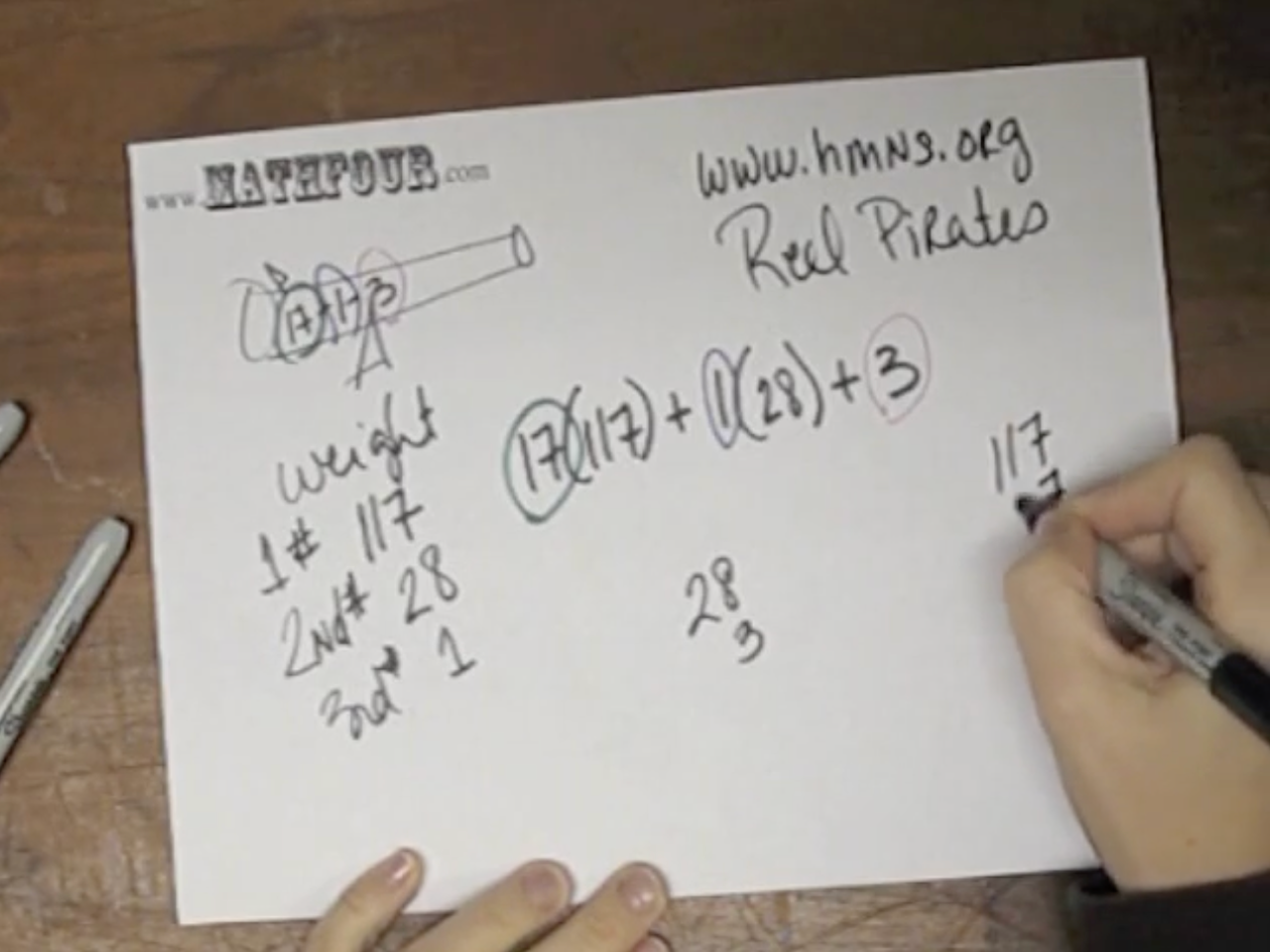
  • How to Calculate the Weight of Cannon

    How to Calculate the Weight of Cannon

    I was at the Houston Museum of Natural Science last Saturday at the Real Pirates exhibit. Here’s the fun math thing I learned:

    Post your thoughts in the comments.